Eight Hundred Forty-ninth
Idea on How to Live a Happy and Righteous Life
A.D. 2001
Masonic Birthday Speech: 2024
Published by d/b/a Thank You Dear God, LLC
(Rewritten: 7-2-24 to 9-1-26)
Prostrate must I fall before you, dear God!
--“who hath not taken [our] souls in vain.”
Some of the things that sustain us are of absolutely priceless, and, while in sooth that which is priceless cannot be transferred, what we do give becomes itself invaluable if in the process someone else’s God given attributes are nourished and activated. Through the years you, Anyukám, have nourished us, activated us, and never once kicked us when we were down, and I shall personally cherish my every moment within the envelope of your love so long as I shall live.
————————————–
SOULS OF RICHENESS! MY MASONIC BROTHERS!
No infinitesimal can match universality and must bow out from the stampedes into generality. For we are born imperfect, with perfection in us forever doomed and honor paid the stone wall of an empty shell. Excellence immersed in love is the option within the present reach of the jewel of having received infinitely much within something so small. Therein move we blessedly reliant on the temporal font of a meaning that was ultimately sourced beyond ourselves—even though ostensible power can be made compatible with arrogance:
“G-d did not wish to shower upon men undeserved bliss and good. He did not want to leave no area for men to work at and exercise their creativity. On the contrary, G-d wanted to give man a sense of fulfillment and accomplishment, something he could consider his own. There is definitely a greater appreciation of that which a man earns by the labor of his own hands than what he would receive as a “handout.” In fact, a person would prefer a single bushel of his own to nine bushels received as a giveaway.”1
Time too finds its value in its having moved. And that becomes in sequent format the source of the moment’s leverage:
“How do you get to Paradise? Practice, practice, practice.”2
Fall we now in thankfulness before God. It is said:
“Life’s a walking shadow, a poor player,
that struts and frets his hour upon the stage
And then is heard no more.”3
But it was only God that created the moment. And it is there that having a pulse is a metaphor for the door to the infinities inhering in the moment but not to the ephemeralities of some rank. In the mean time, while being input to the power of habit, our aphoristic proclamations relapse into the amnesia of triteness. The below become examples having no exception:
- Time excepts nothing from the moment’s lapse:
“And nothing stands but for his scythe to mow.”4
- No transaction transpires a lifetime.
- Time brooks not the moment’s having an eternity.
- Transactionalities from the past cannot replicate in present time.
- Time morphs antithetical to itself at the moment’s passing.
- Past time shall discover vulnerability.
- Present existence succumbs at the moment’s lapse.
- Past time resurrects past position as phantoms.
- The amygdala’s displeasure is that the spatial is displaced by the temporal.
- The amygdala caroms off into precincts outside present time in search of a munificence in pretend space.
1I. The past reformulates itself in the present as dross.
- Time brooks not permanence.
- Past success is saddled with motionlessness.
- Books are the embalming fluid that never resurrected anything.
- Time takes no prisoners.
- Status quo’s problem is the lapse of time.
- Even Aristotelian logic will not save the universe from the moment’s lapse.
So now we know:
“Kisses end. Dreams vanish, and sometimes cities too. We long for the perfect ending, but the curtain falls along with our hearts.
“Beauty is so difficult.”5
Growth accumulates:
“The most important thing you cannot get a picture of, because the most important thing about me is my mental attitude.”6
Growth is an iteration within the territorial. In its microscopic enclave, it is developed in the variable structure of a unique brain. And while repetition there may become the mother of learning, excellence cabins no perfection—and no eternity:
Absent love’s lasting limbic proximity, the refection back from tossing the apple out to another is of no longer duration than the toss.
Increments of growth are impacted by one’s motion, cadenced with amplitudes small, fulcrums kept discrete, frequencies defined by one’s choice of boundary values for to superimpose. Now must needs we crawl subterranean out of sight among life’s temporal riches. The moment’s rebound, however, is blessedly faultless. Compound not life’s erosions with heedlessness:
“Wirf nicht für eiteln Glänz und Flitterschein
die echte Perle deines Wertes hin.”7
The resplendencies of loving are those of proximity, of having been loved, of having loved. Yet even within love–perhaps more so, there remains the need for to find balance:
“. . . . [T]heir general theory is dictated by reason; but the merit, as well as difficulty, consists in the application. The discipline of a soldier is formed by exercise rather than by study: the talents of a commander are appropriated to those calm, though rapid minds, which nature produces to decide the fate of armies and nations: the former is the habit of a life, the latter the glance of a moment, and the battles won by lessons of tactics may be numbered with the epic poems created from the rules of criticism. The book of ceremonies is a recital, tedious yet imperfect, of the despicable pageantry which had infected the Church and State since the gradual decay of the purity of the one and power of the other. . . . . . . . . The vanity of the _____ princes most eagerly grasped the shadow of conquest and the memory of lost dominion.”8
Infinitesimal balance within the moment is no small thing, for it was only God’s forgiveness that redeems us with the moment’s temporal rise. It is that forgiveness that made it feasible for us now to shower the moment with gems solely its own:
“And a star
Gems the sky.”9
Time therefore is not the hopeless creature. It is the priceless miracle ever new, exciting with:
“. . . the sort of interest I am taking in this voyage is so different a feeling to anything I ever knew before . . . .”10
Move, damn it! You can have faith in the down stroke’s rebound because of the next moment’s buoyancy. Do not be fooled by the diminutiveness of one step. It shall find forgiveness in the next step. Thank we God that all along insignificance is the monumental of real time–the miracle of temporal mystery:
“But it was an interesting deviation from a classic style whose placidity had never expressed the overwhelming energy of the Roman character.”11
Excepting therefrom the regenerative downtimes of ultradian pauses and sleep, we discover stoppage imposed on endeavor shuts down initiative.
Being a fungible form of Darwinian territory deeply woven into the amygdala, money in the extreme can trigger a fossilized panoply of greed:
“Private equity claimed to have a more long term approach to managing businesses than was found in the public markets. But the industry’s penchant for enhancing returns with leveraged ‘dividend deals’ and flipping companies for a quick profit belied such claims. The buyout business model normally involved acquiring healthy firms and putting them through the financial wringer: juicy returns derived from applying leverage. Research suggested that most buyouts saw little improvement in operations or business strategy. A 2018 study found that most private equity firms actually cut long term investment. ‘This [buyout] harvest is all about wealth extractions, not wealth creation,’ concludes one commentator. No set of individuals benefited more from the Fed’s easy money than the buyout barons. None was less deserving.”12
They most certainly were not the most deserving. Greed is not the stuff of life’s tick tock:
“Hickory, dickory dock,
The mouse ran up the clock.”13
The mouse must have been in the stock market:
“The clock struck one,
The mouse ran down,
Hickory, dickory, dock.”14
[The Internet on 6-28-26 reads: “Hickory, dickory, dock come from the ancient Celtic language that was spoken in the British Iles long before English, and they mean eight, nine, ten. The old tongues were very much alive in the Middle Ages, in some cases into the 19th century. Shepherds used to count their sheep [the financial capital] using these words, even when they already spoke English.”]
Materialism finds its convergence by fading out:
“ ‘When a nation is running to decay and ruin, the merchant, and monied man, do what you can, will be sure to starve last.’
John Locke, 1691”15
Within an expanding universe, salvation:
“of mice and men”16
never was asymptotic with turgidity.
“ ‘Financial capital, once cut loose from its original role as a modest helper of a real economy or of production to meet human needs, inevitably becomes speculative capital geared solely to its own self-expansion.’
Paul Sweeney”17
Death then becomes the demotion that makes satiation”
“a fool”.18
Business amalgamation destroys completion19–eliminates the continuing adjustments and maneuverability gotton by having to compete. We were born to move, not steadfastly to be engulfed in dross kept stationary:
“O ye Lorenzos of our age! who deem
One moment unamused, a misery
Not made for feeble man! who call aloud
For every bauble drivell’d o’er by sense.”20
Caution becomes a tool—but only a tool—within the transitory life:
“How like fish we are ready, nay eager, to seize upon whatever new thing some wind of circumstances shakes down upon the river of time. And how we rue our haste, finding the gilded morsel to contain a hook. Even so, I think there is some virtue in eagerness, whether its object prove true of false. How utterly dull would be a wholly prudent man, or trout, or world!”21
Having given us the course of the quick, God makes self-directed motion the envelope within which to burnish fast passing energies consonant with the nonlinearities of love’s proximities. Just maintain we the bounds small enough to be a-moving at moment’s end on our feet and running:
“[H]e felt an immense gratification that he had leapt a chasm, landed squarely on his two big feet in a land of infinite horizon.22
In sooth, those horizons are minuities endless only in value. The magic emanating from the moment never was ours alone:
“Nature has booth body and space like our other friends, and she is not always pressing the spirit on our notice, nor do we always wish to see it; sometimes we are more in the mood for the opulent beauty of matter than for the delicate half-expressed secrets of soul, which imply and command a certain silence and peace and humility before they can be understood. But there are times, thank Heaven! when we can really close the doors of our mind to racket, and emulation, and all the noises of the century; and then—the sweep of a single grass blade on the breeze suffices for our direction; the sight of the blossom shedding its petals softly on the running water that carries them away, soothes sorrow into peace; the glory of blown autumn leaves against a golden sunset warms a chilled and tired heart; panting with the dustiness of our daily road, we are suddenly cooled and refreshed by the view of a forest glade veiled in wet mists that seem to fall on the brow like holy water from holy hands; and all these things, I venture to say, can only be expressed and brought before us by the old spirit and the old methods of Japan.”23
Infinite spatial horizons would be the trap of self-inflating without bound into an approaching sterility in outer space. The moment’s vector there becomes motionless, moribund in a predominating decay Time’s infinitesimal will find freshness if harmoniously, brightly presented enhanced by coffee. As my dear Wife with her own ground level acumen pointed out:
“When we arrived, I was amazed at how this place and its people could be so different. After a year, I found myself being surprised at how so many people could have changed so much. In between we never felt sorry for ourselves. Actually being so poor can be exciting. You are never sure of what the next new challenge is, particularly when starting out on a new course of life, and we were too busy to lack hope.”24
It is none other than time itself that is the font for prioritizing but wherein:
“What is the most important step in Masonry?
The next step!”25
All development is embedded in the stitching of temporal infinitesimals of motion on paths taken within the minuscules flowing through and around a speck. The fallacy is to stagnate time as dissembled territorial permanence:
“Dissimulation ties but false knots.”26
Being totally stopped except for eating means:
“What’s lighter than the mind? A thought. Than thought?
This bubble world. What, than the bubble? Nought.
Francis Quarles, 1634.”27
It is not that space does not exist. Rather it is the claim that permanence moves. Now therefore each increment of life has its moment of trajectory–transitory, not empty but finite, having life’s special grace by God uniquely us endowed. That is the one thing that we can have faith in:
”See All—Hear All—Say Nowt.
A Yorkshireman’s Advice To His Son:
‘Eat All—Drink All– Pay Nowt.
And If Ever Tha Does Owt For Nowt,
Allus Do it For Thisen.’ ”28
Thusly:
We are not to repine, but we may lawfully struggle.”29
And then do we discover:
“That energy of character which could emerge into a life of action”30
self-induced thereby at each step in life’s sequence. Now incrementally can we:
“dare to trust God to have joy.”31
Facing us all whether explicit or implicit is the upstaging by the moment’s temporal lapse. No conduit can lay claim to the stuff it passes:
“And finally I spoke of our sacrifice, which had meaning in every case. It was in the nature of this sacrifice that it should appear pointless in the normal world, the world of material success.”32
But reducing oneself to mere materialism, one discovers the irrefutable meaninglessness of a pointless end. It is true that materialism has motion and that it too is an infinitesimal of so much, so little, so encompassed in the riches of present motion—where:
“There are no short cuts to any place worth going to.”33
True, yet there is more. Destinations saddle us with their own motifs, e.g., once she got here, my dear Wife became ineluctably endowed almost immediately with an accent in her own native tongue, i.e., by what the people in Hungary would, and did, immediately recognize as being the American accent’. A destination and its preceding traverse are a source for differentials of uniqueness capable at some, but not all, levels of one’s management. Time there is God’s patrimony for patient, controlled strength:
“Blessed are the meek . . . .”
We can thank Jesus for that exhortation for to achieve self-control and to forbear, i.e., meekly as used in Elizabethan English. There is much to strategize when the moment’s door opens. Ely S. Parker in his youth, later Brigadier General Ely S. Parker, was a member of the Gordian Knot Masonic Order organized by Lewis S. Morgan at Cayuga Academy, which soon:
“became known as the Councils of the New Confederacy of the Iroquois. To its members it was known by the mysterious name of We-yo-ha-yo- de–za-de Na Ho-de-no-sau-nee, a Seneca phrase meaning, “They who live in the home of the dwellers of the Long House.”34
After the war, General Parker gave his word:
“He was a bondsman for a bank cashier. The cashier defaulted and General Parker was called upon to make the bond good. It was a rude shock to have a trusted friend turn out a thief, almost as bad as making up for his embezzlements.
“General Parker’s attorneys hastened to him with advice. ‘You won’t have to pay,’ they said; ‘You are an Indian, and the law does not hold you to it. You can not be compelled by law to live up to that bond. It is not worth the paper it is written on.’ Here was a loop-hole that would save the accumulation of a lifetime. The elements of escape were few and simple: ‘Indian, do not have to pay, law can not compel–contract void.’
“But General Parker gave a single answer, ‘I fully intend to make that bond good,’ he said. ‘I executed it in good faith. I am a man and if the law does not compel me to pay, my honor does.’ And he paid, though his fortune was wrecked. Years after the defaulter became wealthy and respected, but he never repaid a penny. (emphasis in the original)
“Again an effort was made to repair the loss of funds, and another small fortune was accumulated, only to be swept away in the crash of the Freedman’s bank. More money flowed out in the failure of an insurance company and still more in a publishing venture. This left a man past middle life in a position where he must struggle again for new footing and resources. What do most men do amid such discouragements? What did he do? He went to work. And herein lay the secret of his life’s success. It is well embraced in the family maxim–it is Iroquois in its origin:
‘Spend no time in mourning the failures of the past. Tears make a biter throat. Look ahead, there is more work to do. Unstop your ears and listen. Hear the call.’ “35
General Parker, that is beautiful. The brain is the present but variable microcosm, an infinitesimal that is uniquely composited like unto a Mandelbrot set’s divinely, infinitely detailed boundary. Paramount to that are the limbic brain’s frequencies induced by kindnesses within love’s proximities. It remains, however, that without our being invested with the power of photosynthesis, being alive is defined by ingesting—stealing–something else’s protoplasm. Their lives were taken not in vain that we might eat! Eating therefore bears ignominy’s scratch. This is the physical world of realpolitik–daily bailouts at someone else’s sole expense.36 Food sub silentio becomes sprinkled with moieties of flagitiousness, slander, calumny, libel, all of them sanitized in the supper club of self-righteousness, self-interest, self-preservation, flattery. But the imprecations of subliminal guilt from devouring—usually ravenously—something else’s last remains also means personal truth can no longer be a universal measure. Supremacies—and eating is one of them–become the masque submerged in the tides of time, at death for to be drowned passé.37 Nor will personal merit save one from his or her own vulnerability to the:
“inconsistencies of fortune.”38
Blessedly and concurrently, there is the evolving monumental topology of every life, high-lighted by a wedding and the birth of a child and the deep meaning of a marriage. Forget not that the mind is endowed with an interpersonal limbic regulation that can love. Gibbon sees only the transitoriness of power:
“But it is not in the city of Constantine, nor in the declining period of an empire, when the human mind was depressed by civil and religious slavery, that we should seek for the souls of Homer and Demosthenes.”39
He forgets Homer and Demosthenes couold love and then did themselves get classified passé. Time is egalitarian. All the King’s horses and all the King’s men cannot save us from the lapse. But the moment needs no more that itself and is the infinitesimal irrefutably yours, not to be denied by either eternity or the universe in cases of love. And except for the limbic interactions within consensual limbic proximities, no amount of amygdalar logic will save the moment from its minusculeness.
“Entbehren sollst du! Sollst entbehren!
Das ist der ewige Gesang,
Der jedem an die Ohren klingt,
Den unser ganzes Leben lang
Uns heiser jede Stunde singt!”40
Rank is specifically leveled to the ground once revealed by its moves:
“. . . . the words of Bias [of Priene] seem to be well said, that ruling will reveal a man.”41
Without reprieve, it is now the moment that needs be embraced. Further if alive, we each be immersed inside and out in a personalized, essential, ever active microbial microbiome of forty billion microbes subject like us to being born, living and dying in inexorable telomeric replica tion/decay–or by getting mercilessly culled by infusions of fresh alcohol or the ilk into the gut. Nonetheless virtue survives:
“Friendship is not a matter of arithmatic.”42
It is only the moment’s preceding lapse that allows us mercifully to resurrect as a momentary infinitesimal to exude a God given fragrance:
“Not my brother, not my sister. It’s me, O God,
Standing in the need of prayer.””43
We fall down on our faces to worship you, God. Mercy is abounding each step of the way that that we are spared the lifeless orbit of death. Dare we not to morph present time motionless for to ravish the moment’s gem as a dead stop. Time’s lapse superimposed on the do-nothingness within one’s protective coat of triggered, self-proclaimed supremacy will consume the moment in the shadows of forever nevermore. That is not the moment’s damnation. It is its tragedy. For there lost we it:
“And my soul from out that shadow that lies floating on the floor
shall be lifted–nevermore.”44`
Now do life’s solutions seriatim include getting off the pedestal of the stopped dead–out of the present pallid pit of just make-believe:
“propagated by vanity, beyond the truth.”45
Further:
“celerity and vigor of operations”46
themselves ineluctably shall burn out, then languish as their own lifeless planets:47
“By this date, the great ________ ______ was dead.”48
Telomeric decay is the fly in the ointment. In the mean time, throwing yourself into something is the moment’s salvation from within the overlays of love. Water not the coffee down if you be the one making the coffee. It was God who opened the door to the moment. Time has its diamonds, diamonds never identical to anything else, diamonds—for the moment–nevertheless. The choice made of the endeavor against which for to compete determines the conscious course of one’s two second attention span. Concentration becomes one of those finite quantities that is infinite in personal value while the beauty of the soul inheres in the moment:
On January 3, 2000, just four days after reading the National Geographic article, “The Enigma of Beauty”, I visited Mildred R. Leitner at the nursing home. In the voice of someone aged in the withered extreme, she told me that she looks in the mirror and sees herself old and ugly. In a strong voice, I told her that she had benefited me and that someday somebody in the world would be enriched by her. Then I told her about “The Enigma of Beauty” and was suddenly humbled. Never once did this article mention, nor had I ever reflected when reading it, that there was such a thing as beauty of the spirit. I looked at her, and with a twinge of shame, I told her that she was indeed old but that here spirit was a spirit of beauty. I left much the better than when I had come.
Thank you, Mildred! The problem with perfection is its convergence into impossibility embodied within the moment’s lapse. It is disturbing to face a diminutive domain. Chain yourself to your office’s chair as Attorney Jimmy D’Amato used to advise beginning lawyers. Regularity ends small, excellence has no need for applause, and proximity made continuous morphs as love. Feeling becomes reality, and a wedding is the consecration. Now is time the font of discontinuity where relevancy is blessedly unique, infinitesimally faceted. The fallacy49 is the moment made solely into a subsidy’s fixd point. No subsidy, no advantage, no vested interest absolves one from a present initiative. It it is God who laid the moment at the doorstep of initiative. We fall on our faces, God, in thankfulness. Who needs a compulsed attention to multiplicities when we already have God?
“They might lack material things, but who pays attention to that when you have G-d? Who worries about a lost pebble when they find a diamond?”50
All ordering of transactionality remains nothing more than the sequenced practices of the blessed Alcoholics Anonymous in the realm of self-control made into the flesh. Perfection’s not being the reality, in sooth again God must be relied on51 as the starter:
“I am not remarkable. I am just a common drunk who does not drink. The whole of my debt–everyday–is to God. That I never forget.”52
Thank you, ______! We discover that which is self-directed and that which is not. As to the latter, there are the 40 billion parallel lives of microbes thriving as a separate microbiome inside and on the envelope of each human being. We house them, without a doubt feed them, and are influenced by them through their seemingly imperceptible but numerous instances of beneficence. Even at death some of them, no longer kept in check by an immune system, become the agents of global terminal decay. We are mosaics of colonization:
“. . . . . Indeed, our body is a complex microbial ecosystem; a broad variety of bacteria, fungi, viruses, and microeucaryotes is contained here.
. . . . . . . . . . . . . .
“. . . . We are each special in the microbes we bear[.]”53
And then there are the microbial clouds we incessantly be exhaling on everything else around–on everyone else’s keyboards and all.54 In the mean time, our macroscopic conquests of standardizing other people’s profoundly variable brains merely end in ubiquitous, sometimes iniquitous transmogrifications. Such conquests are by us deemed as permanent but in fact reduce to a mere denial of the lapse of time—then morph as themselves gone amok Even the culinary arts can be characterized:
“He that kills a breeding Sow destroys all her Offspring to the thousandth generation.”55
It is true:
“. . . one small lamp may light a thousand.”56
In sooth induce we growth somewhere whether in self or elsewhere. The traverse implicates looking ahead into a universe itself in motions:
“If you are not thinking five years ahead, you will never go anywhere,”57
We be confronted by the judiciousness of retreat, achieving a continuity of a predatorily obtained nutritional sustenance, striving not to tempt the fates, and caring for our microbial biomes. In no event do we beat the rap of telomere attrition. Telomeric permanence is not one of life’s incidents of ownership. We end up chasing around dodging tombstones–finding ourselves dead on the carpet like expired flies. Nevertheless there is so much more to life than dead flies and the tombstone. Within a temporal universe God given, the moment’s choice is endowed with the beautiful:
“The radiant silver of Summer’s sun
has slowly turned to gold;
A lazy haze creeps over us,
Our Summer is growing old.
Crimson streaks of vivid red,
Greens and copper shades–
Display one great triumphant fling
Before their brilliance fades.
Their glory lasts just long enough
For Indian Summer’s Call;
And then the sun once more will smile
A Benediction on the Fall.”58
Specificity remains the moment’s anchor. The interface between time and space become the present miracle. And have it as you will, the prize of love’s proximities is what counts. Now therefore move we on, not just as a matter of salvation, but as a matter of having been blessed. Self’s each reinvention in real time is meant to be the aliquot of life, concentration the pathway:
“If I see something I think is useful for me, I think about how I can make the most of it and take advantage of that.”59
Rank is real, just never prime. Reinvention gives the moment its pulse, every rank without pulse is dead, and absent work, pulse is not much of a pulse. Passé made continuous with the new moment is just the choice for not to compete. Neither mountaintops nor valleys are what beget future motion. They sre merely iterates soon to be relegated to standstill. The moment is the variable vector in the temporal soul:
“Nullius in verba.”60
[“Do not take my word for it”]
The moment makes motion the mystery of all mysteries. It was none other than in the moment that we could:
“–put out [our] hand[s] and touched the face of God.”61
Move, damn it! Time has no rebounds standing still:
“The wrastling for this world asketh a fall.
Here n’ is no home, here n’s but wildernesse:
Forth, pilgrim, forth! Forth, beast, out of thy stalle!
Hold the high way, and let thy ghost thee lede;
And trouth thee shall deliver, it is no drede.”62
That the universe would shake just because some minuscule starts to quake is not the answer to covet:
“. . . . . but the ‘Patrician order’ does not appear all that different from its challengers. However, __________ ____________ clearly saw a difference, and it rankled him. The privileges of this ‘aristocracy of wealth’, he wrote, needed to be destroyed in order ‘to make an opening for the aristocracy of virtue and talent’, of which he considered himself a prime example.
“He came to see himself as a kind of impresario for America, rescuing his countrymen from their deplorable barbarism’ . . . . “63
It is a favorite trick of mankind to find fault elsewhere–better yet to find finality of guilt in another for then to impute to oneself the merit requisite to some piceyune apotheosis. Specificity lowly as it generally is becomes a blessed thing on its own of inestimable value. To be discrete is the gift of real time. To be discrete is the leverage of the infinitesimal. Within bounds of the blessedly minuscule:
“Our remedies oft in ourselves do lie,
Which we ascribe to heaven: the fated sky
Gives us free scope, only doth backward pull
Our slow designs when we ourselves are dull.”64
Love, however, is no minuscule thing:
“What power is it that mounts my love so high?
That makes me see but cannot feed mine eye.
The mightiest space in fortune nature brings
To join likes and kiss like native things.
Impossible be strange attempts to those
That weigh their pains in sense and do suppose
What hath been cannot be: Who ever strove
To show her merit, that did miss her love?”65
Discreteness is the avenue to love. The amygdala–so absolutely crucial to so many facets of having existence–can at any moment end up contorting itself into an irrelevant flitting butterfly for to be frozen solid in universality and there crowned as entitled to no encroachments. Applause too may be thought of as tooting some win eternally extended. However, that too induces one to be affixed to nothingness, cantoring inside a paper bag for the present to be:
“dying in the inside,”66
reduced to being some critter perched alone on a pedestal eating at pretend supremacy’s feeding trough. We manufacture ourselves as imaginary infinities for to become impersonated fops. The problem was not born to us yesterday:
“. . . . . and the name of the Roman Republic, which so long preserved a faint tradition of freedom, was confined to the Latin provinces; and the princes of ________________ measured their greatness by the servile obedience of their people. They [the princes] were ignorant how much this passive disposition enervates and degrades every faculty of the mind.”67
Death is the spoiler of accumulation. But there are also characterizations that bespeak in us of a spark of the divine:
Oh, God! We are spatially bounded, but spiritually big enough for the infinities into our souls by you us given. The gift of your divinity to us is the treasure within the soul though it be bracketed, then sequenced as single temporal infinitesimals. Having been born into time, we become a cosmos in the form of the moving moment’s single vector.
Hoeing the long row now becomes the minuscule yet blessed entitlement, and even that started as a gift. It is not in spite of, but because of God’s infinities,68 that a loving course there taken is precious beyond compare. However, God’s existence is never to be made the basis for slaking one’s thirst for some lifelong status quo. Work’s finite modicum betokens the endowed richness of stoking life’s pulse. That is not so shabby:
“Busting your ass”69
is the grain of sand in the ocean of the divine. Every amygdala nonetheless is born into this world vying to tie into something else as its personal asset that everyone else knows shall cease as such at death. Each moment has its very own soul but never an impersonation of fixed points:
“When this body did contain a spirit,
A kingdom for it was too small a bound.
But now two paces of the vilest earth
Is room enough.”70
Motion is the mark of being alive, proximity is the font of feeling, time has its own promise of the next freshening. Hang not dead flies from the past on present time’s neck. While the amygdala makes pretenses so compelling and abhors to think itself bounded, he who steals the ball never did get to keep it. For we are constructed of 3.8 billion years of thievery–injustices so to speak. Only for now become we the legatees of goods previously stolen . For sundry advantage muted by sequent change shall someday end fallacious, the goods pirated away by some self-canonized Black Beard, riding high on the prow of his good ship Lollipop, officiously firing both of his dime store pistols into the sky. It is true:
“Kindness has many details.”71
Thank you, God, for that. Even so, while every life has its deployments, kindness is not the bar before which amygdalas plead their cause:
“Sometimes when you look carefully you can see tiny strings of bubbles rising to the surface as they give up their oxygen. In two billion years such tiny exertions raised the level of oxygen in the Earth’s atmosphere to 20 percent, preparing the way for the next more complex chapter in life’s history.
“. . . . Having prepared the way for more complex life forms, they [the stromatolite cyanobacteria] were then grazed out of existence nearly everywhere by the very organisms whose existence they had made possible.”72
Eating defines so-called injustice at the lowest common denominator. Mutuality of exchange is not the model in such transactions. Of course, theft of another’s last remains is not the question. On this planet, survival is the starter. And that is the step function sequence that implicates terrestrial vulnerability as it evolved over time and space under the multifariously composited panoply of judgment, fate, decay, growth, variable modes of competition, usurpation, defalcation, dissimulation, probabilities, money, and hunger. There be relativities to survival. And gold is one of them. However, it is interesting to note that never once does Gibbon in his six volumes of The History of the Decline and Fall of the Roman Empireever once mention the byzant, let alone the history of its 800-year inviolability of the gold content. Instead he dwells on his conceptualization of decay as the decline in a desire to be a soldier. But decay or no decay, gold is still gold:
“Perhaps the greatest example of a nation with sound money, however, was the Byzantine Empire. Building on the sound monetary tradition of Greece, the emperor Constantine ordered the creation of a new gold piece called the solidus and a silver piece called the miliarense. The gold weight of the solidus was fixed at 65 grains and was minted at that standard for the next eight-hundred years. Its quality was so dependable that it was freely accepted, under the name bezant, from China to Brittany, from the Baltic Sea to Ethiopia.
“Byzantine laws regarding money were strict. Before being admitted to the profession of banking, the candidate had to have sponsors who would attest to his character, that he would not file or chip either the solidi or the milliarensia, and that he would not issue false coin. Violation these rules called for cutting off a hand.
“It is an amazing fact of history that the Byzantine Empire flourished as the center of world commerce for eight-hundred years without falling into bankruptcy nor, for that matter even into debt. Not once during this period did it devalue its money. ‘Neither the ancient nor the modern world,’ says Heinrich Gelzer, ‘can offer a complete parallel to this phenomenon. This prodigious stability . . . . . secured the bezant as universal currency. On account of its full weight, it passed with all the neighboring nations as a valid medium of exchange. By her money, Byzantium controlled both the civilized and the barbarian worlds–‘ “73
–but not the process of decay anywhere:
“When Fortune loves too much, she makes a fool.”74
Decay is sourced in specialization. For specialization necessitates simultaneous inactivity in unrelated fields–creates the very boundary values that impede, nay do exclude, the brain’s Fourier frequency spectrum characteristic to such other endeavors. A specialization’s failure to match the frequency spectrums in unrelated fields is not a basis for disparagement. Such shortfall is the physical fact of time’s permitting only one action at a time:
“The ________, in truth, were an unwarlike people; but they were rich, industrious, and subject to the will of a single man.”75
Move, damn it all! Default was no key past time’s backward lock during the lapse. The moment must needs you not sit through. For it is there we receive from God infinitesimals infinitely much. At the onset of the moving moment–at the starting shot–thank we you, God. Yet present time’s redemption never was ours for to keep, its impact not for us to trace. One’s having passed through a territory has no love’s aurora lasting for anyone except one’s spouse. The new moment’s God given infinities are oursseriatim within which in sooth to receive, cultivate, and then transmit:
“As for bad luck, he didn’t believe in it. Instead he put his faith in his own unaided effort—the one factor in life that he could control—and he taught Meyer and me to do the same.”76
Giving that the slip, we deify keeping and transmute self into spinning in the wind in self-induced mirages of more be gotten—ever more. Asymptotically we become like dead flies—in hindsight–encased in the ointment of the standstill of things only. In real time, we are not for to be fixed points of decayed warpage in accumulation’s obstructed bowels. Universal decay meets its match only in incremental initiative. Present time brooks not its desecration by our transfixing it elsewhere. And dropping out has no excuses. Be not a-whining if you are alive, for blessedly were you permitted time’s thread. Gird thyself up:
“. . . Celebrate the glad day,
Be not weary therein.”77
Life is a positive thing78 in time’s crevices:
“Yours is the honor of expressing your heart and soul through this beautiful and noble art form.”79
Inside the ordinary80 we find real time within the luster of the moment –sequenced bits imbued with goodness in fact:
“Wherefore did he create passions within us, pleasures round about us, but that these rightly tempered are the very ingredients of virtue?”81
Per Shakespeare,82 Will Durant,83 Adam Smith,84 Apollonius of Tyana,85 and Natalie Angier,86 gold is not the sine qua non for life’s rate determining processes. Further we must needs successively meet a multiplicity of step function linkages of food, sleep, and reproduction, each conditioned on having thus far survived, i.e., ever eating something else and not getting eaten as were the single-celled stromatolite cyanobacteria for their carbohydrate content previously by them photosynthesized. An oxygenated world had become the norm and was here to stay. Everything changes. Per ruminations on the internet:
“Mammals, for instance, have an average species ‘lifespan’ from origination to extinction of about 1 million years, although some species persist as long as 10 million years. There are about 5,000 known mammalian species alive at present.” (Google: 8-13-25)
Spiritually just be we not a-claiming to have been the ones who did it all, to
have it all, to be master of it all. Not exactly so is it to expostulate:
“This unbounded creation of sun, and moon, and stars, and clouds, and seasons, was not ordained merely to feed and clothe the body, but first and supremely to awaken, nourish, and expand the soul, to be the school of the intellect, the nurse of thought and imagination, the field for the active powers, a revelation of the Creator, and a bond of social union. We were placed in the material creation, not to be its slaves, but to master it, and to make it a minister to our highest powers.”87
This is nothing more than a statement that subsidies impact worldly advantage. There is more to the gift of life than that. However it is that advantage may get sopped up, it ends as no substitute for love. Life bounded in time finds its richness by weighting self small, not coterminous with the whole universe, but by a love not afflicted by:
“ingratitude in casting off what has been done for your benefit as well as for that of all the world, and which ought to make you still more careful, perhaps even fearful lest you should not have taken all the pains you could to judge truly . . . . .
“I do not wish for any answer to all this–it is a satisfaction to me to write it. Don’t think that it is not my affair and that it does not much signify to me. Everything that concerns you concerns me, and I should be most unhappy if I thought we did not belong to each other forever. I am rather afraid my own dear will think I have forgotten my promise not to bother him, but I am sure he loves me, and I cannot tell him how happy he makes me and how dearly I love him and thank him for all his affection which makes the happiness of my life more and more every day.”88
How beautiful! How of unparalleled wonder love makes life. But this is not necessarily the fate of all steps in a traverse:
“. . . . for we have no right to sacrifice, to the vain longings of affection, that time which providence allow us for the task of our station.
“Yet it too often happens that sorrow, thus lawfully entering, gains such a firm possession of the mind, that it is not afterwards to be ejected; the mournful ideas, first violently impressed and afterwards willingly received, so much engross the attention, as to predominate in every thought, to darken gaiety, and perplex ratiocination. An habitual sadness seizes upon the soul, and the faculties are chained to a single object, which can never be contemplated but with hopeless uneasiness.
“From this state of dejection it is very difficult to rise to cheerfulness and alacrity; and therefore many who have laid down rules of intellectual health, think preservatives easier than remedies, and teach us not to trust ourselves with favourites but to keep our minds always suspended in such indifference, that we may change the objects about us without emotion.”89
In all stations of life, one finds the traveling salesman combinatorial problem inherent to permutated sequences. Plans of extended delineations of the such are beyond the mortal ken of man. Instead sequenced physical disappearing acts are what we get in a temporal universe of serialized lapses wherein only paresent time has absolute certainty:
“In the jargon of mathematicians, the problems that Graham specializes in are known as ‘hard’–because of the mind-boggling complexity they assume in successive steps.”90
The moment’s lapse then makes universality the impostor as the measure. But blessed is the specific. Time allows tacking but not keeping of lapsed specificities. There are kingdoms in the universe for to be crafted, but like stars, so are kingdoms capped, then crash. Fortunately we are neither kingdoms nor stars, for mutual love enabled by devoting the individual brain stems to spousal proximity does exceed physical bounds. Nevertheless the individual life has rules of its own. Every reinvention is a minuscule, and a moment without its reinvention is wasted.. As written by one of our Masonic brothers from the Fulton Masonic Lodge No. 69:
“From my lifelong observations,
The best thing I have learned:
My mistakes have taught me lessons . . .
And good things must be earned.”91
Time’s present lapse is the reversion that catapulted us into the high stakes of the next moment. A most choice thing is it that motion sacrifices all options except one. That sets the stage for the moment’s concentration, and the reinvention there defines a constituent in one’s course. Thusly bounded, the intellect’s two second attention span is brought to a unique fruition. The imperialist amygdala so crucial to survival is simultaneously so counterintuitive to the diminutiveness of a single strand in real time. However, what makes the moment precious beyond compare is the interaction therein with one’s own spouse. Absent that, how hopeless we end. Time is the Achilles heel of having neglected to achieve a marital interpersonal limbic relationship:
“After a few weak efforts, [they] sunk into the grave with vexation to see the rising generation gain ground upon them.”92
The moment’s lapse is the present fixed point, but the moment itself is blessed with variability. Some decay somewhere is a given as an incident of the limitations imposed by the lapse. The decay itself just does not have to predominate as one’s sole process. Otherwise we find ourselves alone–alone clipping gold from one’s God given coin for to be deprecated. Life can be so difficult:
“Tis hard to carry a full cup even.”93
Per Richard III himself, accumulation ends:
“A horse! A horse! A kingdom for a horse!”
As Carnegie would say it, the problem all along was:
“The man who dies rich die[d] disgraced.”
Greed can deny but never end time. For naught doth money march us all to a demise:
“By this date, the great ________ ______ was dead.”94
Macroscopic supremacies and their extenders by group think are destined to become more of the same flat busted balloons fraught with collapse:
“As with any great event, a hollowness soon prevailed.”95
It is true we be doomed to being passed through merciless gauntlets of competing amygdalas, all of them connected to their own panoplies of self-interest also immutably transitory. Life as we got it was endowed as an infinitesimal, and smallness is not a shortfall. Blessed by moments of life, we can crawl within finite bounds. In fact in real time we must needs crawl. We masquerade ourselves anyway as forever, then at some point discover self to be alone, yea ossified, in some state of the:
“instinctual and tribal”,96
morphed as vulnerable by change in fact. The problem started when the moment’s lapse was extrapolated backwards, then forwards onto the next moment. Instead there is an urgency in the richness of the long haul:
“How poor are they that have not patience.
What wound did ever real but by degrees?
Thou know’st we work by wit and not by witchcraft,
And wit depends on dilatory time.”97
Sequences are the stuff of being alive, but present time is an act of faith in the minuscule unknown:
“Every time you do something right, there will be other things in your life made right.”98
Now does earthly merit become a treasured medium for thankfulness. To make something right is promise enough. Life in sooth becomes so much the more richly bound. The lapse of time brooks no fixed points in which to dither:
“The mistake in setting targets lies in assuming that the relationships between variables—in this case a certain measure of the money supply and inflation—are stationary. In the real world, human behavior responds to attempts at control. ‘The essence of Goodhart’s Law’, write John Kay and Mervyn King in their book Radical Uncertainty, is that ‘any business or government policy which assumed stationarity of social and economic relationships was likely to fail because its implementation would alter the behavior of those affected and therefore destroy that stationarity’ . . . . . . . .
“Another retired central banker, Paul Volcker, was even more critical of the inflation target. ‘I puzzle at the rationale’, wrote the former Fed chief. ‘A 2 percent target, or limit, was not in my textbooks years ago. I know of no theoretical justification.. It’s difficult to be a target and a limit at the same time.’ No price index could accurately capture the real change in consumer prices, Volcker added. Besides, in a growing economy there is a tendency for prices to move up and down a little, not sideways. As to the idea that monetary policy should be eased at a time when the economy was robust and unemployment low merely because inflation trailed the target, well, Volcker thought, ‘certainly, that would be nonsense.’ “99
Rigid goals engender brittleness. Mere supremacies-bear no guaranties against the fates. But foresighted caution does. In the end, the least common denominator within life’s potpourri view is:
“Better to live on beggar’s bread with those we love alive.”100
Amygdalas, it is true, are the engines of initiative:
“Competition is ruthless, unprincipled, uncharitable, unforgiving–and a boon to society.”101
Whose society? Again we be a-facing partial truths. In sooth cause and effect are ours to use, not ours solely to possess. The best and the worst in a society compete. Both are encompassed by the temporary stockade of the moment that will irreversibly lapse. Both are subject to rules ever a-mutating. Both thirst to pontificate center stage and hurl thunderbolts here, there and everywhere with guarantied acceptance nowhere, but their every move is doomed to the final anonymity of the forgotten. The best and the worst are together superimposed with having to achieve the surplus of a Machiavellian realpolitik so often deterministic of eating’s:
“passionate confidence of interested falsehood”.102
Yet within the minusculness of a God given soul:
“This seemeth incredible unto those that know not the principle that the mind of man is more cheered and refreshed by profiting in small things than by standing at a stay in great.”103 (emphasis in the original)
Infinitesimal is not fictional. Thank God that at least work gives blood the pulse the whole world can feel. Continued idleness distills as nothingness:
“Alas, for the man who has not learned to work! He is a poor creature. He does not know himself. He depends on others, with no capacity of making returns for the support they give; and let him not fancy that he has a monopoly of enjoyment. Ease, rest, owes its deliciousness to toil; and no toil is so burdensome as the rest of him who has nothing to task and quicken his powers.
. . . . . . . . .
[And] fashion is a poor vocation. Its creed, that idleness is a privilege, and work a disgrace, is among the deadliest errors.”104
Such truths are so tantalizingly true. However, the cause and effect harbored within us is too myriad for to be monotonic. Again now comes the lie. Within personal space and driven by an ever appended amygdala, supremacy reigns supreme, encased in a myriad of labels. Extenders for preserving personal supremacy become the ruling mode. Nevertheless without work even perfection would grow stale, for it is having the miracle of the moment—like it or not–that is primal. Each success is happily contemplating becoming permanent, and sadly each failure is fearing its own permanence. But the pieces of life’s puzzle are in motion’s cloud of permutation. Time implicates motion. The problem with motion is that it relinquishes the prior territory. Rapidly spreads the scope of one’s irrelevancy functioned as insignificance in space:
“This suggests the dignity of toil.”105
We find steadfastness:
“Dare to be poor.”106
But life itself was made so rich:
“. . . that officious and watchful kindness which love only can dictate, and those lenient endearments by which love only can soften life.”107
The rest of the pieces are falling outside the realm of constancy. The game changers change. They are enveloped in their own deterministic course within foreseeable and unforeseeable mutating boundary values. With a ring of truthfulness, my mother could propound to her Sunday School class a temporal strategy:
“Girls, just wait. It will all come your way.”
Circumstances are evolving without reprieve, competition faces ceaselessness of change, and a demise is the finale in every scheme. In the mean time, progressive telomeric decay at the chromosome’s tip is part of the bargain. Personal perfection there is of no avail. Instead thank we God for the moment’s chance. Apotheoses reside in the moving target of the moment’s miracle, and as Achilles once he was doomed to Hades108 would fain himself have had it:
“I’d rather feel the earth beneath my feet. Yes I would. If I only could, ——I surely would.——–“109
Absent death, what we plan next is what we do next. But desires are also real, triggered and lying in wait. No one wins an argument with instinct using logic:
“. . . . . . It was well that Schopenhauer should force philosophy to face the raw reality of evil and point the nose of thought to the human tasks of alleviation. It has been harder since his day, for philosophy to live in the unreal atmosphere of a logic-chopping metaphysics; thinkers beg[a]n to realize that thought without action is a disease.
“After all, Schopenhauer opened the eyes of psychologists to the subtle depth and omnipresent force of instinct. Intellectualism–the conception of man as above all a thinking animal, consciously adapting means to rationally chosen ends–fell sick with Rousseau, took to its bed with Kant, and died with Schopenhauer. After two centuries of introspective analysis philosophy found, behind thought, desire; and behind intellect, instinct[.] . . . . . . he revealed our secret hearts to us, showed us that our desires are the axioms of our thought as no mere abstract calculation of impersonal events, but as a flexible instrument of action and desire.”110
Clearly in the year 1926 on the date of publication of the above, no one but no one knew about the physical functioning of the amygdala and the correlative interpersonal limbic regulation generated by proximities between brain stems, in the case of couples richly engrossed by romanticisms of spousal oxytocin. But everyone knew that some form of cumulative decay defined eventual death. Even so, life’s cottage industries are blessed with work’s present overlays, and happily, loving experiences are cumulative:
“I love [that] these _____ last years have been filled with all the beauty, love, and joy that you deserve.”
There:
“Experience is by industry achieved.”111
And:
“Every move must have a reason”112
to find and keep our commitments to proximity with another’s infinitesimal of love:
“And what is it to work with love?
“It is to weave the cloth with threads drawn from your heart, even as if your beloved were to wear that cloth.”113
We must needs still face a physical survival wherein we do irrefutably compete for nourishment:
“This winter run took the Washakie pack across Wyoming’s Absaroka range in search of food.”114
Though we only:
“. . . see through a glass darkly”,115
a stomach full of protoplasm filched from something else is none other than The Origin of Species‘ format for a divine right to eat, the divine right to satisfy the brain’s implacable demand for to eat. Personal justification is driven by ineffaceably implacable intestinal demands. Rationalization sauces every bite. This is never pretty everywhere. But supremacies shall be struck down, doomed passé, then truncated by competing amygdalas. Success pontificates permanence but gets it not. Time’s new moment refreshes an increment of life. Fate itself brooks no inviolable assumptions, arrogance is a risky adventure, and
“Freedom has its identity in commitment.116
No one is free who has no commitment to something. Play the supporting role to God’s munificence, damn it. For `In sooth the supporting role is blessedly superimposed with:
“By my soul, there is no time so miserable but a man may be true.”117
Nonetheless, even as food is succumbing to one’s digestion, renewed eating prospectively plays the power player:
“A power player’ refers to someone with significant influence, power, or skill within a specific field or context, often in a way that is commanding and assertive. The term can describe a person who actively seeks to strengthen their position and achieve goals, whether in business or politics, or games, and is characterized by ambition, leadership, and a strategic mindset.”118
Life-forms lacking photosynthesis demand intestinal consumption kept constant:
“They [the coral polyps] have tiny arms that capture food from the water and put it in their mouths.”119
Being so encased by such necessities, one’s person is subject to endless variable ramifications, some of them delicious, some of them life at its best, some of them not so melliferous, including but not limited to the manifold tentacles of guilt inherent to self-contempt kept frozen in hopeless standstill, often enough grated by a contemptuous scorn of others. Time made prior rank passé, motion under the temporal aegis displaced prior position, and shortfalls upstaged us all. Rank morphs wildly subject to change–never did transmit far for long. Top dog today, zero dog tomorrow means getting forgiven by God tomorrow but not reconstituted as today in real time. Self’s spatial differential equations that are a function of time may covet solutions converging to asymptotes exaltedly static. But the result there would be net decay in real time. Now therefore:
“After a victory, tighten your Helmet cord.”120
Winning’s and losing’s compulsively-obsessively spiraling into outer space is just another path to an ending:
“Ill-weaved ambition, how much art thou shrunk.”121
We are filaments of time, not empires. Glory and gloom transmute together hand in hand as getting stuck. Except during sleep and pauses, which by nature are restorative, there can be no reinvention lying down:
“And he [the beggar Bartimæus, the blind son of Timæus], casting aside his garment, rose and came to Jesus.”122
Post win, post losing, it all is the same. A new beginning demands reinvention. Forget not that this is made possible by the mystery of God given time. Thank we you, dear God:
“Thou wilt keep him in perfect peace, whose mind is stayed on thee: because he trusteth in thee.”123
Peace, yes. But let no increment of perfect peace however that is defined fail to have respect for the vulnerability of one’s subsidies. Every pedestal is destined to collapse. Yet work itself is its own species of reinvention, nevertheless a passing one:
“I was pleased with my time–the average runtime for the Marine Corps Marathon is just over five hours–but even more pleased that I’d had the will to get myself in shape in the first place. As grueling as the experience had been, I found in it a kind of honesty and simplicity that was rare in
Washington. Either I prepared each day, or I didn’t, either I paid the price and suffered through the pain, or I didn’t.”124
The moment from the get-go does have it own font that issues from a loving trust by God created.125 Trusting in that, can we now approach the temporal resurrections cognizant of being ensconced in our own finite fragments of eternity. Wasted not is an act of faith:
“My message is not to give up. Three strikes doesn’t mean you are out. There’s always one more thing you can do. Give it time, and you can finish your journey.”126
Time makes self-directed rectitude into minuities of feasibility:
“My goal isn’t to be be better than anyone else. My goal is to be better than I once was.”127
Excellence has no need for applause. There is not much to be jealous of in an infinitesimal. Proximity made continuous ends in love. Love’s reality becomes the possible. And a wedding is a consecration. There is more. It is competition. And the requisite for competition is none other than having a functioning amygdala, as graphically proven by surgical extractions performed on the amygdalas of mice with disastrous consequences for the mouse, i.e., a loss of any meaning of survival, ambition, resistance to setback, the thirst to live. No one would want the amygdalae posited tip top on the temporal limbic system surgically removed. The amygdala is requisite to excellence, but the soul’s diminutiveness is the gem through which the said excellence must needs pass. Love’s interpersonal limbic proximities are such key parameters that cost is reckoned not in space endlessly extended, but rather in keeping self proximate to one’s spouse. Mutuality of presence makes the moment dynamically infinite in value, just not infinite, never futile, not forever, yet within reality’s reach. We proceed anyway to defy time and posit ourselves in some never ending, ever expanding stop. Pauses128 are necessary, stopping in perpetuity is disaster. Obstruction within the bowels of standstill is the strategy of no strategy, alive buried dead. Spotlighting past spotlight’s moment is vain-glory standing still at one’s worst. Overextension ends in predominant decay’s warped disaster. We there are alone, churned within keep-all’s bowels:
“But Agripinna [Nero’s mother] had more determination and less scruple. Perceiving the emperor’s intentions she [his fifth wife] risked everything: She fed Claudius poisonous mushrooms, and he died after twelve hours of agony, without being able to utter a word. When the Senate deified him, Nero, already enthroned, remarked that mushrooms must be the food of the gods, since by eating them Claudius had become divine.”129
We shall soon discover mummifications are passé lying in state in their own spiritual stench:
“. . . . . and we sink into the gulfs of insatiability, only because we do not sufficiently consider, that all real need is very soon supplied, and all real danger of its invasion easily precluded; that the claims of vanity, being without limits, must be denied at last; and the pain of repressing them is less pungent before they have been long accustomed to
compliance.”130
Expansiveness in the stagnant state doth sterile ring as the doom of an end run around the lapse of time:
“But the son of Theodosius passed the slumber of his life a captive in his palace, a stranger in his country, and patient, almost the indifferent, spectator of the ruin of . . . .”131
Fossilization begets not competence, intrinsic freshness lies within action’s sinew, and necrosis abideth not if we be posited within a move. U nlimited space is a species of damnation while overextension’s fallacy is that only time’s renewal expands past the prior moment:
“But an important distinction has been already noticed: the ________ were stationary or retrograde, while the ________ were advancing with a rapid and progressive motion. The nations were excited by the spirit of independence and emulation; and even the little world of the _______ states contained more people and industry than the decreasing circle of the ________ empire. In ________, the lower ranks of society were relieved from the yoke of feudal servitude; and freedom is the first step to curiosity and knowledge.”132
Amygdalar sensibilities were designed as the fast getaway from getting eaten and conversely getting to eat while the solution sets for present excellence do not match the feasibilities of amygdalar approval elsewhere within amygdalas not your own. Further, a continued existence is saddled with change, the stone walls of time’s lapse. Do your present best, and for now you will be an infinitesimal wherein proximity is the tool that rules the roost of interpersonal limbic regulation. Ban not a competing individual mired by you in execration, spared perhaps with his life, just not in my backyard:
“Having been once wrong, he can never be right.”133
This is just the bubble’s babble:
“prone to the base practice of insulting and calumniating a fallen enemy”134
–a false premise that sours when the truth be known–like unto the real number system’s having forgotten that having the duality of complex numbers has real number meaning. It is true getting shunned is a source for others to seize control. But time catapults love’s limbic proximities for to keep and cherish. And specificity simplifies the bulwark of morality while falseness masquerades as fantasized growth–its cure for the lapsed time’s shortfalls. No one competes forever whining out repertoires of lies. There do the:
“Little wrongs grow into big wrongs.”135
It is then that the dramatist starts looking for a finale–for the requisite tragic flaw, the flaw that shall fail to measure up at the end. Our salvation is that the rise of the moment morphs as God’s forgiveness. It is just not for us to dictate how he does it. Now doth one who makes himself a friend with God:
“waxeth wiser than himself.”136
Even the cankered soul–ever yet a God given soul–can unleash the miracle of goodness from within the moment:
“When counting all your blessings, folks
Be thankful that you’re you; Just minimize what’er your faults, Your virtues will shine through.”137
Our good fortune is that God himself cannot repress his perception of our ringing true. We ring true on our own. The ring itself, however, came from God:
“May those who love thy salvation
Say evermore, ‘God is great!”138
We are blessed by the tectonic forces sourced from God’s having stooped to tend us. God puts grandeur presently somewhere into soul. We discover the anticipation of giving kindness for to be metamorphosed:
The woman139 who triggered the above memories put her wing around me only once. By her invitation through my family, we two sat on the porch of the house where she roomed, and we talked. She told me about her days as a sanatorium worker, and she turned over to me for my collection her old post cards of Waukesha, some of which are now enlarged and posited on the wall in our City Hall’s corridor. Her aurora of genuine goodness was obvious to me. Even then I could appreciate the close up look at it. I remember thinking during our conversation about how important a woman of her stature must have been to people in the old sanatoriums–to the Civil War veterans crippled from life. I opened the shutter of my mind wide and drank her image in.
We discover at day’s end our kindness gets reworked by God himself. How high the stakes are. That is the accumulation that is paramount:
“Oh my soul, Oh my soul!” 140
Right action can now refute the multifarious shortfalls of the moment, and God’s birthing of time made the moment the honor of all honors. Amplitudes in one’s on and off temporal course are not the measure of the soul’s rate determining processes. Life is the ultimate rank, the present moment’s rank is being alive, and blessed is it that the temporal renewals are themselves inalienable:
“God’s call for transformation of their lives was just the beginning.”141
God is not interested in resuscitating dead on arrival moments from the past. The renewed moment is the birthrigh, not perfection.. Mere supremacies however induced leave us behind as pretenders to the throne of the present tense. That is the flaw of making the moment exceed itself. One does not successfully bide the moment so stranded. Our past is not by God vindicated, just forgiven. And that be what makes real time so fortunate:
The little clay pot fell, got its hairline crack. It ceased to be a collectable. Its market value as an empty pot was lost. But renewal of the contents was the miracle yet the given:
“I am always looking for a challenge.”142+
There t was God within the pot in the thick of it:
“The highest regard or man’s toil is not what he gets for it but what he becomes by it.”143
One’s cadence controlled, but did not define time. How much more mystical can things get?
The miracles of the temporal come in small packages, for time brooketh not universality. Our boundary values become that which defines the moment’s contour. Management and control there are real while a moment of goodness is monolithic. We are not. Pass forward, for that is the end run. As profoundly written by one of our brothers of the Silas H. Shepherd Lodge of Masonic Research No. 1843 F. & A. M. of Wisconsin:
“The Royal Arch Degree gives us these great tools . . . . . . . crow, pickax, and spade to discover that great truth we need to move forward and rebuild our spiritual and moral temple.”144
We whine anyway that we be small. Wake up! It is only God, universal as he is:
“who hath not taken [our} soul[s] in vain.”145
We be by him kneaded in love–unseen–intangible–beyond any ken of ours. He breathes into us for the taking the infinities not by any of us created—the intangible–the fragrances of a life:
“Ka makani hali `ala o puna.”146
The moment is what got, and what a prize that is. Blessed then is it that forward motion’s buoyancy can revert prior motion back into the inchoate. We be by time made spatially infinitesimal but not thereby lifelessly kept within the ramparts of some niche’s nonstarter standstill—not kept in the same tenderizing cattle yard corral, the egalitarian mimic of the common good. A new differential of temporal difference is arising at every lapse:
Only time is justice—sameness in everywhere for everyone. It is territory that is the bone of contention–endlessly never the same, endlessly variable. There is no spatial equality. It is true that continuity is real in matters of space. But only the rise and the lapse of time are universally the same.
Stealing is the asymptote of competition, though not for fiduciaries relative to their cestui que. Now to bespeak to thyself. The brain and its lifelong course are known to be fundamentally different from person to person.147 Telomeric attrition dements permanence. Flaws remain somewhere at the moment’s truncation, just never in God’s eye to the level of a bar to a devolution into the new moment. Be a man. Take the pain of the flaws like a man. You still get the new moment’s miraculous infinitesimal of infinite value. And having enough does not mean that you do not compete. However nothing is more subject to change than the present array of one’s perspectives. Plethoric as posited in us, they are all each a-begging for to be acted upon. Move! Each motion’s requirement of making one choice shall in present time override the unrequited perspectives. Specificity is the incident of ownership of choice while all choices made are something higher if higher means smaller– if all things smaller mean proximity juxtaposed to love’s circuitries of interpersonal limbic regulation”:148 The starter is biding one’s time preliminary to the confidence of one’s gifting of self wherein:
“And ever tha does owt for nowt, allus do it for thisen.”149
But it is God only who showers on us the jewels of time. Crawl, damn it, crawl! It is so simple to be one thing at a time, so much smaller all the time. Harmonization of love’s infinities within motion’s minusculeness now becomes the high calling:
Thank I God that you, dear Wife, are the female half of my soul–my salvation–the part of myself ever by me adored unabated–the blessed kept by me as the measure of my life.
Death will rob us of proximity’s euphoria except that past memories of love are not delusional. Memory’s infinitely precious jewels remain—are the vindication yet left. Moments’ endings end as time’s stepping stones while our monuments to the past are like unto expired exoskeletons of insects lying lifeless, supine on the carpet. A monument of stone and steel has the consummation of sheet music no longer played:
“. . . . . . . . . . . . . . . .
‘On this home by horror haunted–tell
me truly, I implore–
Is there–is there balm in Gilead?–
tell me–tell me, I implore!’
Quoth the Raven, ‘Nevermore.’
” ‘Prophet’ said I, ‘thing of evil!–
prophet still, if bird or devil!
By that Heaven that bends above us
–by that God we both adore–
Tell this soul with sorrow laden if,
within the distant Aidenn,
It shall clasp a sainted maiden whom
the angels name Lenore–
Clasp a rare and radiant maiden
whom the angels name Lenore.’
Quoth the Raven, ‘Nevermore.’
” ‘Be that word our sign in parting, bird
or fiend!’ I shrieked, upstarting–
‘Get thee back into the tempest and
the night’s Plutonian shore!
Leave no black plumage as a token of
that lie thy soul hath spoken!
Leave my loneliness unbroken–quit
the bust above my door!
Take thy beak from out my heart, and
take thy form from off my door!’
Quoth the Raven, ‘Nevermore.’
“And the Raven never flitting still is
sitting, still is sitting
On the pallid bust of Pallas just above
my chamber door;
And his eyes have all the seeming of a
demon’s that is dreaming,
And the lamplight o’er him streaming
throws his shadow on the floor;
And my soul from out that shadow
that lies floating on the floor
Shall be lifted–nevermore!”150
A moment of life is its own diamond. But motion once chosen dictates focus in the brain, so powerful is time. If our claim is any more than that, we become alone in fact, essentially nullities posited alive in the flatlands of nothingness, taking renewed flights into a conceit whose mathematical limit is a bound kept inside a casket, inside an urn if you will, the soul pretending to flicker therein for the moment’s final viewing. And but for our being yet alive, death’s global physical decay would nix even that. High values brook not delay:
“He `ike `ana ia ika pono.”151
Time is the God given, motion is impact’s requisite source, and impact is infinitesimal. It is possible, of course, to control two points at one time, just not then occupy them both. Motion is the single entity’s sine qua non for concentrating within time’s bound in a conscious state. However, we cannot move if we are not minuscule, concentration comports with the infinitesimal, and alive means small. But now comes it that God’s gift all along was proximity’s divine drop of love in the bucket–the drop that never has time to waste. At the spouse’s death, we became the emptied out shell but for the gratefulness for the infinities of once limbically together being, of having been:
“For Thy sweet love remembered, God, such wealth brings
That I scorn to change my place with kings.”152
Not the dead, but the survivors must endure putting their shoulders to the yoke. Time was only by God us given, and the temporal is:
“the surcease of sorrow.”153
Life does enable us to be redeemed by love in real time. Absent our love,- lacking limbic proximities, summits and valleys will bear us no tidings of solutions to the demotions of time’s lapse. Summits and valleys themselves do not pull us ahead from the moment’s truncation. It is only the temporal renewal that does that. Past the lapse, it is time’s resurrection, not space, that is ultimately deterministic. Delay is not the terminology at the lapse:
“. . . . . . . . . . . . . . . All is whole;
Not one word more about the consumed time.
Let’s take the instant by the forward top;
For we are old, and on our quick’st decrees
The inaudible and noiseless foot of Time
Steals ere we can effect them. . . . “154
The amygdala–sometimes not so pretty–is the organ for not going extinct. But God made love’s infinities, and that means being placed proximate to one’s love. Irrespective of the endless cookbook compendiums of the philosophers and saints, love within moment’s bound remains as two creatures together situate. Time itself makes no distinctions. Now is all now or never:
“And when Jesus came to the place, he looked up, and saw him, and said
unto him, ‘Zachæus, make haste and come down; for to day I must abide at thy house.’
“And he made haste, and came down, and received him joyfully.”155
Love is infinite for the lovers. Yet it too must bow at death to renewal’s loss—renewals of proximity’s physical fact. Thank you, dear God, that I still do have the memories:
My dear, dear Editkiém, when I met you, I discovered profoundness. How most fortunate I was–by the grace of God–that I somehow did the same for you. Our proximally mutual limbic existence died when you died. I am alone. I am so sorry for you. My life remains so honored by your name. But without you I now be just the hitter that struck out:
What incoherent fools we are to fret
when our lives shared are the jewels we get.156
I lost life’s summit when I lost you. But that did not abjure the moments I must needs yet pass through. No greater happiness is there than your having been my happy wife. That was, and now still is the vindication. While the lapse of time pays no heed to summits, thankfulness does. It was a supremely precious gift from God himself that my own love’s each act was like unto a single flower in your for me divine lei. Forever by me be you beloved, and your lei doth now hang upon my neck. Oh! Oh, thank you, dear God:
“E lei no au i ko aloha.”157
You, dear Wife, are the eternal garden in my soul. You are the blessed eclipse of my existence, always were, continue to be. Oh, God, thank you, thank you! Thank you that I yet can be joyous in our memories. Her happiness made me among the most fortunate of human beings. For within the domain of interpersonal limbic regulation, nothing but love and having loved survives the moment. Once cast into the ditch of lapsed time, all the rest finds itself fast a-fading. Found by me in a drawer long forgotten, the below I read again and again:
“I love you!
I want to see you
before you leave–because
I love you!
Editkéd”
My dear Wife, your soul is the soul of my soul. Every thoughtfulness towards you morphs as a blessing. My memory of you is much more than a:
“reunion [of] sheer intellect”.158
Your journey as extended in mine is in my mind paramount even though death did sever us physically in twain. Success is discounted at the moment’s lapse. Once we are dead, there are no temporal renewals. But love finds consummation in far more than endings–in much more than achievements in real time now lapsed. Our marriage always was bigger than we were, and my memories of its previously sequestered proximities remain profoundly rich:
There is no higher point in the practice of law than to arrive on a house call my dear Wife at my side as the second witness and find the clients there waiting with expectation unabated, homemade muffins, fresh black coffee, and four carefully set place settings of paper plates and old tinned flatware.159
Life needs be crafted diminutive for to refine its positive forces. In my case, there you be thusly the mirror in which I did, do yet contemplate our minuscule lives in:
“images created but [now
no longer] incarnated.”160
A keeping is requisite to rankings. In real time however, refining is the option. Refining is an incident of ownership in every life. Relativity to others is not—except as lovingly bowing to your wife. Not because of myself did I deserve, nor could I ever be entitled to the miracle that was you. You were the gift by God to me given–a gift by God made divine by us shared. And did we not together have a brush with God?
I want you to know that this coming Friday, Edith and I were married in this Church 50 years ago at which time we received an anchor–a spiritual anchor–a matter for which we are profoundly indebted–a matter for which we are ever thankful–to you as a Church and to the Church as an institution.
You are the motif of our achievements. Take I anything that is good in our lives, and I see your craftsmanship. Without you, I am truly just progressing posited on the final decline on the remaining single strand of time. I remain yet blessed to worship your love–to keep the precious imprint of your soul stamped on mine, endowed with:
“a love that is willing to go on loving”161
–you, my dear Wife, forever. Oh, God, thank you I remain still shaped by her. Oh, Editkém! Your image is my life’s prime boundary value–mathematically or otherwise. You be my universe ensconced in my soul:
“Oh my soul, Oh my soul!” 162
But life is an iteration in sequenced time–the long row to hoe–the row where successive measures taken add up to their own form of continuity:
“Voluntarily disqualif[y yourselfnot] from the business of [your] station.”163
For me, it is through you yet kept heavenly as a temporally variable fractl, created infinitely, delightfully:
“We love in [the] small things . . . . . [within the miracle of] love.164
How big I may have or not have been, or now am, explains not the miraculous glow by God showered on me through the miracle of your smile–the miracle of your smile of marriage and motherhood. And your scaffoldings, dear Wife, of treasured standards have suffered no diminution, no absolution in my life. Drága Editkém, I need you, and earnestly do pray that you still need me. My life is to you forever indebted. For paper thin was I before your appearance. But we sculptured our lives in each other’s presence God given kept infinitesimal:
“adventures which regularity admits”.165
How incredibly rich for me you be–a richness stretching out from my commitments to you from the start–if not now physically, then as a fiduciary where yet:
“`Ono kāhi `ao lu`ae me ke aloha pu.”166
Oh, thusly does my memory of you interact within the loving brainstem within me in my mortal heart, albeit leaving no outside trace. How sterile we be but for loving memories. Death is a physical move, the last one, the one truncating forward steps in an eternity that doth not repeat prior time:
“Of human life the most glorious or humble prospects are alike and soon bounded by the sepulchre.”167
Life was not nothingness, just not forever. There doth the moment not brook the living not to move:
“[t]he callous palms of [a] laborer . . . conversant with finer tissues of self-respect and heroism, whose touch thrills the heart, [more] than the languid fingers of idleness.”168
We were paltry small, but the commitments had bounds that allowed:
“Als Ik kan.”169
My own gratefulness to you doth survive: You in your last Valentine’s Day card captured it best–your loving card of so many:
“God has been good to us, ______kám.
. . . . . . . .
Editkéd”
Yes, God! You were good to us. It was you that made our love so choice. It is you to whom we remain eternally grateful. We could not want more than the infinities of our together being, of having been. Edith’s happiness became the ultimate in my life. She gets all the credit. She was my dear wife.
The question is not whether she led me around by the nose with a string. She did. Instead the question is whitherto did she lead me. There did I find myself in the chamber of her beautiful, divine and contented love for me. But, Oh how full of love’s fortune it was for me to be within its undiminished, unimpeded ambiance unforgettably hers!
My dear, dear Wife, what did you ever do for me? Everything!
The present shall get reshuffled. The miracle of the moment provides no bar to its loss. Overstay not the lapse. That is why in marriage proximity’s locking in of its two interpersonal limbic systems is the sine qua non.
“Nice people finish last”170
Maybe so. But it remains:
“Step to the side, attractive figure. Inner beauty comes first.”171
“Félre, formás idomok, elö, szépséges bensö.”
Just look we not in the mouth God’s gift of the moment. Negate not the meaning of infinitesimal goodness now earned within the munificence of having been simultaneously by God crafted into two composite lives having minuities of goodness pushed through life’s temporal keyhole, there together made infinitely much. Absent love, one settles for death as a presence fast fading:
“________ expressed his hope that the virtues of his son and successor would erect the noblest mausoleum to his memory. His memory was embalmed by the public affliction [grieving]; but the most sincere grief evaporates in the tumult of a new reign, and the eyes and acclamations of mankind were speedily directed to the rising sun.”172
Having loved, however, we find proximity was the salvation from futility. One becomes at the spouse’s death quixotic seeking more than a phantom. Only memories remain. The world was never devoted to me, my Wife, my dear, dear Wife, was. It was the miracle of her devotion that allowed her acceptance of my reciprocations– by her made so rich, bounded so minutely from within–with futility fast approaching everywhere else. Without love, perfection shall prostrate lie in the tomb, for renown is not the essence of love:
“The last delusion of great minds–an immortality of fame.”173
Rather a man gets the safe passage from his wife’s love. A wife’s happiness means:
“A man’s role in life is to serve his wi fe.”174
A man never stops wooing his wife. Therein lies the man’s measure: the softness of her heart. Her happiness is its own infinity. It is so simple. To one’s wife, goodness transfers. It was all right all along to be your wife’s secondary:
“freely giving [ to her] as you have [been by her] shown the way.”175
In a sense, a woman’s love means nothing else much counts. A wife is the magic in a man’s life, magic ensconced within the interpersonal limbic regulation of two human brain stems posited close:
“I don’t have wisdom, merely patience and affection.”176
At the mate’s death, the roles are gone, the nest is empty, the fulfillment is not. However, life’s great personal futility still is the doom of never having loved–single-handedly the frozen solid, insurmountable final temporal trap. Time shall bite excellence in the back, sameness in the end,
shortfalls of nothingness–even if excellence was the requisite blood that once pulsated in the bloodstream of the present tense:
Like every other living thing, a city fights for each breath of its life. And just as this river is our center of motion, every citizen’s present moment is the living blood pumped through _________’s heart. Look at yourselves, fellow citizens. Know that your best is just as good as the genius of the
City States of ancient Greece and Renaissance Italy. That your every excellence is the soul of this City. God bless you. And thank you all for today coming to honor this our river.
Per Heracleitus himself, even acts of excellence are ephemeral:
“The extant apophthegms do not contain the famous formula, panta rei, ouden menei—‘all things flow, nothing abides’; but antiquity is unanimous in attributing it to Heraceltus. ‘You cannot step twice into the same river, for other waters are ever flowing on to you’. . . . . . Multiplicity, variety, change are as real as unity, identity, being; the Many are as real as the One.”177
Relevancy moves, but time gives no quarter. So it is:
“Time wasted is existence, used is life.”178
Nonetheless impact is multivariabled, moves but at its own cadence. The course of the moment itself is made monumental if done with:
“simplicity, dignity and subtle proportions”.179
The mind’s infinitesimal nonlinearities are strategized, tempered, and legitimatized by one’s own output stirred to become the moment’s freshness for unleashing the internal infinities therein posited. Absent love’s proximities, however, the transmissibility of the resonances of an existence is doomed capped incomplete. We find:
“Vain and transitory scenes of human greatness are unworthy of a serious thought.”180
Woe unto him whose myriad temporal renewals shall be made to become empty in perpetuity, kept alone, whining out distorted images morphed as illusionary non sequiturs. How blessed it is when choices made become some species of motion wherein what we give of ourselves self-rectifies, self-vindicates. Rely not on some apotheosis of merit. Impacts readiate in myriad fashion:
“Flattery adheres to power, and envy to superior merit.”181
Nevertheless the rules politik do have overlays of efficaciousness:
“To speak as little as possible of one’s self.
To mind one’s own business.
Not to want to manage other people’s affairs.
To avoid curiosity.
To accept contradictions and correction cheerfully.
To pass over the mistakes of others.
To accept insults and injuries.
To accept being slighted, forgotten and disliked.
To be kind and gentle even under provocation.
Never to stand on one’s dignity.
To choose always the hardest.”182
One’s God given divinity is not an invitation for the moment to mimic the universal. It is not an invitation to make the triggers of life to be the only components therein—not an invitation to be no more than the scrambled orbit of continued inaction inexorably reduced to a stitched decay. Decay is decay irrespective of the accoutrements. But decay is too multifaceted bo be simple. It is the handmaiden of a moment’s lapse if kept unsurpassed by incremental growth. For growth has its inception as vigor bred to the flesh during time’s passage out of the nothingness of the moment’s lapse:
“Tragedy does not exist in history, not pure tragedy that sweeps away the hopes and dreams of men and makes an end to everything; for history is motion, and motion does not stop. The days of wrath passed by in Philadelphia, life went on, survivors looked ahead, not back. What men could, they forgot; and what they could not forget, they translated into usable experience.”183
Virtue facilitates the moment’s passage184 even if riding on the coattails of pain:
“She’s untiring in her efforts
to make our day seem brighter.
Regardless how her heart may ache
She keeps our burdens lighter.
To teach us love and peacefulness,
God gave the world a Mother[.]”185
Oblivion is the guarantied price motions pay. But it is God who opens the doors of time. It is there that proximities make the infinities of love:
” . . . . . . .
The lives which seem so poor, so low,
The hearts which are so cramped and dull,
The baffled hopes, the impulse slow,
Thou takest, touchest all, and lo!
They blossom to the beautiful.”186
However ascribe we not to our doing life’s infinite spectrum of Fourier-like frequencies and its Mandelbrot sets of God given luminosity. Be glad that your life of crawling has meaning to your wife. For there is more to a seed’s growth than our having planted it:187
“For the erth bryngeth forthe frute off hersilfe, first the blad, then the eares, after that full corne in the eares.”188
I still have too much to do within my watch. While tragedy may not exist in history, the moment itself becomes the tragic if it is for to be frozen dead alone in some cemetery of the living. Rank is real, yet relativity by us embalmed becomes the straight jacket freezer bag ready-made for freezing self. Sparkle! You are the dewdrop embraced by the sun.189 Move seriatim a step at a time inside life’s infinitesimal. Do not morph self into a buried stone’s mimic just because you have been cut from some team or lost out on some patch of space. Blessed is it, infinitesimal as we are, that we can direct and strategize the thrusting of self’s current impulse of momentum into the present cosmos of cause and effect. Reject not minusculeness in real time, for it is there that we find:
“Having nothing, but having it all.”190
As Dostoevsky writes after his last minute reprieve from the firing squad, his sentence commuted to exile in Siberia:
“Yes, it’s true! The head which was creating, living with the highest life of art, which had realized and grown used to the highest needs of the spirit, that head has already been cut off from my shoulders. There remain just the memory and the images created but not yet incarnated by me. They will lacerate me, it is true! But there remain in me my heart and the same flesh and blood which can also love, and suffer, and desire, and remember, and this after all is life. On voit le soleil! [The sun is shining.] Now, good-bye brother! Don’t grieve for me!”191
Gentlemen, my Masonic Brothers, life has the special grace God given within time ‘s guaranty for the existence of present motion—motion for the inception of meaning.192 There can you look at the dewdrops embraced by the sun. One thing meaning is not is uniformity. Most fortunate is it that no one’s meaning is coextensive to another’s. Uniquely did God make one’s time the miracle of the present. Blessedly does God morph our each downstroke into the buoyancy of the next moment’s rebound. As quoted in the history from 1855 to 1921 of Fulton Masonic Lodge No. 69:
“He was the type of man who does good by stealth and blushes to find fame.”193
The truth is:
“I must learn to be content with being happier than I deserve.”194
There discover we infinitesimal infinities. And there are many of them by God to us born, composited by our boundary values. Within the gloss of each moment’s high standards, we make conduct to converge to acceptable asymptotes:
“Heart of my own heart, whate’er befall,
Still be my vision, O’ Ruler of all.”195
Conscience is the control panel for directing the soul’s temporal progression, though not perfect, yet posited in us indispensable. We are coupled to balancing the dichotomy of self-interest and the concomitantly existing commitments of loyalty and good faith in consensual fiduciary relationships. Self-direction comports not with universality. Once we get to the peak, we are still minuscules. That is not the amygdala’s cup of tea, no comfort to instinct. But decay too bears no analgesics for passé. Renewed vitality does. Choiceness is to:
“Have good boundaries.”196
Or, as our Masonic metaphors are wont to say, have good boundaries:
“kept within the due bounds of the compass within the straight and narrow on the square.”
There do we craft the harmonies by tuning the moment. The choice determines the pitch. Profound then are the boundary values by us imposed on the brain’s said frequency spectrum as we move through the sequenced fragments of time us given. And how eternally indebted are we to you, dear God, for::
“those intimate harmonies which stir the whole man to the depths of his being.”197
This is the primal measure. Futility ceases to be one’s fate while fame by itself–but not love–distorts:
“`Oni kalalea ke ku a ka lā au loa.”198
Pass on from the summits, past the lows, lest you find ridicule as you be without mercy cast into the common ditch of lapsed time. Move on from the moment’s bubble, for people like stars in the heavens do not last forever just eating. Meaning is a gift:
“And a star
gems the sky.
Gleaming bright.
From afar.”199
Time is the kernel of the greatness by God bestowed bounded small:
“The crudeness and inadequacy of materials and techniques constrained the masters of these works with certain monumentality of the style.”200
All motion truncates in temporality’s renewals :
“Maybe you watched a show I did in November with a young woman name Jacqui, who was burned alive when the car she was riding in was hit by a drunk driver. She’s had more than 40 operations and basically has no face—it melted away in the raging flames. A paramedic at the scene who heard her screams said he prayed for God to take her so her suffering could be over.
“Burned on more than 60 percent of her body, Jacqui survived. And How! One breath at a time, she kept healing herself, through the most excruciating pain and scarring. She told me she only allows herself five minutes a day to cry. She said she has to keep getting up and moving forward. When I asked her if there were times she wished she died in that fire, she said, ‘No, I have too much left to do.’ I got goose bumps sitting before this woman with the face of a tortured soul and the heart of an angel. I knew in that moment that I was looking at the loving breathing definition of inner beauty, inner strength, and love of self.”201 (emphasis here added)
For within our each endowment of God given divinity in real time, find we our present aliquot of his forgiveness. Once placed in the hands of an individual—or a group of individuals—the highs on every mountaintop and the lows in every crevice must face the irrelevancy of being passé—the debacle of having stayed posited in past time. We become::
“like death in that it made all people equal.”202
As in all market bubble crashes, it is renewed time that makes the shortfalls in substance unerringly irrefutable within:
“the carnival spirit of [antihierarchic] equality.”203
The nice thing is that God does not wait to forgive.204 It is self’s present giving as we do elect—no matter how dimensioned diminutive by the eclipse of a whole universe–that we are are brought face to face with a miraculously monumental minuscule moment in real time to be woven indefeasibly deep into the soul. This is the great treasure of a life. And then comes there the matter of cause and effect:
“Luck is what you have left over after you give 100%.”205
How nice it is that:
“The harder you work, the more you like your work.”206
Oh, Gentlemen, my Masonic brothers, a single point doth lie in us each–the single point that moves in real time within our own sine qua non interpersonal limbic cosmos of love. Love makes life its own miracle:
“amor que quiera seguir amando.”207
Being bounded never did foreclose that:
“Forget not then thine own approved
The which so long hath thee so loved,
Whose steadfast faith yet never moved–
Forget not this!”208
Happily as written in 1927 by one of our very own Job’s Daughters:
“We leave with you this message true–
‘We’re loyal and grateful to you.’ “209
As Masons:
“In an era where division seems to dominate, let’s remember that brotherhood and unity are not just ideals, but necessities. Like threads in a tapestry, our diversity strengthens us when woven together with understanding and respect. Let’s choose to connect, not divide, for in unity lies our true strength.”210
But what about the cosmos? The nice thing about the craft is that the compass and the square are metaphoric for our staying ‘inside the due bounds of mankind’ and making ‘life stand on the square’. But every craft also has to have a mystery beyond mortal ken, to wit: the existence of Deity. Draw a square. Inscribe a circle inside the square. We all know the perimeter of the square is four times the side. And we also know absolutely–indisputably–mathematically per the circa 1425 Madhava of Sangamagrama of the Kerala School of Astronomy and the Gottfried Leibniz formula for pi211 that the circumference of the said inscribed circle is the square’s aforesaid perimeter multiplied by a fraction equal to the transcendental (per von Lindemann), convergent alternating infinite series:
1 – 1/3 + 1/5 – 1/7 + 1/9 – 1/11 + 1/13 – 1/15 + . . . . .
While we know the principle to be mathematically true, it is impossible because of an endless number of terms for us merely mortal Masons—and so likewise everyone else—for to compute the value of the said infinite series and therefore the exact value of pi, i.e., four times the said series’ numerical value. This is no trivial matter because pi is universal in defining the traverse of every motion in the universe past, present, future and their respective, innumerable linear, and relativity’s nonlinear, vector combinations of rectilinear and rotational displacements. Furthermore pi is ubiquitous in mathematics itself. Undeniably we always had the capacity to understand the mathematical definition of pi but were ourselves powerless to compute the sum. Again, summation of an infinite number of terms is beyond mortal ken. We be left in the lurch facing a stone wall. But this is blessed, for it is the impossibility that constructively proves the existence of a Deity–a higher power–the higher power that doth know the actual, but to us forever unknown value of the said known to exist transcendental number. See Figure 1 infra. While the lynchpin of persuasiveness in all this is that this is one mystery whose exact underlying nature we know conclusively to exist, the above constructive proof of the existence of a Deity has the added significance for Masons of being tied symbolically to the craft’s very own icons, i.e., our symbols of the compass and the square, though never as a matter of appropriating the Deity, nor the above power series, to ourselves. No one owns that which is universally connected to everything:
Thusly the circumference of every circle is equal to the perimeter of the square inscribing said circle, multiplied by the infinite alternating series whose respective terms are equal to 1/(2n – 1), n = 1, 2, 3, 4 . . ., as then multiplied by
(-1) respectively carried to the (n + 1) power. Figure 1 illustrates the case of a unit circle inscribed by a unit square. Within the realm of infinity, squares can now be transformed by the Supreme Architect into circles, and circles into squares, each the inverse of the other, and there is mystical significance in the symbolism of the square as prerequisite to every compass’s circumscription of the due bounds of mankind.
The solace of the Infinite in us made fleeting humbles us with the hope of the quick.
So small! So ephemeral! So infinitesimal! So quickened by the Supreme Architect! An aliquot of mysticism becomes within reach. We are shrouded in the evolving mists of the infinite–not as stones, dead stopped in some increment of time past. As Geometers of the Blue Lodge, strive we ever to ordain the passing, fast flowing mysteries of the craft, i.e., to decree pi a mystery of the craft, demonstrable but not by us measurable. Its numerical value is known only to the Supreme Architect, not comprehendible by any of us, only revealed in principle.”
So mote hyt be!
Here is no belief at all. The knowledge that the mystery exists is absolute, and the then ensuing constructive proof of God’s certainty of existence allows one’s present fragment of eternity blessedly to have its own certainty:
“Built of nothing but solitary thought,
A structure rises precipitously upward:
And joins the clustering stars,
Illuminated by a distant divinity.”212
p
Now have we complete confidence in one dimension of the unseen, i.e. to have a:
“. . . . . faith that baffles all calamity and ensures genius and patience in the world.”213
There are other mathematical certainties that prove the Deity’s existence, e.g., those c-values in the quadratic fractal boundary of a Mandelbrot set in the complex number plane. In any event, it is requisite in Masonry to believe in the existence of a higher power, and even though there are no apotheoses of perfection in any of us, it is only because we know God exists that can it be:
Souls of Richness! One miracle is miracle enough.214
Class dismissed. It too has lapsed. And once the such lapse happened, where went its moments’ moves?
“The bell strikes one. We take no note of time
But from its loss. To give it then a tongue
Is wise in man. As if an angel spoke,
I feel the solemn sound. If heard aright,
It is the knell of my departed hours:
Where are they? . . . . “215
Nonsense! Sub silento, each one of us is constituted as today’s separately arrayed matrix of ancestral infinitesimals—billions upon billions of them–our own paper thin sequence of antecedent conditions precedent having the requisite continuity. It is true that for us there are no endless safe harbors in a universe constituted of temporal gradients. There are no prospective solutions for our own succession. But thank God. The moment does now have a soul, and one’s soul does have the moment. Time brooks no grousing about, for moments do get renewed, each one of a kind and priceless. Passé never was foundational for generality. It is in our seeking to move towards convergence to a choice of personal excellence that can find itself bounded in the cocoon of love’s infinities—inside a grain of sand’s cathedral. Now can we thank God for the fortune of a new day—the new day that morphs as the living within the unseen. The unseen is the difference between the conscious mind of medieval man and that of modern man. What are we complaining about? The present moment in our hands bears its own divinity. Time is the font of discontinuity in a physical medium, but look hard. Life may be spatially and temporally made mathematically comparatively insignificant. But then also:
“The world, after all, is not so unendurable, when a man gets a chance to look at it and smell it and feel its texture and be alone with it”216
–where:
“Life itself is a positive force, and every normal function of it holds some delight.”217
The epicenter of the moment is revealed as none other than its own universe. There, dear Lord, in the moment so small, thank we you that you yet:
“Abide with [us].”218
And thankful219 be we for endlessly so much.220 We pray to:
“husband the great deposit[s in us] of [the] Creator.”221
It may be that we be posited in a moment currently shared with 8.33 other human beings, all of us in motion. The amygdala’s essence therefore must needs mean its sundry machinations are not the whole story. Causation becomes multivariabled. Finding a pretty stone on the beach does not make one into a pretty stone. Now Gentlemen—my brothers—make your infinitesimal motion within the moving moment your passion222 where:
“I dwell in possibility”223
–where bowing to the beauty of one’s jewel of a life posited in the such choice means finding reciprocal infinitesimals of love. This is the vindication worth the search:
“If I speak in the tongues of men and of angels, but have not love, I am a noisy gong or a clanging cymbal.”224
And there shall we find memories:
The associations were exceedingly strong, and my dear, dear Wife a number of times thought she heard her mother’s voice. The fact of the matter is not the point. The experience was deep and a matter for our own personally profound thankfulness.
We are not race horses, for we ever be a-plodding like work horses.
“The goodness and the doing it well seem to be in the work”225
Per George Washington’s Rules for Civility and Decent Behavior in Company and Conversation:
“When a man does all he can though it succeeds not well, blame not him that did it.”226
God shall knead our goodness beyond our ken:
These rules227 were transcribed by Washington at age 14, circa A.D. 1746, in his own hand, i.e., with indisputable authenticity, as an exercise in his home schooling. The Rules themselves were originally a treatise prepared by the Pensionaires at the Jesuit College at La Fleche in 1595, entitled Bienseance de la Conversations entre les Hommes. It was then sent to the Brothers at the monastery at Pont-a-Mousson and there supplemented by Father Peron as to manners at table. It was first published in France in 1617, translated into German, Spanish, and Bohemian, and lastly in 1636 into English by Francis Hawkins and printed in England in 1640. Beyond the Pensionaires’ wildest dreams, the seeds of their souls were on a journey to a faraway place, so distant in the future, to be sewn in such fertile soil.
The prior lapse of time cannot deny the miraculous present moment within one life:
“All the performances of human art, at which we look with praise or wonder, are instances of the resistless force of perseverance; it is by this that the quarry becomes a pyramid, and that distant countries are united with canals. If a man was to compare the effect of a single stroke of the pickaxe, or of one impression of the spade, with the general design and last result, he would be overwhelmed by the sense of their disproportion; yet those petty operations, incessantly continued, in time surmount the greatest difficulties, and mountains are leveled, and oceans bounded by the slender force of human beings.”228
The ground rules for time are responsive to morality, and morality is the safe harbor for becoming a servant to good things:
“Virtus est vitium fugere.”229
[‘To flee vice is the beginning of virtue’]
Rank ends as its own fable:
“. . . . hourly swept away by time among the refuse of fame.”230
We of course wish the famous well–just not with our time. For fame, stature, rank, and reputation can be overrated. Fame is the fiction in the minds of the famous:
“Some men wear out their lives for the sake of a statue and fame.”231
Like anything not per se evil, fame is made insidious by our being trapped therein:
“But when the world’s loud praise is thine,
And spleen no more shall blame;
When with thy Homer thou shall shine
In one establish ’d fame!
“When none shall rail, and every lay,
Devote a wreath to thee:
That day (for come it will) that day
Shall I lament to see.”232
Being unnoticed is reward enough since merit is ultimately sourced from an aliquot of divinity by God given. Nonetheless we peck around, compounding fetishes that merely put excellence into expiration’s rut. Passé has no mercy there. In sooth, it is only because of God that we did enter the moment endowed at all. That makes a moment of life into present miracle enough though never into universality’s measure. We posit ourselves anyway inside acclamation’s approbation:
“. . . . . . . . You shout me forth
In acclamations hyperbolical
As if I loved my little should be dieted
In praises sauced with lies. . . . . . ”233
Approval is doomed over time to sour long forgotten, and we are left in the lurch in the vacuum of disappearance. Fame converges to opprobrium:
“One fraud tread fast on the heels of another.”234
Magnitude in us is minute. It is the moment that is the relevancy. Propositioned as more than that, it ends up phantasmagoric:
“What years are squandered, wisdom’s debt unpaid.”235
Jettison self small into the moment:
“Sensory underload is the biggest thing we fight in long duration. Not seeing, hearing or smelling new things really, I think, changes how our brain works.”236
Single steps mean thinking. Written without peer by one of our Masonic brothers:
“Finally, it is important to remember that the purpose of life is not always about achieving great things or making a big difference in the world. Sometimes, the purpose of life is simply to live each day to the fullest and to enjoy the journey.”237
Finding the antithesis of futility is a matter of present time. Specificities are too ephemeral to be part of our permanent design. Perfection is the apotheosis we shall never have. But even if transitory, our infinitesimal goodness can transfer at the moment’s lapse. Whatever you do, be a-doing something. Time leverages if you pass on. It stagnates you if you do not. In any event, amygdalar worthlessness is simply not true. Winning and losing are worthy enough within the single moment of time, but they are each just one term of many in the sequence. Amygdalar peaks are real, just not prime if juxtaposed to love. Love’s infinities are no masquerade for universality, but they are a monumentality that is posited in its own grain of sand in life’s cathedral. Therein strike we the iron hot within the mind’s course stitched incrementally:
All change is relegated to the Method of Successive Approximations for solving life’s grand array of simultaneous spiritual and partial differential equations over a lifetime in time and space, subject to the initial conditions imposed at the beginning of each moment.
God forgive that we would deny him a part in that. Sequent choices now become factors in the course the mind takes on its journey potpourri. Masques in the unbounded cease to be the measure. It is real time that unleashes liking’s excited pitch within the moment’s choice. Liking is an engine of blind vitality oblivious to everything but itself. Yet if forged by the better side of soul’s motion, passions stoke the immune, nervous, and endocrine systems. The external control imposed on us by others ceases to be determinative of health.238 Personal control stems from the goodness that initiative can impose on the moment. It is in spite of us that the God endowed the blessing of the ineluctable moment wherein lies the personal aliquot of his luster.239 We find deep comfort in religiosity.240 For God does not wait to forgive.241 We be multifariously bounded, but his forgiveness is not. It is the infinities of his forgiveness that are so much hoped for:
“Within a grain of sand is a cathedral.”242
Worldly greatness does not accumulate:
“Everyone has the power for greatness—not for fame but greatness, because greatness is determined by service.”243
Insignificance is the given, minutae are the domain, the minusculeness that moves is the promise, and commitment made into inconvenience transmutes into misrepresentation. Every moment is the miracle monotonically rising from the lapse. There is no time there to waste not to be a-crafting. By itself, however, life is too stochastic for anyone mired in minusculeness to claim themselves to be deterministic. Harangues have too short a shelf life to be relied on:
Many a man his life hath sold
But my outside to behold:
Gilded tombs do worms enfold.
Had you been as wise as bold,
Young in limbs, in judgment old,
Your answer [to the gold encrusted casket] had been inscroll’d
Fare you well, your suit is cold.”244
Perfection is not the measure in systems doomed to change. What are you so worried about that which is not? The moment’s forgiveness is the starter. Cankers, yes. Exiles, no. It is the risen moment that is the prize, not the past. Then with legitimate expectation:
“Like fossil species in our past, I was going to have to evolve or go extinct. If extinction for a scientist is irrelevance, then a deep dive into genetics, developmental biology, and the world of DNA would keep me part of intellectual action.”245
It is within reach to be insignificant. Just move, and you shall be small. Love is the metamorphosis. For a woman never flowers without a man, but, when she does, no man can match her. A man never flowers without a woman, but when he does, no woman can match him. Unsurpassably hot burns the flame resultant of the two—male and female—working in tandem—no mere linear combination–simultaneously balanced—spiritually overlapping—inseparably amplified in a harmonic uniqueness, each link profound, each a nonlinearity. How very much a man doth ride on his dear wife’s coattails. She deserves all. For him she is the sine qua non. Now can he:
“Like to the Lark at break of day arising.
From sullen earth sing[ ] hymns at heaven’s gates.”246
Within the union of the two sets did they bloom:
“The Attic or Athenian school added to the Peloponnesians and to Myron what woman gives to man–tenderness, delicacy, and grace; and because in doing this it still retained a masculine element of strength, it reached a height that sculpture may never attain again.”247
Nevertheless the unprovability of the continuum hypothesis is the ban to universality, competition can provide no personal solutions except discreteness, and minusculeness is the medium. Sameness imposed by anyone everywhere is the impossibility. None of us wants our time straitjacketed in some non-spousal cardinality. Instead indefeasible is the moment’s jewel shining bright under the sun. Blessed be we by the knowledge of a Deity’s existence. After all, acknowledgment of a deity is a prime tenet in the craft. In our own universe endowed to us so small, so much, on so short a hold, so infinite in worth, there is it that weaving goodness with time’s shuttle fast moving puts the threads of rectitude’s beauty in the stream of thought. These become the takeoffs from one’s soul:
“God will be there whether you summon him or no.”248
We encounter him stopping close for to replenish the goodness in our souls. In the mean time :
“Orandum est, ut sit mens sana in corpora sano.”249
[We should pray for a sound mind in a sound body.”]
Perpetuity on earth is the flawed plan. Yet the microbial biome in the gut and all over is still the present zenith for symbiosis. And love’s proximities remain the linkage to richness. My Masonic Brothers, transitoriness is so exciting:
“Show me one scar charactered on thy skin.
Men’s flesh preserved so whole do seldom win.”250
It’s not where is the beef but where is the scar. Within all this, the Supreme Architect is the constant—a transcendental one among other things. Now can the miracle of the moment morph deterministic within the confines of physical law, overlaid with the stochastic within the multiplicities of the boundary values attendant too our present choices made. Now can the minuscule:
“have too much left to do.”251
Born of woman, we become infinitesimals having:
“much . . . to do.”252
W e who were born so small beware:
“As in _________, easy money bought time, but time was wasted.”253
The stuff of the temporal is too infinite for us to a-wasting it—too much a miracle not to move, even infinitesimally:
Souls of Richness! One miracle is miracle enough.
So mote hyt be.
Life moves by definition self-directed in real time. That is the font for having the richness of a soul, so very small, so very intangible, so imbued with feeling. There the subconscious mind is incrementally impacted by each act of one’s present concentration. This is a species of conscious control, each such act but a mere infinitesimal, pertinacity for the moment–jewels blessedly for to be involuntarily by the soul accreted at the moment’s lapse so small:
“G-d did not wish to shower upon men undeserved bliss and good. He did not want to leave no area for men to work at and exercise their creativity. On the contrary, G-d wanted to give man a sense of fulfillment and accomplishment, something he could consider his own. There is definitely a greater appreciation of that which a man earns by the labor of his own hands than what he would receive as a “handout.” In fact, a person would prefer a single bushel of his own to nine bushels received as a giveaway.”1
In sooth, appreciation of self finds its own value in one’s having actually moved–even if concentration is ever so small. But then, as a reformulation of all this in sequence format:
“How do you get to Paradise? Practice, practice, practice.”2
Fall we in thankfulness on our faces before God but not before men! Time will not—cannot–comport itself to that. For motion brooks not competition’s abrogation, and the genetic devices for primacy are no match forever for the lapse of time:
“Life’s a walking shadow, a poor player,
that struts and frets his hour upon the stage
And then is heard no more.”3
It is only God that creates the moment. And it is there that one’s minuscule motion incident to being alive doth arise–where having a pulse is a metaphor for the infinites inhering therein. But, unlike learning, writer’s repetition is the mother of writer’s rubbish:
1. Time makes no exceptions at the moment’s lapse:
“And nothing stands but for his scythe to mow.”4
2. No transaction transpires a lifetime.
3. Time brooks not the moment’s having an eternity.
4. Transactionalities from the past cannot replicate present time.
5. Time morphs antithetical to itself at the moment’s passing.
6. Past time shall discover vulnerability.
7. Present existence succumbs at the moment’s lapse.
8. Past time resurrects past position as phantoms.
9. The amygdala’s displeasure is that the spatial is displaced by the temporal.
10. The amygdala caroms off into precincts outside present time in search of self-munificence in pretend space.
1I. The past reformulates itself in the present as dross.
12. Time brooks not permanence.
13. Past success is saddled with motionlessness.
14. Books are the embalming fluid that never resurrected anything.
15. Time takes no prisoners.
16. Status quo’s problem is the lapse of time.
17. Even Aristotelian logic will not save the universe from the moment’s lapse.
So now we know:
“Kisses end. Dreams vanish, and sometimes cities too. We long for the perfect ending, but the curtain falls along with our hearts.
“Beauty is so difficult.”5
Nonetheless recall internalized growth is the exception, and it all becomes:
“The most important thing you cannot get a picture of, because the most important thing about me is my mental attitude.”6
Growth is territorial, cumulative as by us developed in the brain’s circuitries. Repetition now becomes the mother of all learning though excellence cabins no perfection. Increments of growth are impacted by one’s motion, cadenced with amplitudes small, fulcrums kept discrete, frequencies defined by one’s choice of boundary values for to superimpose on self. Thusly out of sight must needs we there crawl subterranean among the riches of a present life. The moment’s rebound, however, is itself blessedly without fault. Compound not life’s temporal erosions and erasures of exponential decay with heedlessness:
“Wirf nicht für eiteln Glänz und Flitterschein
die echte Perle deines Wertes hin.”7
Implement instead life’s resplendent proximities of being loved and of
loving, of having been loved, having loved. Yet even within love–perhaps more so–there remains the need for to find a balance between work and management:
“. . . . [T]heir general theory is dictated by reason; but the merit, as well as difficulty, consists in the application. The discipline of a soldier is formed by exercise rather than by study: the talents of a commander are appropriated to those calm, though rapid minds, which nature produces to decide the fate of armies and nations: the former is the habit of a life, the latter the glance of a moment: and the battles won by lessons of tactics may be numbered with the epic poems created from the rules of criticism. The book of ceremonies is a recital, tedious yet imperfect, of the despicable pageantry which had infected the Church and State since the gradual decay of the purity of the one and power of the other. . . . . . . . . The vanity of the _____ princes most eagerly grasped the shadow of conquest and the memory of lost dominion.”8
The infinitesimal of the moment is no small thing. After all, it was God’s forgiveness that redeemed us with the moment’s rise. It is the such that makes it feasible for us to shower the moment with gems solely its own:
“And a star
Gems the sky.”9
Time therefore is not the hopeless creature. It is the miracle, not futile, ever new, having an increment of priceless momentum, of itself exciting with:
“. . . the sort of interest I am taking in this voyage is so different a feeling to anything I ever knew before . . . .”10
Move, damn it! You can have faith in the down stroke’s rebound because of the next moment’s buoyancy. Do not be fooled by the diminutiveness of one step. It shall find forgiveness in the next step. Thank we God that all along insignificance is made monumental by the mysteries of real time. Time’s enablement of motion is miracle enough:
“But it was an interesting deviation from a classic style whose placidity had never expressed the overwhelming energy of the Roman character.”11
Yet stoppages imposed on endeavor shut down initiative, excepting therefrom, of course, the essential regenerative downtimes of ultradian pauses and sleep. For having given us the course of the quick, God makes self-directed motion the envelope within which to burnish fast passing energies outside keeping’s walls. Just keep we our bounds small enough that we can still move at moment’s end on our feet and running:
“[H]e felt an immense gratification that he had leapt a chasm, landed squarely on his two big feet in a land of infinite horizon.12
In sooth, those horizons are minuities even if of endless value. Infinite spatial horizons would be the trap of self-destruction as inflating without bound into outer space. The conjugate is motionlessness. There covet we resting moribund in predominant decay. The moment’s own infinitesimal best will instead find freshness if harmoniously, brightly presented, particularly when enhanced with the keen acumens from drinking coffee:
“When we arrived, I was amazed at how this place and its people could be so different. After a year, I found myself being surprised at how so many people could have changed so much. In between we never felt sorry for ourselves. Actually being so poor can be exciting. You are never sure of what the next new challenge is, particularly when starting out on a new course of life, and we were too busy to lack hope.”13
Thusly were my dear Wife’s first steps in the New World, for me paramount forever blessed. It is none other than time itself that is the font of all new priorities:
“What is the most important step in Masonry?
The next step!”14
All development now becomes engrossed in a temporal stitching. The fallacy is to dissemble permanence on time itself:
“Dissimulation ties but false knots.”15
Each increment of life has its moment of trajectory–transitory, not empty, finite but having life’s special grace by God uniquely us endowed. That is the one thing that we can have faith in:
“We can dare to trust God to have joy.”16
Now then:
We are not to repine, but we may lawfully struggle.”17
Add to that character, blessed by its own self-induction of energy at each step in the sequence:
“That energy of character which could emerge into a life of action.”18
In fact facing us all whether explicit or implicit is the need to restrict self to comply with the lapse of time:
“And finally I spoke of our sacrifice, which had meaning in every case. It was in the nature of this sacrifice that it should appear pointless in the normal world, the world of material success.”19
Yet reducing oneself to materialism too finds failure. Irrefutable in the end is it that materialism morphs to none the better as just another pointless end. It is true. Materialism has motion–infinitesimals of so much, so little, so encompassed in the riches of present time. The problem is the amygdala’s physical desire for permanence. Biding time, the conglomerate forces of the universe brook no competing claims of universal control by anything by anyone. Without reprieve be we ever cast into the next moment. A single step requires the attention of intelligence yet carries no one to the end of the universe. Time is the patrimony for patient, controlled strength:
“Blessed are the meek . . . .”
We can thank Jesus for that exhortation for to achieve self-control and to forbear under injury, i.e., meekly as used in Elizabethan English. There is much to strategize when the doors open. But when the doors close, we discover the prior apotheoses become the pain of honor. He gave his word:
“He was a bondsman for a bank cashier. The cashier defaulted and General Parker was called upon to make the bond good. It was a rude shock to have a trusted friend turn out a thief, almost as bad as making up for his embezzlements.
“General Parker’s attorneys hastened to him with advice. ‘You won’t have to pay,’ they said; ‘You are an Indian, and the law does not hold you to it. You can not be compelled by law to live up to that bond. It is not worth the paper it is written on.’ Here was a loop-hole that would save the accumulation of a lifetime. The elements of escape were few and simple: ‘Indian, do not have to pay, law can not compel–contract void.’
“But General Parker gave a single answer, ‘I fully intend to make that bond good,’ he said. ‘I executed it in good faith. I am a man and if the law does not compel me to pay, my honor does.’ And he paid, though his fortune was wrecked. Years after the defaulter became wealthy and respected, but he never repaid a penny. (emphasis in the original)
“Again an effort was made to repair the loss of funds, and another small fortune was accumulated, only to be swept away in the crash of the Freedman’s bank. More money flowed out in the failure of an insurance company and still more in a publishing venture. This left a man past middle life in a position where he must struggle again for new footing and resources. What do most men do amid such discouragements? What did he do? He went to work. And herein lay the secret of his life’s success. It is well embraced in the family maxim–it is Iroquois in its origin:
‘Spend no time in mourning the failures of the past. Tears make a biter throat. Look ahead, there is more work to do. Unstop your ears and listen. Hear the call.’ “20
The fact of the matter is the brain is the present but variable microcosm within a splendid infinitesimal, uniquely composited like unto a Mandelbrot set’s boundary in infinite detail but evolving by the repeated lapses of time. We are ill-weaved for personal effectuation of anything except present and prospective moments of motion. The move itself is the essence for defining the rational mind’s escape from the moment’s mimic of death’s finality21 during the lapse. Paramount even to that are the limbic brain’s frequencies induced by the kindnesses within love’s proximities. In the mean time in the physical world of realpolitik, being alive was defined by ingesting something else’s protoplasm, i.e., a theft in a FRB22style of bailout. Personal truth can no longer be the universal measure. Eating always was an act of supremacy even if by time kept momentary. Food sub silentio becomes sprinkled with moieties of flagitiousness, slander, calumny, libel, all of them sanitized in the supper club of self-righteousness, self-interest, self-preservation, and flattery of self. One’s goodness finds itself saddled with the imprecations of the universal guilt from ingesting food–eating the protoplasm of something else’s last remains. But hate too won only if it got to eat, and it did, and always will get to eat like everything else–just for now. All vain-glory ends getting signalized passé:
“But it is not in the city of Constantine, nor in the declining period of an empire, when the human mind was depressed by civil and religious slavery, that we should seek for the souls of Homer and Demosthenes.”23
The problem with this is that Gibbon sees only the transitoriness of power and overlooks that human minds, including those of Homer and Demosthenes, could love. Further, he forgets Homer and Demosthenes too in the end did but get classified passé. For time is egalitarian. All the King’s horses and all the King’s men cannot save us from the isoclines of time’s lapse. Thankfully within its lowly yet divine minusculeness, the moment’s excellence ultimately needs no more than itself. It is internally independent. And in the situations that find themselves being interpreted as losing, can one move forward unnoticed, then in private burst forward out from the moment–never into universality yet still undeniably moving. Keep your tailings to yourself. Combativeness is only the font for competitiveness, conquest shall be a passing confidence, decay has its very own false sense of self-importance. And no claim of ours of an apotheosis is an escape hatch from truth:
“. . . . the words of Bias [of Priene] seem to be well said, that ruling will reveal a man[.]”24
Further are we immersed inside and out in our own microbial microbiome–microbes subject like us to living and dying in inexorable, exponential telomeric decay–or getting killed off in the gut by infusions of fresh alcohol or the ilk. Yet does the intangible exist beyond the quantitative aspects:
“Friendship is not a matter of arithmatic.”25
It is only the moment’s preceding lapse that allows the new moment to resurrect as an infinitesimal exuding a God given fragrance. Morph not time motionless. Time’s lapse conjoined prospectively to do-nothingness will consume the present moment in the shadows of forever nevermore:
“And my soul from out that shadow that lies floating on the floor Shall be lifted–nevermore.”26`
Now do life’s solutions seriatim become getting off the pedestal of stopped dead–out of the pallid pit of make-believe:
“propagated by vanity, beyond the truth.”27
Further:
“celerity and vigor of operations”28
themselves ineluctably burn out, then languish as lifeless planets.29 Throwing yourself into something is the moment’s salvation within the overlays of love. Water not the coffee down if you be the one making the coffee. It was God who opened the undeniable door to the moment’s one chance. Time has its diamonds–diamonds never identical elsewhere, never the same, diamonds nevertheless. The choice made of the endeavor against which for to compete now determines the conscious course of one’s two second attention span. Concentration is one of those infinite infinitesimals that one protects. But perfection itself is not the issue. Who needs to pay a compulsed attention to such the nonexistent when you already have God?
“They might lack material things, but who pays attention to that when you have G-d? Who worries about a lost pebble when they find a diamond?”30
All ordering of transactionalities remain nothing more than the sequenced practices of the blessed Alcoholics Anonymous inside the realm of self-control. Perfection’s not being the reality, in sooth God must as the starter be relied on:31
“I am not remarkable. I am just a common drunk who does not drink. The whole of my debt–everyday–is to God. That I never forget.”32
Furthermore, there is that which is self-directed and that which is not–such as the parallel lives of the forty billion microbes thriving as a separate microbiome inside and out—in and on–the envelopes of each human being. We house them, without a doubt feed them, and are influenced by them through their seemingly imperceptible, in numerous cases indispensable transactionalities. Even at death some of them, no longer kept in check by an immune system, become the immediate agents of global physical decay. We are mosaics of colonization:
“. . . . . Indeed, our body is a complex microbial ecosystem; a broad variety of bacteria, fungi, viruses, and microeucaryotes is contained here.
. . . . . . . . . . . . . .
“. . . . We are each special in the microbes we bear[.]33
And then there are the microbial clouds we incessantly be exhaling on everything else around–on everyone else’s keyboards and all.34 In the mean time, our conquests of standardizing other people’s profoundly variable brains merely end in an ubiquitous, sometimes iniquitous transmogrification. Such conquests are by us deemed as forever but then reduce to a denial of the lapse of time and morph as gone amok. Even the culinary arts are characterized as the macabre:
“He that kills a breeding Sow destroys all her Offspring to the thousandth generation.”35
However it is true:
“. . . one small lamp may light a thousand.”36
There do we induce growth somewhere whether in self or elsewhere:
“If you are not thinking five years ahead, you will never go anywhere,”37
in any event minutely leveraged by the ensuing effectuations by us impelled. The complexity is that each traverse doth implicate looking ahead into a whole universe itself in motion. There are also restraints: the stone walls of time’s lapse; the judiciousness of a present retreat; achieving continuity of food and other predatorily obtained substances; a rendezvous of the pernicious fates; and one’s microbial biome’s level of beneficial performance. In no event do we beat the rap of telomere attrition. Telomeric permanence is not one of life’s incidents of ownership. We end up chasing around dodging tombstones and the fate of lying dead supine on the carpet like expired flies. Nevertheless there is so much more to life than dead flies and a tombstone. For within a temporal universe God given, the moment’s choice is endowed with the beautiful:
“The radiant silver of Summer’s sun
has slowly turned to gold;
A lazy haze creeps over us,
Our Summer is growing old.
Crimson streaks of vivid red,
Greens and copper shades–
Display one great triumphant fling
Before their brilliance fades.
Their glory lasts just long enough
For Indian Summer’s Call;
And then the sun once more will smile
A Benediction on the Fall.”38
Specificity is the moment’s anchor. The telomeric mode of physical failure is just another physical cap. The interface between time and space remains the present miracle. And have it what you will, the prize of love’s proximities is what counts. Now therefore move we on, not just as a matter of salvation, but as a matter of having been blessed. Self’s each reinvention in real time is meant to be the aliquot, concentration the pathway:
“If I see something I think is useful for me, I think about how I can make the most of it and take advantage of that.”39
Rank is real. But reinvention gives the moment’s rank its pulse, every rank without pulse is dead, and absent work, pulse is not much of a pulse. Passé kept continuous is just the choice for not to compete. Neither mountaintops nor valleys beget motion in real time prospectively. They are merely iterates, soon to be relegated to standstill. No one else wants the motionlessness reconstituted from your past. Rather each moment is the variable vector in a temporal soul:
“Nullius in verba.”40
[“Do not take my word for it”]
Motion makes the moment the mystery of all mysteries. It was in the moment that we:
“–put out [our] hand[s] and touched the face of God.”41
Move, damn it! Time has no rebounds standing still:
“The wrastling for this world asketh a fall.
Here n’ is no home, here n’s but wildernesse:
Forth, pilgrim, forth! Forth, beast, out of thy stalle!
Hold the high way, and let thy ghost thee lede;
And trouth thee shall deliver, it is no drede.”42
That the universe would shake just because some minuscule starts to quake is not the question for to covet:
“. . . . . but the ‘Patrician order’ does not appear all that different from its challengers. However, __________ ____________ clearly saw a difference, and it rankled him. The privileges of this ‘aristocracy of wealth’, he wrote, needed to be destroyed in order ‘to make an opening for the aristocracy of virtue and talent’, of which he considered himself a prime example.
“He came to see himself as a kind of impresario for America, rescuing his countrymen from their ‘deplorable barbarism’ . . . . “43
It is a favorite trick of mankind to find fault elsewhere–better yet to find a finality of guilt in another, for then to impute to oneself a merit requisite to eternal amygdalar apotheosis. Specificity is a blessed thing because it is the real life answer to the pitfall of seeking a fallaciously universal supremacy in oneself. The amygdala–so absolutely necessary to so many facets of having an existence–can at any moment contort itself into a flitting butterfly, then to be frozen solid in universality, there crowned as entitled to no encroachments. Applause too we may think as tooting the easy win. However, that too induces one to be affixed to nothingness inside a paper bag for the precious present to be:
“dying in the inside,”44
reduced to some critter perched alone on a pedestal eating at pretend supremacy’s feeding trough. We manufacture ourselves there as imaginary infinities on the inside to become impersonated fops on the outside. The problem was not born yesterday:
“. . . . . and the name of the Roman Republic, which so long preserved a faint tradition of freedom, was confined to the Latin provinces; and the princes of ________________ measured their greatness by the servile obedience of their people. They [the princes] were ignorant how much this passive disposition enervates and degrades every faculty of the mind.”45
Highs and the lows are lost in life’s next real time passage, though the old objectives can yet remain an option. But excellence needs more than mere say-so. Hoeing the long row is life’s entitlement, and even that started as a gift. Just do not say you did that too. It is not in spite of, but because of, God’s infinities,46 that a loving course by us taken is precious beyond compare. God’s existence is never to be made the basis for slaking one’s thirst for the upper hand. It is work’s modicum that becomes the richness of stoking the pulse. That is not so shabby:
“Busting your ass”47
is the grain of sand in the ocean of the divine. The moment has its very own soul but never endlessness:
“When this body did contain a spirit,
A kingdom for it was too small a bound.
But now two paces of the vilest earth
Is room enough.”48
Motion is the mark of being alive, proximity is the font of feeling, time has its own promise of a next freshening. Hang not dead flies from the past on present time’s neck. While the amygdala makes pretenses so compelling and abhors to think itself bounded, he who steals the ball never gets to keep it forever anyway. For we were constructed of 3.8 billion years of thievery–injustices so to speak. Only for now are we the legatees of the previously stolen goods. Sundry advantage muted by sequent change shall end in fallaciousness, to be pirated away by someone else, canonized–black beard riding high on the prow of his good ship Lollipop, officiously firing both of his brandnew pistols into the sky:
“Kindness has many details.”49
Thank God for that. But kindness is not the bar before which amygdalas plead their cause:
“Sometimes when you look carefully you can see tiny strings of bubbles rising to the surface as they give up their oxygen. In two billion years such tiny exertions raised the level of oxygen in the Earth’s atmosphere to 20 percent, preparing the way for the next more complex chapter in life’s history.
“. . . . Having prepared the way for more complex life forms, they [the stromatolite cyanobacteria] were then grazed out of existence nearly everywhere by the very organisms whose existence they had made possible.”50
It is eating that defines injustice, and mutuality of exchange is not the model in theft transactions. Of course, mere theft is not the question. Survival is. And that is the sequence that implicates vulnerability as it evolved over time and space under the multifariously composited panoply of human judgment, fate, decay, growth, variable modes of competition, usurpation and money. Thusly be there multitudinous relativities to survival. And gold is one of them. However, it is interesting to note that never once does Gibbon in his six volumes of The History of the Decline and Fall of the Roman Empire even mention the byzant, let alone the history of the 800-year inviolability of its gold content. Instead he dwells on his conceptualization of decay as the decline in a desire to be a soldier. But decay or no decay, gold is still gold:
“Perhaps the greatest example of a nation with sound money, however, was the Byzantine Empire. Building on the sound monetary tradition of Greece, the emperor Constantine ordered the creation a new gold piece called the solidus and a silver piece called the miliarense. The gold weight of the solidus fixed at 65 grains and was minted at that standard for the next eight-hundred years. Its quality was so dependable that it was freely accepted, under the name bezant, from China to Brittany, from the Baltic Sea to Ethiopia.
“Byzantine laws regarding money were strict. Before being admitted to the profession of banking, the candidate had to have sponsors who would attest to his character, that he would not file or chip either the solidi or the milliarensia, and that he would not issue false coin. Violation these rules called for cutting off a hand.
“It is an amazing fact of history that the Byzantine Empire flourished as the center of world commerce for eight-hundred years without falling into bankruptcy nor, for that matter even into debt. Not once during this period did it devalue its money. ‘Neither the ancient nor the modern world,’ says Heinrich Gelzer, ‘can offer a complete parallel to this phenomenon. This prodigious stability . . . . . secured the bezant as universal currency. On account of its full weight, it passed with all the neighboring nations as a valid medium of exchange. By her money, Byzantium controlled both the civilized and the barbarian worlds–‘ “51
but not the process of decay anywhere:
“When Fortune loves too much, she makes a fool.”52
Decay is even complicated by specialization, for specialization necessitates simultaneous inactivity in the unrelated fields–creates the very boundary values that impede, nay do exclude, the brain’s Fourier frequency spectrum characteristic to such other endeavors and so likewise to their sundry amplitudes. A specialization’s failure to match the frequency spectrums elsewhere is not a basis for to be disparaged. Such shortfall is physically the result of time’s permitting only one course of action at a time:
“The ________, in truth, were an unwarlike people; but they were rich, industrious, and subject to the will of a single man.”53
Move, damn it all! The moment must you needs pass through. Seriatim there do we receive from God infinitesimals that are infinitely much. At the onset of the moving moment–at the starting shot, thank we you, God. Yet present time’s redemption never was ours to keep. It is instead ours within which to receive, cultivate, and then transmit. Gifting of itself is time’s entitlement. Giving that the slip, we merely deify keeping and transmute self into spinning in the wind in the name of more–ever more–be gotten. Stopped dead, we find warpage and decay in accumulation’s obstructed bowels. Per Shakespeare,54 Will Durant,55 Adam Smith,56 Apollonius of Tyana,57 and Natalie Angier,58 gold is not the rate determining process for life itself. From evolution’s standpoint we must needs meet successive step function linkages of food, sleep, and reproduction, each preceded by having thus far survived, i.e., eating something else and not getting eaten up as were the single-celled stromatolite cyanobacteria for their carbohydrate content previously by them photosynthesized. An oxygenated world was the norm here to stay. Per ruminations on the internet:
“Mammals, for instance, have an average species ‘lifespan’ from origination to extinction of about 1 million years, although some species persist as long as 10 million years. There are about 5,000 known mammalian species alive at present.” (Google: 8-13-25)
Spiritually just be we not a-claiming to have been the ones who did it all, to have it all, to be master of it all:
“This unbounded creation of sun, and moon, and stars, and clouds, and seasons, was not ordained merely to feed and clothe the body, but first and supremely to awaken, nourish, and expand the soul, to be the school of the intellect, the nurse of thought and imagination, the field for the active powers, a revelation of the Creator, and a bond of social union. We were placed in the material creation, not to be its slaves, but to master it, and to make it a minister to our highest powers.”59
This is nothing more than a statement that the monopoly of all subsidies presently controls the panoply of worldly advantage. There is more to life than that. Life bounded in time finds richness by weighting self small, not coterminous with the whole universe, but by a love not afflicted by:
“ingratitude in casting off what has been done for your benefit as well as for that of all the world, and which ought to make you still more careful, perhaps even fearful lest you should not have taken all the pains you could to judge truly . . . . .
“I do not wish for any answer to all this–it is a satisfaction to me to write it. Don’t think that it is not my affair and that it does not much signify to me. Everything that concerns you concerns me, and I should be most unhappy if I thought we did not belong to each other forever. I am rather afraid my own dear will think I have forgotten my promise not to bother him, but I am sure he loves me, and I cannot tell him how happy he makes me and how dearly I love him and thank him for all his affection which makes the happiness of my life more and more every day.”60
Our getting anywhere, including finding personal meaningfulness and survival, remains, however, a variation of the old traveling salesman combinatorial problem inherent to every sequence that is fronted at each step by multiple destinations:
“In the jargon of mathematicians, the problems that Graham specializes in are known as ‘hard’–because of the mind-boggling complexity they assume in successive steps.”61
But the essential question is uselessness–nothingness. In any event, the finality of the moment’s lapse makes universality in us the impostor. Again, it is the specific that is the anchor within the bound imposed by each increment of time and allows tacking temporal specificities together into a lifetime. Nonetheless there are kingdoms in the universe. They are capable of being crafted. And like stars, so are kingdoms capped, then crash. Fortunately we are not kingdoms, for mutual love enabled by devoting individual brain stems to proximity does exceed physical bounds. Nevertheless the individual life has rules of its own as controlling precedent. As written by one of our Masonic brothers from the Fulton Masonic Lodge No. 69:
“From my lifelong observations,
The best thing I have learned:
My mistakes have taught me lessons . . .
And good things must be earned.”62
Time’s present lapse is the reversion that catapults us into the high stakes of the next moment. A most choice thing is it that motion’s sacrifice of all options except its own sets the stage as the moment’s concentration. So bounded, the intellect’s two second attention span is brought to its unique though never perfect present fruition. Yet what makes the moment precious beyond compare is the interaction therein of one’s best with one’s spouse. Absent that, how hopeless we be. Time is the Achilles heel of having neglected to achieve a spousal interpersonal limbic relationship:
“After a few weak efforts, [they] sunk into the grave with vexation to see the rising generation gain ground upon them.”63
So long as we be alive, the presence of some decay is universal, it just does not have to predominate. Otherwise, so soon do we find ourselves alone–alone clipping gold from life’s for now deprecated coin:
“As with any great event, a hollowness soon prevailed.”64
Wealth can deny, but never end time’s existence.65 For naught does money march us to a demise while macroscopic supremacies and their extensions by group think are destined to become more of the same flat busted balloons once fraught, now collapsed. Then be we doomed to being passed through the merciless gauntlets of amygdalas not our own, all of the such being connected to their own panoplies of self-interest. Highs and lows are immutably transitory. Life as we got it was endowed as an infinitesimal, and shortfalls are the inevitable. In fact we crawl. We masquerade ourselves anyway as the forever, then at some point discover self to be alone, ossified into enervated, vulnerable misfits of the:
“instinctual and tribal”.66
All supremacies–but not foresighted caution–are no bulwark against the fates of tragedy:
“Better to live on beggar’s bread with those we love alive.”67
Amygdalas, it is true, are the engines of initiative:
“Competition is ruthless, unprincipled, uncharitable, unforgiving–and a boon to society.”68
Whose society? Again we be a-facing partial truths. In sooth cause and effect are not ours outright. They are ours to use but not to own. The best and the worst in a society compete. Both are encompassed by the stockade of a moment that irreversibly will lapse. Both are subject to mutating rules many-variabled. Both thirst to pontificate center stage and hurl thunderbolts here, there and everywhere with guarantied acceptance nowhere. Every move is doomed to a final anonymity. And everywhere the best and the worst are superimposed with having to achieve the surplus of a Machiavellian realpolitik so often deterministic of eating’s:
“passionate confidence of interested falsehood”.69
Even so, the amygdala must needs seek a strategy sharpened by an intellect kept inside the due bounds of tempered, temporal jewels of a minuscule God given soul:
“This seemeth incredible unto those that know not the principle that the mind of man is more cheered and refreshed by profiting in small things than by standing at a stay in great.”70 (emphasis in the original)
Infinitesimal is not fictional. Thank God that at least work gives blood the pulse the whole world feels. A sequence space on symbols without work converges to customized downfall. Continued idleness distills minuteness as nothingness:
“Alas, for the man who has not learned to work! He is a poor creature. He does not know himself. He depends on others, with no capacity of making returns for the support they give; and let him not fancy that he has a monopoly of enjoyment. Ease, rest, owes its deliciousness to toil; and no toil is so burdensome as the rest of him who has nothing to task and quicken his powers.
. . . . . . . . .
[And] fashion is a poor vocation. Its creed, that idleness is a privilege, and work a disgrace, is among the deadliest errors.”71
Such truth is so tantalizingly true. However, the cause and the effect harbored within us are too myriad for to be monotonic. Nevertheless without work perfection grows stale. While present primacy is the query inside the amygdala, time’s lapse is the price all moments of goodness and evil must pay–even as each success happily and each failure unhappily are contemplating permanence. A demise is the finale. Progressive telomeric decay at the chromosome’s tip is the inevitable. Instead thank we God for the moment’s chance. The only genuine apotheoses are those of the moment. And as Achilles once he was doomed to Hades would fain have had it:
“I’d rather feel the earth beneath my feet. Yes I would. If I only could, ——- I surely would. _______”72
Absent death, what we plan next is what we do next. But desires are also real, all of them triggered lying in wait:
“. . . . . . It was well that Schopenhauer should force philosophy to face the raw reality of evil and point the nose of thought to the human tasks of alleviation. It has been harder since his day, for philosophy to live in the unreal atmosphere of a logic-chopping metaphysics; thinkers beg[a]n to realize that thought without action is a disease.
“After all, Schopenhauer opened the eyes of psychologists to the subtle depth and omnipresent force of instinct. Intellectualism–the conception of man as above all a thinking animal, consciously adapting means to rationally chosen ends–fell sick with Rousseau, took to its bed with Kant, and died with Schopenhauer. After two centuries of introspective analysis philosophy found, behind thought, desire; and behind intellect, instinct[.] . . . . . . he revealed our secret hearts to us, showed us that our desires are the axioms of our thought as no mere abstract calculation of impersonal events, but as a flexible instrument of action and desire.”73
Clearly in the year 1926 on the date of publication of the above, no one but no one knew about the physical functioning of the amygdala and the correlative interpersonal limbic regulation generated by proximities between brain stems, for couples richly engrossed by romanticisms of spousal oxytocin. But everyone knew that some form of cumulative decay defined eventual death. Even so, life’s cottage industries are blessed with work’s present overlays, and happily, loving experiences accumulate:
“I love [that] these _____ last years have been filled with all the beauty, love, and joy that you deserve.”
For it ever remains that:
“Experience is by industry achieved”74
where:
“Every move must have a reason”75
to find and keep our commitments to proximity with another’s infinitesimal of love:
“And what is it to work with love?
“It is to weave the cloth with threads drawn from your heart, even as if your beloved were to wear that cloth.”76
However, we must needs also face a physical survival wherein we do for food compete using irrefutable multiplicities:
“This winter run took the Washakie pack across Wyoming’s Absaroka range in search of food.”77
Though ever we only:
“. . . see through a glass darkly”,78
a stomach full of protoplasm filched from something else is patently none other than The Origin of Species‘ formulation of a divine right to eat–a divine right having civic sufferance, then personal justification by the ineffaceable demands of one’s intestinal tract. This is never pretty everywhere. Simultaneously all supremacies, including having had the culinary upper hand, are struck down, then doomed by becoming passé and truncated for good measure in a petri dish of no-holds-barred competing amygdalas. Even so:
“Freedom has its identity in commitment”79
–where blessedly yet:
“By my soul, there is no time so miserable but a man may be true.”80
Yet food succumbs to digestion, and renewed eating becomes a power player:
” ‘A power player’ refers to someone with significant influence, power, or skill within a specific field or context, often in a way that is commanding and assertive. The term can describe a person who actively seeks to strengthen their position and achieve their goals, whether in business or politics, or games, and is characterized by ambition, leadership, and a strategic mindset.”81
Life-forms lacking photosynthesis demand intestinal consumption kept constant:
“They [the coral polyps] have tiny arms that capture food from the water and put it in their mouths.”82
Being so encased by such necessity, one’s person is subject to endless variable ramifications, some of them delicious, some of them life at its best, some of them not so melliferous, including but not limited to the manifold tentacles of guilt inherent to self-contempt kept frozen on stage in hopeless standstill. Self-contempt is further often enough grated by the contemptuous scorn of others. Time made prior rank passé, motion under the temporal aegis displaced prior position, and shortfalls upstaged us all. Rank morphs wildly subject to change–never did transmit very far for long. Top dog today, zero dog tomorrow means getting forgiven by God tomorrow but not reconstituted as today in real time. Self’s spatial differential equations that are a function of time may covet solutions converging to asymptotes exaltedly static. But the result is net decay in real time. Now then:
“After a victory, tighten your Helmet cord.”83
Winning’s and losing’s compulsively-obsessively spiraling into outer space is just another path to an ending:
“Ill-weaved ambition, how much art thou shrunk.”84
We are filaments of time, not empires. Glory and gloom transmute as getting stuck. There can be no reinvention lying down:
“And he [the beggar Bartimæus, the blind son of Timæus], casting aside his garment, rose and came to Jesus.”85
Post win, post losing, it all is the same. A new beginning demands reinvention. But forget not that this is made possible by the mystery of God given time. Thank we you, dear God:
“Thou wilt keep him in perfect peace, whose mind is stayed on thee: because he trusteth in thee.”86
Peace, yes. But let no increment of perfect peace however that is defined fail to have respect for the vulnerability of one’s subsidies. Every pedestal is destined to collapse. Yet work is its own species of reinvention–a passing reinvention:
“I was pleased with my time–the average runtime for the Marine Corps Marathon is just over five hours–but even more pleased that I’d had the will to get myself in shape in the first place. As grueling as the experience had been, I found in it a kind of honesty and simplicity that was rare in
Washington. Either I prepared each day, or I didn’t, either I paid the price and suffered through the pain, or I didn’t.”87
The moment from the get-go does have a font that issues from a loving trust by God created.88 Trusting in that, approach we our temporal resurrections ensconced in finite fragments of eternity. Wasted not is an act of faith:
“My message is not to give up. Three strikes doesn’t mean you are out. There’s always one more thing you can do. Give it time, and you can finish your journey.”89
Time makes self-directed rectitude into minuities of feasibility:
“My goal isn’t to be be better than anyone else. My goal is to be better than I once was.”90
Excellence has no need for applause. Proximity made continuous ends in love. Love’s reality becomes the possible. And a wedding is a consecration. There is more. It is competition. And the requisite for competition is none other than having a functioning amygdala, as graphically proven by surgical extractions performed on the amygdalas of mice with disastrous consequences for the mouse, i.e., the loss of any meaning for survival: ambition, resistance to setback, and a desire to live. No one would want the amygdala posited tip top on the temporal
limbic system surgically removed. Further, the amygdala is requisite to excellence. The soul’s very own diminutiveness is the gem through which the said must needs pass–where love’s interpersonal limbic proximities are such key parameters that cost is reckoned in space, not endlessly extended, but rather kept proximate to one’s spouse. Mutuality of presence makes the moment dynamically infinite in value, just not infinite, never futile, just not forever, yet its reality within reach. We proceed anyway to defy time and posit ourselves in some never ending stop. Pauses91 are necessary, stopping in perpetuity is disaster. Self-obstruction within the bowels of standstill is the strategy of no strategy, and being self-spotlighted past spotlight’s moment is vain-glory standing still at one’s worst:
“. . . . . and we sink into the gulfs of insatiability, only because we do not sufficiently consider, that all real need is very soon supplied, and all real danger of its invasion easily precluded; that the claims of vanity, being without limits, must be denied at last; and the pain of repressing them is less pungent before they have been long accustomed to
compliance.”92
Over and over again overextension ends as predominant decay’s warped
disaster:
“But Agripinna [Nero’s mother] had more determination and less scruple. Perceiving the emperor’s intentions she [his fifth wife] risked everything: She fed Claudius poisonous mushrooms, and he died after twelve hours of agony, without being able to utter a word. When the Senate deified him, Nero, already enthroned, remarked that mushrooms must be the food of the gods, since by eating them Claudius had become divine.”93
Mummifications are obfuscations. We there are alone, churned within keep-all’s bowels. Expansiveness there doth sterile ring:
“But the son of Theodosius passed the slumber of his life a captive in his palace, a stranger in his country, and patient, almost the indifferent, spectator of the ruin of . . . .”94
Fossilization begets not competence:
“Show me one scar character’d on thy skin:
Men’s flesh preserved so whole do seldom win.”95
We settle for the stagnant state. But that is the doom of an end run around the lapse of time. Intrinsic freshness lies within action’s sinew irrespective of how eclipsed it is. Salvation from necrosis abides if we be posited within a specific move. Unlimited space is a species of damnation, and overextension’s fallacy is that only time’s renewals expand past the prior moment:
“But an important distinction has been already noticed: the ________ were stationary or retrograde, while the ________ were advancing with a rapid and progressive motion. The nations were excited by the spirit of independence and emulation; and even the little world of the _______ states contained more people and industry than the decreasing circle of the ________ empire. In ________, the lower ranks of society were relieved from the yoke of feudal servitude; and freedom is the first step to curiosity and knowledge.”96
This is oversimplification, but simplification can have its say. The rational mind ceases not to be center stage for an infinitesimal to play life’s progressions in a pageantry of wonder. Permanence is the mirage. Endowed be we with the degrees of freedom mathematically inherent to all independent variables. Within the bounds of decay, fault, and divinity, there is an ocean of variables, but the moment is it that catapults us into love’s limbic proximities. Meanwhile achievements shall be deemed a fly in another’s ointment. Acceptance is never monolithic. The solution sets
for excellence great or small do not match the feasibilities for amygdalar approval elsewhere within amygdalas not your own. Our presence in that case is viewed as an intrusion, and the critter so intruded upon spews out spin-offs of deprecation in a cloud of the hate originally designed as the fast getaway from getting eaten or conversely as getting to eat. However one’s guilt may be defined, the final move is to ban the guilty mired in execration:
“Having been once wrong, he can never be right.”97
This is just the bubble’s babble:
“prone to the base practice of insulting and calumniating a fallen enemy”98
–a false premise that sours when the truth be known–like unto the real number system’s having forgotten that having the duality of complex numbers has real number meaning. It is true that One’s getting shunned is a source for others to seize control. But love’s proximities are yours for to cherish. Specificity simplifies the bulwark of morality. But falseness masquerades as a cure for shortfalls, and no one competes forever whining out repertoires of lies. There do the:
“Little wrongs grow into big wrongs.”99
It is therein that the dramatist looks for a finale–for the requisite tragic flaw–the flaw that fails to measure up at the end. It is none other than the rise of the moment that morphs as God’s forgiveness. It is just not for us to
dictate how God does it. One who there makes himself a friend with God:
“waxeth wiser than himself.”100
Even the cankered soul–ever yet a God given soul–can unleash the miracle of kindness:
“When counting all your blessings, folks
Be thankful that you’re you; Just minimize what’er your faults, Your virtues will shine through.”101
Our good fortune is that God himself cannot repress his perception of us ringing true. The moment’s ring itself, however, comes from God. God
presently puts grandeur somewhere into every soul. From God come the tectonic forces arising from his having stooped to tend us. Again and again we discover the anticipation for giving kindness for to be metamorphosed by God into forces of goodness:102
The woman who triggered the above memories put her wing around me only once. By her invitation through my family, we two sat on the porch of the house where she roomed, and we talked. She told me about her days as a sanatorium worker, and she turned over to me for my collection her old post cards of Waukesha, some of which cards are now enlarged and posited on a wall in our city hall’s corridor. He aurora of genuine goodness was obvious to me. Even then I could appreciate the close up look at it. I remember thinking during our conversation about how important a woman of her stature must have been to people in the old sanatoriums–to the Civil War veterans crippled from life. I opened the shutter of my mind wide and drank her image in.
What is left of our kindness at day’s end gets reworked by God himself:
“Oh my soul, Oh my soul!” 103
Now can right action in real time refute shortfall’s extrapolation. God’s birthing the moment at its start now makes the moment the honor of all
honors. The diminutions in one’s course are not the rate determining processes for the infinitely variabled infinitesimals of one’s existence. Life itself is the ultimate rank, the present moment’s rank is being alive, and blessed is it that the temporal renewals are themselves inalienable:
“God’s call for transformation of their lives was just the beginning.”104
God is not interested in resuscitating our dead on arrival moments from the past. The moment is the birthright, not perfection. If we be immersed in some nothingness, we are left behind as pretenders to the throne of the present tense. That is the incontrovertible flaw of making the present moment into prior space. Our past is not by God vindicated, but forgiven,
for we are at that point endowed with a new moment. There time brooketh not universality. Goodness is monolithic, we are not. As profoundly written by one of our brothers of the Silas H. Shepherd Lodge of Masonic Research No. 1843 F. & A. M. of Wisconsin:
“The Royal Arch Degree gives us these great tools . . . . . . . crow, pickax, and spade to discover that great truth we need to move forward and rebuild our spiritual and moral temple.”105
We whine anyway that we be so small. Wake up! It is only God, universal as he is:
“who hath not taken [our} soul[s] in vain.”106
We be by him kneaded in love–unseen–intangible–beyond any ken of ours. He breathes into us for the taking the infinities not by any of us created–the fragrances God given::
“Ka makani hali `ala o puna.”107
Pass on from the raptures outside love’s realm. Forward motion’s buoyancy will revert prior motion back into the inchoate. We be by time made infinitesimal. We are not dead stopped egalitarian–not lifeless pretend universalities kept within the fallacious ramparts of some nonstarter standstill.
The amygdala’s self-interested conceptualizations of what is enough, then followed by looking for more than enough, does not give cognizance to time’s one choice at a time. On earth only time is justice–the same everywhere for everybody for everything. It is territory that is the bone of contention–endlessly never the same everywhere for everyone and everything. Every differential there will get a rise out of someone. Territory is endlessly variable, but the lapse of time is the same everywhere. This skirting on nothingness means move on.
The brain and its lifelong development, however, are known to be fundamentally different from person to person,108 and the lapse of time coupled to telomeric attrition will dement all claims of permanence. We soon find there is nothing more subject to change than our present array of perspectives. So posited in us, they are all a-begging for to be acted upon. Choice becomes plethoric. But motion’s one choice once made shall in present time override the unrequited perspectives. Thusly is it specificity is the asymptote of choice. And all choices made are something higher if higher means smaller and if all things smaller mean proximity juxtaposed to love’s circuitries of interpersonal limbic regulation.109 It is God only who showers on us the jewels of time. It is so simple to be one thing at a time, so much smaller all the time. Harmonization of love’s infinities within motion’s minusculeness now becomes the high calling:
Thank I God that you, dear Wife, are the female half of my soul–my salvation–the part of myself ever by me adored unabated–the blessed measure of my life.
Death will rob us of proximity’s euphoria except that past memories of love in the living are not delusional. The dead themselves are dropped like dead flies. Monuments to the past are like unto expired exoskeletons of insects lying supine, lifeless on the carpet–have the consummation of sheet music no longer played. During life, however, each moment’s ending ends as a stepping forward into the ensuing temporal increment. By having died, we irretrievably lose that:
“. . . . . . . . . . . . . . . .
‘On this home by horror haunted–tell
me truly, I implore–
Is there–is there balm in Gilead?–
tell me–tell me, I implore!’
Quoth the Raven, ‘Nevermore.’
” ‘Prophet’ said I, ‘thing of evil!–
prophet still, if bird or devil!
By that Heaven that bends above us
–by that God we both adore–
Tell this soul with sorrow laden if,
within the distant Aidenn,
It shall clasp a sainted maiden whom
the angels name Lenore–
Clasp a rare and radiant maiden
whom the angels name Lenore.’
Quoth the Raven, ‘Nevermore.’
” ‘Be that word our sign in parting, bird
or fiend!’ I shrieked, upstarting–
‘Get thee back into the tempest and
the night’s Plutonian shore!
Leave no black plumage as a token of
that lie thy soul hath spoken!
Leave my loneliness unbroken–quit
the bust above my door!
Take thy beak from out my heart, and
take thy form from off my door!’
Quoth the Raven, ‘Nevermore.’
“And the Raven never flitting still is
sitting, still is sitting
On the pallid bust of Pallas just above
my chamber door;
And his eyes have all the seeming of a
demon’s that is dreaming,
And the lamplight o’er him streaming
throws his shadow on the floor;
And my soul from out that shadow
that lies floating on the floor
Shall be lifted–nevermore!”1010
We be each bounded by a point of space. If our claim is any more than that, we become alone in fact, in essence nullities alive, posited in the flatlands of the dead, taking flights into a conceit whose mathematical limit is nothingness. It is possible, of course, to control two points at one time, just not occupy them both. Motion is the single entity’s sine qua non for time’s bound of a conscious state. Contemporaneously we cannot move if we are not minuscule, concentration comports with the lowliness of of the gloriousness inhering in an infinitesimal, and ‘alive’ first of all means ‘small’. But now comes it God’s gift all along was proximity’s divine drop of love in the bucket–the drop that has not time to waste. At the spouse’s death, we became the emptied out shell but for gratefulness for the infinities of once limbically together being, of having been. Not the dead, but the living must endure putting their shoulders to the temporal yoke. While beauty is not a matter of just deserts, time is the given and is the soul’s requisite to gratefulness. Gratefulness is:
“the surcease of sorrow.”111
There seems to be a certain fallacy here about just who is the prime mover. But being alive does enable an infinitesimal to be redeemed by love in real time. But lacking proximities and having only summits and valleys will bear us no tidings of solutions to our death’s interpersonal limbic demotion. Nor will summits and valleys pull us ahead from any moment’s truncation. It is only the temporal renewal that does that. Delay is not the terminology at the moment’s lapse:
“. . . . . . . . . . . . . . . All is whole;
Not one word more about the consumed time.
Let’s take the instant by the forward top;
For we are old, and on our quick’st decrees
The inaudible and noiseless foot of Time
Steals ere we can effect them. . . . “112
The amygdala is the organ for not going extinct. But God made love’s infinities, and that means being placed proximate. Irrespective of the endless cookbook compendiums of the philosophers and saints, love within the moment’s bound remains as two creatures together situate. Time itself makes, however, no distinctions. Now is all now or never:
“And when Jesus came to the place, he looked up, and saw him, and said
unto him, ‘Zachæus, make haste and come down; for to day I must abide at thy house.’
“And he made haste, and came down, and received him joyfully.”113
Love is infinite for the lovers. Yet it too must bow at death to the loss of temporal renewals of proximity’s physical fact. Memory is all that the survivor has got. Thank you, dear God that I do have that:
My dear, dear Editkiém, when I met you, I discovered profoundness. How most fortunate I was–by the grace of God–that I somehow did the same for you. Our proximally mutual limbic existence died when you died. I am alone. I am so sorry for you. Yet my life remains so honored by your name. Without you, however, I now be just the hitter that struck out:
What incoherent fools we are to fret
when our lives shared are the jewels we get.114
I lost life’s summit when I lost you. But that does not abjure the moment. That does not abjure the moment I must needs pass through. No greater happiness, however, is there than your having been my happy wife. That was, and now is the vindication. While the lapse of time pays no heed to summits, thankfulness does. It was a supremely precious gift from God himself that my own love’s each act was like unto a single flower in your divine lei. Now forever by me beloved, that lei doth hang upon my neck. Oh! Oh, thank you, dear God!
“E lei no au i ko aloha.”115
You, dear Wife, are the eternal garden in my soul. You are the blessed eclipse of my mere minusculeness, always were, continue to be. Perhaps we should say love is self-eclipsing of oneself but not of itself. Oh, God, thank you, thank you! Thank you that I yet can be joyous in that. Her happiness made me among the most fortunate of human beings. For within the domain of interpersonal limbic regulation, nothing but love and having loved survives in the moment. Once cast into the ditch of lapsed time, all the rest finds itself fast fading. Found by me in a drawer long forgotten, the below I read again and again:
“I love you!
I want to see you
before you leave–because
I love you!
Editkéd”
My dear Wife, your soul is the soul of my soul. Every thoughtfulness towards you morphs as a blessing. It is much more than a:
“reunion [of] sheer intellect”.116
Your journey as extended in mine is in my mind paramount even though death did sever us physically in twain. Success is discounted at the moment’s lapse. Once we are dead, there are no temporal renewals. But love finds consummation in far more than endings–in much more than achievements in real time now lapsed. Our marriage always was bigger than we were, and my memories of its previously sequenced proximities remain profoundly rich:
There is no higher point in the practice of law than to arrive on a house call my dear Wife at my side as the second witness and find the clients there waiting with expectation unabated, homemade muffins, fresh black coffee, and four carefully set place settings of paper plates and old tinned flatware.117
Life needs be crafted diminutive for to refine its positive forces. There be you the mirror in which I did and do contemplate our minuscule lives–contemplate the:
“images created but [now
no longer] incarnated.”118
Not because of myself did I deserve, nor could I ever be entitled to, the miracle that was you. And profoundly so, you were the gift by God to me given–a gift by God made divine. And did we not together have a brush with God? That was the gift God given by us shared:
I want you to know that this coming Friday, Edith and I were married in this Church 50 years ago at which time we received an anchor–a spiritual anchor–a matter for which we are profoundly indebted–a matter for which we are ever thankful–to you as a Church and to the Church as an institution.
You are the motif of our achievements. Take I anything that is good in our lives, and I see your craftsmanship. Without you, I am truly just progressing posited on the final decline on a remaining strand of time composited into aging’s diminutions. I remain yet blessed to worship your love–to keep the precious imprint of your soul stamped on mine, endowed with a:
“a love that is willing to go on loving”119
–you, my dear Wife, forever. Oh, God! Thank you! I still remain shaped by her. Oh, Editkém! Your image is my life’s prime boundary value–mathematically or otherwise. You be my universe ensconced in my soul:
“Oh my soul, Oh my soul!” 120
But life is an iteration in sequenced time–the long row to hoe–the row where successive measures taken add up to their own form of continuity. For me, it is through you yet kept heavenly as self’s temporally variable fractl infinitely delightfully contoured:
“We love in [the] small things . . . . . [within the miracle of] love.”121
How big I may have been, or now am, explains not the miraculous glow by God showered on me through a smile on your face–the miracle of your smile of marriage and motherhood. And your scaffoldings, dear Wife, of treasured standards have suffered no diminution, no absolution in my life. Drága Editkém, I need you, and earnestly do pray that you still need me. My life is to you forever indebted. For paper thin was I before your appearance. But we sculptured our lives in each other’s presence–God given infinitesimalized miracles–
“adventures which regularity admits”.122
How incredibly rich for me you be–a richness stretching out from my commitments to you from the start–if not now as a fiduciary to you physically, then let me be allowed by God as a fiduciary to my present best as formed by you–where yet:
“`Ono kāhi `ao lu`ae me ke aloha pu.”123
Oh, thusly does my memory of you yet interact within the loving brainstem within me albeit without leaving a visible trace except in my mortal heart. How sterile it all is but for the memories. Death is a physical move, the last one, the one truncating forward steps in an eternity that doth not repeat prior time:
“Of human life the most glorious or humble prospects are alike and soon bounded by the sepulchre.”124
But life was not nothingness, just not forever. There doth the moment brook not the soul not to move:
“[t]he callous palms of [a] laborer . . . conversant with finer tissues of self-respect and heroism, whose touch thrills the heart, [more] than the languid fingers of idleness.”125
Thusly were we in fact paltry small, and the commitments had bounds that allowed:
“Als Ik kan.”126
My own gratefulness to you doth still survive: Now then in all matters of our love’s miracle, you in your last Valentine Day card captured it best–your loving card of so many:
“God has been good to us, ______kám.
. . . . . . . .
Editkéd”
Yes, God! You were good to us. It was you in your miraculousness that made our love most choice. It is you to whom we remain eternally grateful. God, we could not want more than the infinities of our together being, of having been:
Your wife gets all the credit. She’s your wife.”
For Edith’s happiness was a gift, God–for me the ultimate of all miracles. I thank you. Prostrate I fall before you, God:
The question is not whether my dear Wife led me around by the nose with an attached string. She did. Instead the question is whither to did she lead me—into a chamber of her beautiful, divine and contented love for me. But, Oh how full of love’s fortune it was for me to be within its undiminished, unimpeded ambiance—unforgettably hers!
The present gets reshuffled at the lapse. That is why in marriage the locking in of its two interpersonal limbic systems is the physical sine qua non of permanence—the crown jewel. Otherwise the given of change would start from the moment’s inception. Just look not in the mouth God’s gift of the moment. Negate not the meaning of infinitesimal goodness now earned, now earned within the munificence of having been simultaneously by God crafted into two composite lives having minuities of goodness pushed through each moment’s temporal keyhole, there together made infinitely much. Absent love one settles at death for a presence fast fading:
“________ expressed his hope that the virtues of his son and successor would erect the noblest mausoleum to his memory. His memory was embalmed by the public affliction [grieving]; but the most sincere grief evaporates in the tumult of a new reign, and the eyes and acclamations of mankind were speedily directed to the rising sun.”127
Having loved, however, we see proximity was the salvation from futility. At the spouse’s death, one becomes quixotic seeking more than a phantom. Only the memory remains. How very rich the memory is that, though the world was never devoted to me, my Wife, my dear, dear Wife, was. It was her miracle of devotion that allowed the delighted acceptance of my reciprocations–so small, so rich, so plain, bounded so minutely from within. Without love, even perfection lies in the tomb:
“The last delusion of great minds–an immortality of fame.”128
A man presently gets a safe passage from his wife’s love and its global resonances. Concomitant to that, he finds her acceptance to boot. A wife’s happiness means:
“A man’s role in life is to serve his wife.”129
A man never stops wooing his wife. For a man’s measure is the softness of her heart. Her happiness is its own infinity even after death. It is so simple. To your wife, goodness transferred. It was all right all along to be your wife’s secondary:
“freely giving as you have [been by her] shown the way.”130
In a sense, a woman’s love means nothing else much counts. A wife is the magic in a man’s life–magical within the interpersonal limbic regulation of two human brain stems posited close. In the end, one’s love only requires that:
“I don’t have wisdom, merely patience and affection.”131
At the mate’s death, the roles are gone, the nest is empty, the fulfillment is not. Life’s great futility is the doom of never having loved–single-handedly the frozen solid, insurmountable final temporal trap. Time doth then bite excellence in the back. Specialization becomes sameness in a shortfall of nothingness–even if excellence was the blood that once pulsated in the bloodstream of the present tense:
Like every other living thing, a city fights for each breath of its life. And just as this river is our center of motion, every citizen’s present moment is the living blood pumped through _________’s heart. Look at yourselves, fellow citizens. Know that your best is just as good as the genius of the
City States of ancient Greece and Renaissance Italy. That your every excellence is the soul of this City. God bless you. And thank you all for today coming to honor this our river.
It is true one’s developmental course is monumental as daily done right in:
“simplicity, dignity and subtle proportions”.132
The infinitesimal mind’s nonlinearities are there tempered by the legitimate and strategized by one’s own output to be competitively stirred internally, to become then the moment’s freshness for unleashing the minuscule infinities therein posited. Absent love’s proximities, however, the transmissibility of the resonances of one’s existence is doomed incomplete. We there find that our:
“Vain and transitory scenes of human greatness are unworthy of a serious thought.”133
Woe unto him whose myriad temporal renewals are made to be empty, in perpetuity kept alone, whining out distorted images ultimately morphed as non sequiturs. How blessed it is when choices made become some species of motion where what we give of ourselves self-rectifies, self-vindicates. Proximity there nuances love. Rely not on apotheosis of your merit however it be induced. By itself merit saves you not from the inevitable getting trashed:
“Flattery adheres to power, and envy to superior merit.”134
The rules politik, however, do have their overlays. In worldly matters, one does find it efficacious:
“To speak as little as possible of one’s self.
To mind one’s own business.
Not to want to manage other people’s affairs.
To avoid curiosity.
To accept contradictions and correction cheerfully.
To pass over the mistakes of others.
To accept insults and injuries.
To accept being slighted, forgotten and disliked.
To be kind and gentle even under provocation.
Never to stand on one’s dignity.
To choose always the hardest.”135
One’s increment of divinity is not an invitation to make the moment into an infinitesimal of nothingness—not an invitation to make the amygdalar and instinctual triggers of life to be the only components therein—not an invitation to be no more than a scrambled orbit, followed by continuities of inaction inexorably reduced to stitched decay. Decay is too multifaceted bo be simple. But it is the handmaiden of a moment’s senseless lapse if kept unsurpassed by incremental growth. Growth has its inception as vigor bred to the flesh:
“Tragedy does not exist in history, not pure tragedy that sweeps away the hopes and dreams of men and makes an end to everything; for history is motion, and motion does not stop. The days of wrath passed by in Philadelphia, life went on, survivors looked ahead, not back. What men could, they forgot; and what they could not forget, they translated into usable experience.”136
Even if riding on the coat tails of pain, virtue facilitates the moment’s passage:137
“She’s untiring in her efforts
to make our day seem brighter.
Regardless how her heart may ache
She keeps our burdens lighter.
To teach us love and peacefulness,
God gave the world a Mother[.]”138
Oblivion is the price infinitesimal motions pay, but it is God, not we, who opens time’s monumental next door. There is it that proximities make infinitesimals of love. Ultimately must we thank you, God:
” . . . . . . .
The lives which seem so poor, so low,
The hearts which are so cramped and dull,
The baffled hopes, the impulse slow,
Thou takest, touchest all, and lo!
They blossom to the beautiful.”139
Ascribe we not to our doing life’s infinite spectrum of Fourier-like frequencies in a God given luminosity. There is more to a seed’s growth than one’s having planted it:140
“For the erth bryngeth forthe frute off hersilfe, first the blad, then the eares, after that full corne in the eares.”141
While tragedy may not exist in history, the moment is made tragic if it is by us for to be dead frozen–alone in some cemetery of the living. Sparkle! You have the dewdrop’s ephemeral glory embraced by the sun.142 Move forward seriatim a step at a time inside the infinitesimal of life’s delight. Do not morph self into a buried stone’s mimic just because you have been cut from some team. Blessed is it that we can strategize the thrusting of self’s current impulse of momentum into the present cosmos of cause and effect. Reject not minusculeness in real time, for it is there that we find:
“Having nothing, but having it all.”143
As Dostoevsky writes after his last minute reprieve from the firing squad, his sentence commuted to exile in Siberia:
“Yes, it’s true! The head which was creating, living with the highest life of art, which had realized and grown used to the highest needs of the spirit, that head has already been cut off from my shoulders. There remain just the memory and the images created but not yet incarnated by me. They will lacerate me, it is true! But there remain in me my heart and the same flesh and blood which can also love, and suffer, and desire, and remember, and this after all is life. On voit le soleil! [The sun is shining.] Now, good-bye brother! Don’t grieve for me!”144
Gentlemen, my Masonic Brothers, life has the special grace God given, and time ‘s guaranty for the existence of present motion is the font for the inception of meaning.145 There can you look for the dewdrops embraced by the sun. One thing meaning is not is uniformity. Most fortunate is it that no one’s meaning is coextensive to another’s. Uniquely did God make one’s time the miracle of the present. Blessedly does God morph our each downstroke into the buoyancy of the moment’s rebound past itself. As quoted in the history from 1855 to 1921 of Fulton Masonic Lodge No. 69:
“He was the type of man who does good by stealth and blushes to find fame.”146
And while past, present, and future moments end in some sort of shortfall, the truth is:
“I must learn to be content with being happier than I deserve.”147
There do we discover infinitesimal infinities. And there are many of them by God born to us each, composited in some form of our own boundary values by us to be with specificity crafted. Within the gloss of each moment’s high standards, we can make conduct to converge to acceptable
asymptotes, blessed by an infinitesimal of God’s presence:
“Heart of my own heart, whate’er befall,
Still be my vision, O’ Ruler of all.”148
Conscience is the control panel for directing the soul’s temporal progression. Though never perfect, conscience is in us each posited indispensable. We are coupled to balancing the dichotomy of self-interest and the concomitantly existing commitments of loyalty and good faith in consensual fiduciary relationships. In cases of public trust, the duty’s standards are raised higher yet. Self-direction ineluctably comports not with universality, and once we get to the peak, we are still minuscules. That is not the amygdala’s cup of tea, no comfort to instinct. Decay bears no analgesics for passé. Renewed vitality does, and choiceness is to:
“Have good boundaries.”149
Or, as our Masonic metaphors are wont to say, have good boundaries:
kept within the due bounds of the compass–within the straight and narrow of the square.
There craft we the harmonies by tuning the moment. Choice determines the pitch, and profound become the boundary values for the brain’s frequency spectrum as one moves through sequenced fragments of eternity. Fame by itself–but not love–distorts:
“`Oni kalalea ke ku a ka lā au loa.”150
Pass over the summits and past the lows lest you find ridicule as you be cast into the common ditch of lapsed time. People like stars in the heavens do not last forever just eating. The measure of divinity is God’s, not mine, not yours, not anyone else’s:
“And a star
gems the sky.
Gleaming bright.
From afar.”151
Time is the kernel of the greatness by God bestowed bounded small on us:
“The crudeness and inadequacy of materials and techniques constrained the masters of these works with certain monumentality of the style.”152
Beauty itself in real time is not a possessory interest that survives the moment’s irreversible lapse. All motion truncates in temporality:
“Maybe you watched a show I did in November with a young woman name Jacqui, who was burned alive when the car she was riding in was hit by a drunk driver. She’s had more than 40 operations and basically has no face—it melted away in the raging flames. A paramedic at the scene who heard her screams said he prayed for God to take her so her suffering could be over.
“Burned on more than 60 percent of her body, Jacqui survived. An How! One breath at a time, she kept healing herself, through the most excruciating pain and scarring. She told me she only allows herself five minutes a day to cry. She said she has to keep getting up and moving forward. When I asked her if there were times she wished she died in that fire, she said, ‘No, I have too much left to do.’ I got goose bumps sitting before this woman with the face of a tortured soul and the heart of an angel. I knew in that moment that I was looking at the loving breathing definition of inner beauty, inner strength, and love of self.”153 (emphasis here added)
For within our each endowment of a God given real time divinity, find we our present aliquot of his forgiveness. God does not wait to forgive.154 It is self’s present giving as we do now select so to do—no matter how dimensioned diminutive by the eclipse of a whole universe, i.e., by everything else—that we are are brought face to face with a miraculously monumental beauty within the minuscule moment of real time, to be woven indefeasibly deep into the soul. This is the great treasure of a life. And then there comes the matter of cause and effect in part by us pliable:
“Luck is what you have left over after you give 100%.”155
How nice it is that:
“The harder you work, the more you like your work.”156
Oh, Gentlemen, my Masonic brothers, a single point doth lie in us each–the single point that moves in real time within our own sine qua non interpersonal limbic cosmos of love. Love makes life its own miracle:
“amor que quiera seguir amando.”157
Being bounded never did foreclose that:
“Forget not then thine own approved
The which so long hath thee so loved,
Whose steadfast faith yet never moved–
Forget not this!”158
Happily as written in 1927 by one of our very own Job’s Daughters:
“We leave with you this message true–
‘We’re loyal and grateful to you.’ “159
But what about the cosmos? What about eternity? The nice thing about the craft is that the compass and the square are metaphoric for staying ‘inside the due bounds of mankind’ and making ‘life stand on the square’. But profoundly do the same also imply, implicate, tie into a mystery of the universe beyond mortal ken, i.e., to the existence of Deity. Draw a square. Inscribe a circle inside the square. We all know the perimeter of the square is four times the side. And we also know absolutely–indisputably–mathematically per the circa 1425 Madhava of Sangamagrama and 1786 Gottfried Leibniz formula for pi149 that the circumference of the said inscribed circle is the square’s aforesaid perimeter multiplied by a fraction equal to the transcendental (per von Lindemann), convergent alternating infinite series:
1 – 1/3 + 1/5 – 1/7 + 1/9 – 1/11 + 1/13 – 1/15 + . . . . .
While we know the principle to be mathematically true, it is impossible because of the endless number of terms for us merely mortal Masons—and so likewise everyone else—for to compute the actual value of the said infinite series and therefore the exact value of pi, i.e., four times the said series’ value. This is no trivial matter because pi is universal in defining the traverse of every motion in the universe past, present, and future, i.e., their innumerable linear, and relativity’s nonlinear, vector combinations of rectilinear and rotational displacements. Furthermore pi is ubiquitous–all over in mathematics itself. Undeniably all along we had the capacity to understand the mathematical definition of pi but were always powerless to compute the sum. Again, summation of an infinite number of terms is beyond mortal ken. We be left in the lurch facing a stone wall. But this is blessed, for it is the impossibility that constructively proves the existence of a Deity–a higher power–the higher power that doth know the actual, but to us forever unknown value of the said known to exist transcendental number. See Figure 1 infra. While the lynchpin of persuasiveness in all this is that this is one mystery whose exact underlying nature we know conclusively to exist, the above constructive proof of the existence of a Diety beyond ourselves also has the added significance for Masons of being tied symbolically to the craft’s very own icons, i.e., our symbols of the compass and the square, though never as a matter of appropriating the Deity, nor the above power series, to ourselves. No one owns that which is universally connected to everything:
“Thusly the circumference of every circle is equal to the perimeter of the square inscribing said circle, multiplied by the infinite alternating series whose respective terms are (as respectively multiplied each by minus one to the nth power):
1/(2n + 1), where n = 0, 1, 2, 3, 4, . . . . . .
Figure 1 illustrates the case of a unit circle inscribed by a unit square. Within the realm of infinity, squares can now be transformed by the Supreme Architect into circles, and circles into squares, each the inverse of the other, and there is mystical significance in the symbolism of the square as prerequisite to every compass’s circumscription of the due bounds of mankind.
“The solace of the Infinite in us made fleeting humbles us with the hope of the quick.
“So small! So ephemeral! So infinitesimal! So quickened by the Supreme Architect! An aliquot of mysticism becomes within reach. We are shrouded in the evolving mists of the infinite–not as stones, dead stopped in some increment of time past. As Geometers of the Blue Lodge, strive we ever to ordain the passing, fast flowing mysteries of the craft, i.e., to decree pi a mystery of the craft, demonstrable160 but not by us measurable. Its numerical value is known only to the Supreme Architect but not comprehendible to any of us, only revealed in principle.”
So mote hyt be!”
Every craft has to have some kind of mystery. What is nice is that the belief here is no belief at all. The knowledge that the mystery exists is absolute, and the then ensuing constructive proof of God’s certainty of existence allows a concomitant certainty to one’s own present fragment of eternity. Now have we complete confidence in one dimension of the unseen, i.e. to have a:
“. . . . . faith that baffles all calamity and ensures genius and patience in the world.”161
There are other certainties that prove the Deity’s existence, e.g., those c-values in the quadratic fractal boundary of a Mandelbrot set in the complex number plane. In any event, even though there are no apotheoses of perfection in any of us, it is only because God exists as we now indisputably know that we can discover:
Souls of Richness! One miracle is miracle enough.162
Class dismissed. It too has lapsed:
“The bell strikes one. We take no note of time
But from its loss. To give it then a tongue
Is wise in man. As if an angel spoke,
I feel the solemn sound. If heard aright,
It is the knell of my departed hours:
Where are they? . . . . “163
Nonsense! For each one of us they are today’s arrayed present Matrix of precursors—billions upon billions of years of them. But motion bears itself no temporal permanence. Our best found itself bounded in time infinitesimal, telomeric decay denies personal continuity, and we are left only with the cocoon of love’s infinities. Again thank we God for the fortune of the new day—the new day among the living that morphed as time within the unseen:
“Life itself is a positive force, and every normal function of it holds some delight.”164
Irrespective of the amygdala’s aberrations of time’s sundry bounds, the epicenter of the moment is revealed as none other than a universe unto itself. There, dear Lord, then in the moment so small, please:
“Abide with me. Abide {Lord} with [us all]”165
within today’s thankfullness166 for so endlessly much.167 But now must
needs we be thankful for our progenitors’ each moment of the eons past that did forward pass from the Big Bang to our own present moment’s unique essence for our now:
“husband[ing} the great deposit of [the] Creator.”168
Now Gentlemen—my Brothers and anyone else who wants to share—make your infinitesimal possibility within the moving moment your passion,169 but knowing that possibility achieved is diluted nigh unto worldly insignificance by the current 8.33 billion simultaneous moments in the world’s other contemporary lives, each thusly and blessedly being sequenced in a medium that moves. The amygdala has its own essence but its sundry machinations are not the whole explanation. A pretty stone by me found on the beach does not make me into a pretty stone:
“I dwell in possibility”170
means that we must also forthwith bow to the beauty of one’s jewel of a life posited in the present choice—but one that found vindication in reciprocal love engendered by the proximity of two limbic brain stems. It is the vindication worth the search:
“If I speak in the tongues of men and of angels, but have not love, I am a noisy gong or a clanging cymbal.”171
There, having given your full soul to the moment, you find its memory, and your presence therein are yours and yours alone:170
“The associations were exceedingly strong, and my dear, dear Wife a number of times thought she heard her mother’s voice. The fact of the matter is not the point. The experience was deep and a matter for our own personally profound thankfulness.”172
It remains present best means competing against time even if no one else puts a premium on the plodding of a work horse:
“When a man does all he can though it succeeds not well, blame not him that did it.”173
For God doth knead our goodness within the unknown—whatever and wherever:
These rules174 were transcribed by Washington at age 14, circa A.D. 1746, in his own hand, i.e., with indisputable authenticity, as an exercise in his home schooling. The Rules themselves were originally a treatise prepared by the Pensionaires at the Jesuit College at La Fleche in 1595, entitled Bienseance de la Conversations entre les Hommes. It was then sent to the Brothers at the monastery at Pont-a-Mousson and there supplemented by Father Peron as to manners at table. It was first published in France in 1617, translated into German, Spanish, and Bohemian, and lastly in 1636 into English by Francis Hawkins and printed in England in 1640. Beyond the Pensionaires’ wildest dreams, the seeds of their souls were on a journey to a faraway place, so distant in the future, to be sewn in such fertile soil.175
Of such is the miraculous. Thank you we, Dear God, goodness still transfers! Furthermore, after all:
“All the performances of human art, at which we look with praise or wonder, are instances of the resistless force of perseverance; it is by this that the quarry becomes a pyramid, and that distant countries are united with canals. If a man was to compare the effect of a single stroke of the pickaxe, or of one impression of the spade, with the general design and last result, he would be overwhelmed by the sense of their disproportion; yet those petty operations, incessantly continued, in time surmount the greatest difficulties, and mountains are leveled, and oceans bounded by the slender force of human beings.”176
Otherwise human beings are:
“. . . . hourly swept away by time among the refuse of fame.”177
We, of course, all do wish the famous well–just not with our time. Even so, fame and reputation can be rated high stakes by us also. Like anything not per se evil, it is only our capture by fame that is the insidiousness:
“But when the world’s loud praise is thine,
And spleen no more shall blame;
When with thy Homer thou shall shine
In one establish’d fame!
“When none shall rail, and every lay,
Devote a wreath to thee:
That day (for come it will) that day
Shall I lament to see.”178
For just let everyone else walk away, and see what happens to fame. It goes to hell. We are left in a newly found state of nothingness within the vacuum of a disappearance, posited on the outside of some critical mass of interpersonal limbic regulation no longer by us manageable.. There doth:
“[o]ne fraud tread fast on the heels of another.”179
This is particularly the situation at major changes of phase in life. In any event and not to fame’s liking, all moments themselves must needs end in a friable state. It is only the regularly conducted activity—inherently infinitesimal—that jettisons before the lapse to recycle in the brain in real time. Sequenced choices now become factors in the course the mind itself is somewhat involuntarily taking on its ephemeral and essentially microscopic, potpourri journey. Fame’s masquerade of universality ceases to be the soul’s measure, and the present strike on the hot iron of present time is one’s incremental conscious control over the mind’s long term, multifariously faceted course but not, we pray, alone.
So mote hyt be!
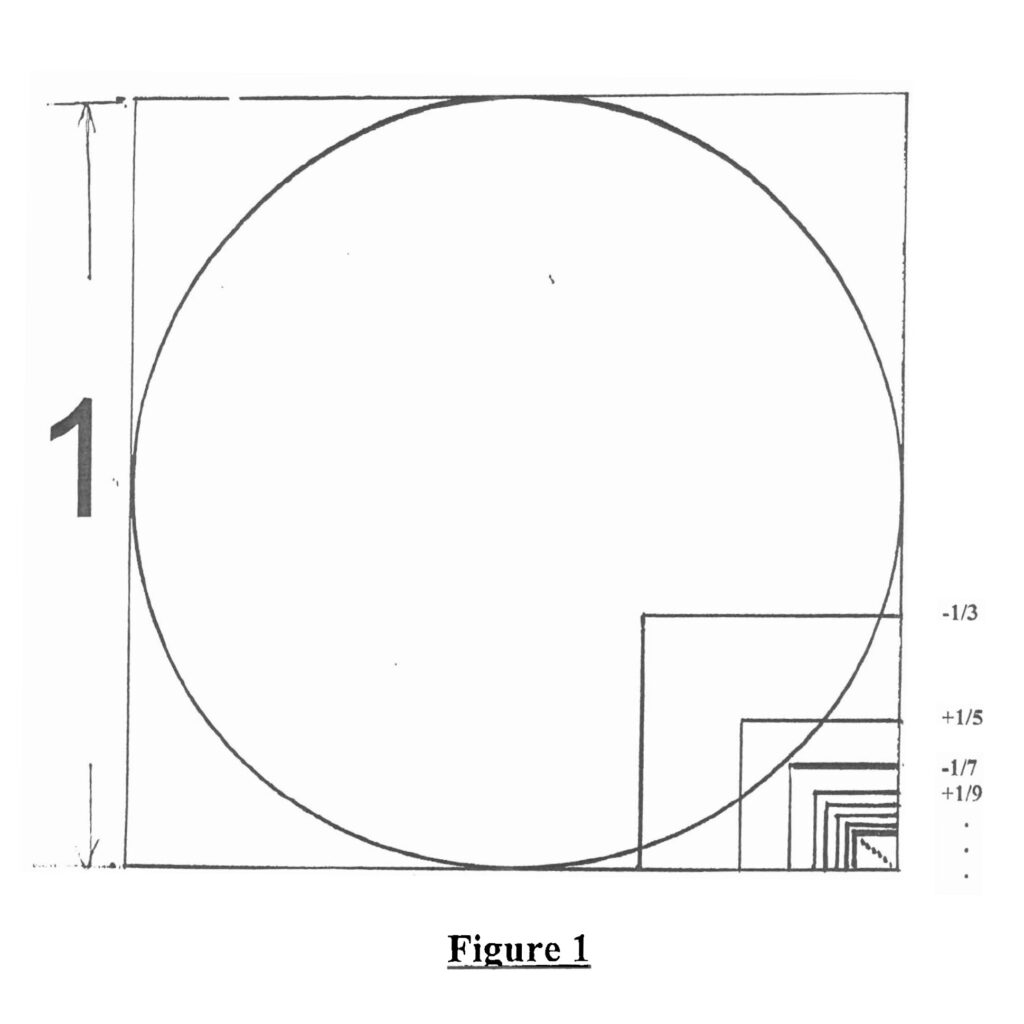
BIBLIOGRAPHY
1. Rabbi Y. M. Kagan: A Thought for the Week, The Complete Collection, Adapted from the Works of Rabbi Menachem M. Schneerson Lubavitcher Rebbe: “Enjoying the Good Life”, Merkos L’inyonei Chinuch (2026), at page 12.
`
2. Matt Gallagher: Practical Freemasonry: Accessible Philosophy for Working-Class Schlubs: “The Plumb Continued” (2021), at page 108.
3. Shakespeare: Macbeth.
4. Shakespeare: “Sonnet 60”.
5. Cathy Newman: “Vanishing Venice: The world tugs at the lovely hem of the city Thomas Mann called, ‘half fairy tale and half tourist trap’ “, National Geographic: Aug., 2009, at page 85.
6. Floyd Patterson, as quoted by W. Clement Stone in The Success System That Never Fails, Prentice-Hall, Inc. (1962), at page 35.
7. Johann Christoph Friedrich von Schiller: Wilhelm Tell, published in English in The Harvard Classics: Vol. 26, edited by Charles W. Eliot LL D, P. F. Collier and Son (1910), at page 399. The translation thereof by Sir Theodore Martin, K.C., LL D, reads
“Cast not for tinsel trash and idle show
The precious jewel of thy worth away.”
8. Edward Gibbon: The History of the Decline and Fall of the Roman Empire: Vol. V, at page 480: “Works of Constantine Porphyrogenitus”, et seq., at pages 482-483: “Provinces and Limits of the Empire”, John D. Morris & Company, Edition DeLuxe, with Notes by Dean Milman, M. Guizot, and Dr. William Smith. Having purchased all six volumes in a used condition for $1.00 at auction together with full used sets of Plutarch’s Lives and all of Emerson’s works, from the Estate of Ruth Morowitz, I become richly indebted–indebted to you, Ruth. Clearly no one else wanted them.
9. “Taps”.
10. Charles Darwin, in a letter written from the Beagle home to his family, quoted by Irving Stone in The Origin, Doubleday & Company, Inc. (1980), at page 267.
11. Will Durant: Caesar and Christ: “The Philosopher Kings: Trajan”, Simon and Schuster (1944), at page 412.
12. Edward Chancellor: The Price of Time: “The Promoter’s Profit: Private Equity”, Allen Lane, An imprint of Penguin Random House UK (2022), at page 163.
13.. Mother Goose.
14. Id.
15. Op. cit.: note 12: at page 156.
16. John Steinbeck.
17. Op. cit.: note 12: at page 156.
.
18. Edward Young: Night Thoughts (1742).
19. Op. cit.: note 12: “The Promoter’s Profit”, at page 160.
20. Op. cit.: note 18.
21. Aldo Leopold: A Sand County Almanac: “The Alder Fork—A Fishing Idyll”, Tamarack Press (1971), at page 62. (Photographs by Tom Algire.)
22. The Origin: op. cit..: note10, at page 286. This is not a quotation of Darwin’s but instead is a thought provoking passage of the author.
23. Mary Crawford Fraser: A Diplomat’s Wife in Japan: Sketches at the Turn of the Century, edited by Hugh Cortazzi, Weatherhill (1982), at page 154, and originally published in 1899 by Hutchinson and Co., London, under the title: A Diplomat’s Wife in Japan: Letters from Home to Home.
24. My dear Wife. (paraphrased as by me remembered)
25. Brother ____ ______ speaking on the occasion of his Masonic birthday on 10-21-21.
26. Philip Massinger: New Way to Pay Old Debts, as reprinted in The Harvard Classics: Vol. 47, Edited by Charles W. Eliot LL D, P. F. Collier & Son (1910), ast page 876.
27. Op. cit.: note 12: “A Big Fat Ugly Bubble”, at page 172.
28. Adage from old Yorkshire, as shared with me by my Yorkshire client,
Mr. John Parker.
29. Samuel Johnson, LL D: The Rambler, Saturday, July 7, 1750: Vol. 1, at page 213, Eighteenth Edition, printed for G. Walker, J. Ackerman, E. Edwards, W. Robinson and Sons, Liverpool; E. Thomson, Manchester; J. Noble, Hull; R. Griffin, Berwick; W. Whyte and Co., Glasgow; as here taken from a photographic replication of the same, made by Wentworth Press for an imprint by Creative Media Partners.
30.Op. cit. note 8: Vol. V, at page 57: “Constantine VII”.
31. The Reverend _______ _______, preaching at the First Congregational United Church of Christ of Waukesha, Wisconsin, on December 14, 2025. (paraphrased as remembered)
32. Dr. Victor E. Frankl, M.D.: Man’s Search for Meaning:
“Experiences in a Concentration Camp”, Beacon Press (1984), at page 83.
33. Beverly Sills, as quoted in “Badger Process Service, Inc. Pocket Calendar for 1998”, Pocket Pal by Myron Manufacturing Corp. (1997).
34. Arthur C. Parker: The Life of General Ely S. Parker: Last Grand Sachem of the Iroquois and General Grant’s Military Secretary: “The Way the Twig Was Bent”, Buffalo Historical Society (1919), and reprinted by Schroeder Publications (2005), at pages 80 to 81.
35. Id.: “An Indian Commissioner of Indian Affairs”, at pages 160 to 161.
36. Acknowledgment: G. Edward Griffin: The Creature from Jekyll Island: A Second Look at the Federal Reserve: dauphin publications ((2010), 595 pp. (fifth printing)
37. Acknowledgment: Friedrich Gerstäcker: Germelshausen.
38. Shakespeare: The Tempest.
39. Op. cit.: note 8: Vol. III, at page 260: “Edifices of Constantinople”.
40. Goethe: Faust, I, 1549-53, as quoted in The Varieties of Religious Experience, A Study in Human Nature, Being the Gifford Lectures in Natural Religion, delivered at Edinburgh in 1901-1902: “Lecture II: Circumscription of the Topic”, reprinted in William James: Writings: 1902-1910, The Library of America (1987), at page 53. As by me translated, Goethe’s octosyllabic couplets become in English iambic pentameter prose:
“Do without—renounce and abstain. That be the never
ending choral in our ears clanging—a song that abstinence
doth sing in full chorus, hoarsely shrill, each hour of our
livelong lives.”
41. Aristotle: Nicomachean Ethics: “BOOK V. Justice”, as translated by Joe Sachs, Focus, an imprint of Hackett Publishing Company, Inc. ((2002), at page 81.
42. Dorothy Kilpatrick, responding to my mother’s claim that it was my parents’ turn to entertain, not Dorothy’s and Harry’s. (paraphrased as remembered)
43. “Not My Brother, nor My Sister”, No. 519: The New Century Hymnal, The Pilgrim Press (1995).
44. Edgar Allen Poe: “The Raven”.
45. Op. cit.: note 29: “Tuesday, June 12, 1750, at page 166.
46. Op. cit.: note 8: Vol. III, at page 638: “A Fleet Sent Against the Vandals, Failure of the Expedition”.
47. Acknowledgment: Gordon S. Wood: Revolutionary Characters: What Made the Founders Different: “The Trials and Tribulations of _______ _______”, Penguin Books (2006), at pages 111-117.
48. Op. cit.: note 12: ”The Promoter’s Profit”, at page 159.
49. Op. cit.: note 12: Acknowledgment: “Let Them Eat Credit”, at pages 200-227.
50.. Rabbi _____ ______, as taken from a sermon by him graciously shared with me.
51. Twelve Steps and Twelve Traditions of Alcoholics Anonymous, Alcoholics Anonymous World Services, Inc. (1952), per fifteenth printing, May, 1977, pp. 1-192. No greater act of a nonfamilial friendship was there than when my recovering alcoholic client—socially, irretrievably diminutive–spiritually rich but whom no one else in the office wanted as a client– presented to me his treasured, much worn copy of this book, which it became my honor to read. I still have it. What an honor it was to hold a candle up to him.
52. Now deceased but kept anonymous.
53. Pallaval Veera Bramhachari: “Microbiomes and Its Significance in the Current Applications in Human Health and Disease: Goals and Challenges of Microbiome Research Today”, Chapter 1, Microbiomes in Human Health and Disease, Springer (2021), at pages 4-5.
54. Acknowledgment: Zoë Schlanger: The Light Eaters: How the Unseen World of Plant Intelligence Offers a New Understanding of Life on Earth: “The Scientist and the Chameleon Vine”, Harper (2024), at pages 185-187.
55. Benjamin Franklin: “Advice to a Tradesman”.
56. William Bradford: Of Plymouth Plantation.
57. Rabbi _____ ______, as related to me by his son, Rabbi _____ ______. (paraphrased as remembered)
58. Margaret Blaisdell Conover: “September” (1952)”, self-published in her poetry anthology: Moments in Quiet Reverie, at page 42, and copyrighted in 1989, as The Church Mouse and Friend.
59. Astrophysicist Matt Schneps, as quoted by Brock L. Eide, M.D., M.A., and Fernette F. Eide, M.D., Infra, note 147, at page 242.
60. The motto of The Royal Society, quoting Horace: “Nullius, addictus jurare in verba magristri, Quo ine cunque rapit temposias, deferor hostes”, Wikepedia, July 15, 2024.
61. John Gillespie Magee, Jr.: “High Flight”, first introduced to me by Mr. _____ ______ at a breakfast meeting of the First Congregational United Church of Christ of Waukesha Men’s Club.
62. Godfrey Chaucer: an excerpt from “Truth”, as quoted by Donald R. Howard: Chaucer: His Life, His Works, His World: “The Worst of Times–the 1380s: The Boece, the Boethian Poems, and Melibee”, E. P. Dalton, a division of NA Penguin Inc. (1987), at page 382.
63. Op. cit.: note 47 at pages 102-104.
64. Shakespeare: All’s Well That Ends Well.
65. Id.
66. Isabel Wilkerson: The Warmth of Other Suns: The Epic Story of America’s Great Migration: “Aftermath”, Vintage Books (2010), at page 464.
67. Op. cit.: note 8, Vol. III, at page 450: “Reign of _________, Administration and Character”.
68. Acknowledgment: Eulogy, delivered by the Reverend Howard Bowman at the First Congregational United Church of Christ of Waukesha, Wisconsin, at the memorial service for Patricia Johnson, November 14, 2002.
69. Dennis Miller, 10-13-13.
70. Shakespeare: The First Part of Henry IV.
71. My dear Wife.
72. Bill Bryson: A Short History of Nearly Everything: “The Rise of Life”, Broadway Books (2003), at page 495.
73. Op. cit.: note 36, at pages 149-150.
74. Publilius Syrus.
75. Op. cit,: note 8, Vo.. VI, at page 167: “Negotiations of the Emperor”.
76. Clarence Thomas, now United states Supreme Court Justice Clarence Thomas: My Grandfather’s Son: “Sun to Sun “, Harper Collins (2007), at page 16.
77. From a poem engraved upon a slab of stone, dated at 2200 B.C., as quoted by Will Durant: Our oriental Heritage: “Egypt”, Simon and Schuster (1935), at page 197.
78. Acknowledgment: Will Durant: The Story of Philosophy: The Lives and Opinions of the World’s Greatest Philosophers: “Schopenhauer”, Simon and Schuster (1926), as reprinted by Pocket Books (2006), at page 453.
79. The Confessions of Miksa Róth: A Stained Gass Artist about Glass Staining: “The Edition of the Author”, Budapest, 1942, at page 5, as published by the Miksa Róth Foundation and Stained Glass Museum (1078 Budapest, Nefelejcs u. 26) and edited by Xenia Megyes of Hungaro Lingua Translators, Chief Editor: Attila Büki, translated by Andrea Megyes of Hungaro Lingua Translators, and printed and bound by Hillebrand Press Ltd, Sopron, Csengery u. 51, Hungary.
80. Acknowledgment: The Reverend _____ ______, preaching at the First Congregational United church of Christ, Waukesha, Wisconsin, on February 6, 2022.
81. John Milton: AREOPAGITCA: A Speech for the Liberty of Unlimited Printing to the Parliament of England, as reprinted by The Harvard Classics: Vol. 3, edited by Charles W. Eliot LL D, P. F. Collier & Son (1909), at page 218.
82. “[Digging]
” . . . . . What is here?
Gold? Yellow, glittering, precious gold?
I am no idle votarist: roots, you dear heavens!
This much gold will make black white, foul fair,
Wrong right, base noble, old young, coward valiant.
Ha, you gods, why this? what this, you gods? Why this
Will lug your priests and servants from your sides,
Pluck stout men’s pillows from below their heads!
This Yellow slave
Will knit and break religions, bless the accursed,
Make the hoar leprosy adored, place thieves,
And give them title, knee, and approbation
With senators on the bench, this it is
That makes the wappen’d widow wed again,
She whom the spital-house and ulcerous sores
Would cast the gorge at, this embalms and spices
To the April day again. Come, damned earth,
Thou common whore of mankind, that put’st odds
Among the rout of nations, I will make thee
Do thy right nature.”
William Shakespeare: Timon of Athens, as quoted by the Rev. W. Beloe, F.S.A., in his annotation to the Latin essay: “The Words in which Herodes Atticus Reproved One who the Dress and Habit Falsely Assumed the Title and Manner of a Philosopher”, originally to be found in Latin in The Attic Nights of Aulus Gelius, but translated into English by the said Rev. W. Beloe, F.S.A., Translator of Herodotus &c, London, MDCCXCV, said translation of the The Attic Nights of Aulus Gelius being printed in English in three Volumes for J. Johnson, St. Paul’s Church-Yard and now scanned and republished in eighteenth century format in English by the Harvard University Press for the Loeb Classical Library, founded by James Loeb in 1911, the said annotation to be found in Vol. 2, at page 141.
83. “Nearly everybody in Rome worshiped money with mad pursuit, and all but the bankers denounced it. ‘How little you know the age you live in,’ says a god in Ovid, ‘if you fancy that honey is sweeter than cash in hand!’–and a century later Juvenal sarcastically hails the sanctissima divitarum maiesta, the most holy majesty of wealth.’ To the end of the Empire, Roman law forbade the Senatorial class to invest in commerce or industry; and though they evaded the prohibition by letting their freedmen invest for them, they despised their proxies and upheld rule by birth as the sole alternative to rule by money, or myths, or the sword. After all the revolutions and the decimations, the old class divisions remained, with band-new titles: members of the Senatorial and equestrian orders, magistrates and officials, were called honestiores, i.e., ‘men of honors’ or offices; all the rest were humiliores, ‘lowly,’ or tenuiores, ‘weak’.”
Op. cit.: note 11: “Rome at Work: VII. The Classes”, at page 332.
84. “Princes, however, have frequently engaged in many other mercantile projets, and have been willing, like private persons, to mend their fortunes by becoming adventurers in common branches of trade. They have scarce ever succeeded. The profusion with which the affairs of princes are always managed, renders it amost impossible that they should. The agents of a prince regard the wealth of their master as inexhaustible; are careless at what price they buy; are careless at what price they sell’; are careless at what expense they transport his goods from one place to another. Those agents frequently live with profusion of princes, and sometimes too, in spite of that profusion, and by a proper method of making up the accounts, acquire the fortunes of princes.”
An Inquiry Into the Nature and Causes of the WEALTH OF NATIONS: “Book V: Of the Revenue of the Sovereign or Commonwealth: Chapter II: Of the Source of the General or Public Revenue of the Society: Part I: Of the Funds or Sources of Revenue which may Peculiarly belong to the Sovereign of The Commonwealth”, Edited by J. C. Bullock PHD, Professor of Economics, Harvard University, as reprinted in The Harvard Classics: Vol. 10, edited by Charles W. Eliot, LL D, P. F. Collier & Son, at page 491.
85. “Yet the honorable Greeks think they have no life unless an obol breeds an obol . . . “
Apollonius of Tyana, as quoted by Flavius Philostratus, “the Athenian”: The Life of Apollonius of Tyana: edited and translated by Christopher F. Jones, and published by the Harvard University Press (2005) for the Loeb Classical Library, founded by James Loeb in 1911, Vol. 2, at page 95.
86. “Sometimes the best offense is a ghoulish pretense. Reporting recently in the Proceedings of the National Academy of Sciences, Leslie Saul-Gershenz and Jocelyn Millar described the case of the abominable blister beetle and the benighted solitary bee:
“Blister beetles live in the southwestern deserts of the United States. Females lay
their eggs in grassy patches where solitary bees forage. The beetle eggs all hatch simultaneously, and the thousand or so newborn larvae immediately gather together into a tight formation. They form a nice oval shape, all dark and fuzzy. They travel as an inseparable unit, up and down the blades of gass. They look and act just like–a female solitary bee. Before long, they start releasing a pheromone mimic, and now they smell like a female bee too. A male bee lands on what he thinks is a mate, and the blister pack clings to him en masse. Disappointed by the the encounter, and seemingly unaware of his cargo, the male bee flies on in search of new love. Should he find and approach a real female bee, the beetle larvae will instantly abandon him and cling to her. The female will take them where they want to go, back to her well provisioned nest. The larvae will deplane, settle down, and gorge themselves to maturity on nectar, pollen, and best of, the bee’s eggs.” (This all assumes that there are no fiduciary relationships here.)
“The Art of Deception: Sometimes Survival Means Lying, Stealing, or Vanishing in Place”, National Geographic: Aug., 2009, at page 76.
87. William Ellery Channing: “Elevation of the Laboring Classes”, as reprinted in The Harvard Classics: Vol. 28, Edited by Charles W. Eliot L L D, P. F. Collier & Son (1910), at page 332.
88. Emma Wedgewood Darwin, as quoted by Irving Stone, op. cit. note 10: at page 432: “Love is a Fever in the Blood”.
89. Op. cit.: note 29: “Tues, August 28, 1756”: at page 304.
90. Bruce Schaefer: “Ronald L. Graham”, as printed in Mathematical People: Profiles and Interviews, Edited by Donald G. Albers and G. L. Alexanderson, Birkhauser Boston (1985) at page 112.
91. Erv Strub, The Old Philosopher: Daily Uplift: Poetic Gems to Live By: “Observations”, Beacon Publications (1979), at page 18. This book was graciously given to me by the Fulton Masonic Lodge No. 69 of Edgerton, Wisconsin.
92 .Op. cit.: note 29: Tuesday, May 29, 1750, at page 143.
93. English proverb.
94. Op. cit.: note 12, at page 159.
95. Martyn Rady: The Middle Kingdoms: A New History of Central Europe, Basic Books (2023), at page 495.
96. Id.: at page 508.
97. Shakespeare: Othello.
98. My dear Wife. (paraphrased as remembered”
99. Op. cit.: note 12: “Goodhart’s Law”, at page121.
100. Bhagavad Gita, as reprinted in The Harvard Classics: Vol. 45, Edited by Charles W. Eliot, LL D, P. F. Collier & Son (1910), at page 805.
101. Adam Smith, as quoted by Mimi Goller in “Is a Padlock Better than a Patent?”, Wisconsin Lawyer: May, 1998, at page 20.
102 Adam Smith: Wealth of Nations: Book IV, Chapter III, as quoted by Milton and Rose Friedman: Free to Choose: A Personal Statement: “What’s Wrong with Our Schools: Higher Education: The Solution”, Harcourt Brace Iovanovich (1980), at page 265.
103. Francis Bacon: Essays or Counsels–Civil and Moral: “XXVI: OF EMPIRE”, as reprinted in The Harvard Classics: Vol. 3, Edited by Charles W. Eliot LL D, P. F. Collier & Son (1909), at page 51. (emphasis in the original).
104. Op. cit., note 87 at pages 325-326; page 328.
105. Patrick Leigh Fermor: Between the Woods and the Water: “the Great Hungarian Plain, New York Review Books (1986), at page 83.
106. Virgil: ÆNEID, as translated by John Dryden, with introduction, notes and illustrations, and reprinted in The Harvard Classics: Vol. 13, Edited by Charles W. Eliot LL D, P. F. Collier & Son (1909), at page 284.
107. Op. cit.: note 29: “Saturday, August 28, 1750”, at page 305.
108. Acknowledgement: Homer: The Odyssey Book XI,, translated by John Dryden, reprinted in the Harvard Classics: Vol.22, at page 164, Edited by Charles W. Eliot
LL D, P. F. Collier & Son (1909):
“Nay, speak not comfortably to me of death, oh great Odysseus. Rather would I live on ground as the hireling of another, with a landless man who had no great livelihood, than bear sway among all the dead that be departed.”
109. Paul Simon: the English Lyric for “El Condor Pasa” (“If I Could”).
110. Acknowledgment: Op. cit.: note 78, at page 456.
111. William Shakespeare: The Two Gentlemen of Verona.
112. Mr. ____ ______.
113. Kahlil Gilbran: The Prophet: “On Work”, Alfred A. Knopf (1959), at page 27.
114. Douglas H. Chadwick: National Geographic: Mar. 2010: “Wolf Wars”, at page 34.
115. The First Epistle of Paul the Apostle to the Corinthians.
116. Reverend _____ _______, preaching at the First Congregational United Church of Christ of Waukesha, Wisconsin, July 2, 2006.
117. Shakespeare: Timon of Athens. The line quoted in the text above is an outstanding line, but it was not in the original play. It is therefore an interjection interpolated later by a scrivener.
118. The Internet on 9-24-25: “Upper Hand: An Overview”.
119. ______ _______: Climate Change: What They Rarely Teach in College: “Extinctions: Coral Reefs”, self-published (2023), at page 74.
120. Japanese adage, commonly attributed to the Sengoku era, and popularized in an article in Entrepreneur, entitled as I recollect: “Getting Orientalized”.
121. Op. cit.: note 70.
122. The Gospel According to St. Mark, preached on by the Reverend _____ ______, at the First Congregational United Church of Christ of Waukesha, Wisconsin, on October 27, 2024.
123. The Book of the Prophet Isaiah. (Emphasis in the Original)
124. Op. cit: note 76: “A Question of Will”, at pages 129-130.
125. Acknowledgment: Mother Teresa: The Joy in Loving: “13 July”, as compiled by Jaya Chalika and Edward Le Joly, Penguin Group (19960), at page 245.
126. Tom Marcum, as quoted in the Wounded Warrior 2020 Calendar for the month of March.
127. The November 25, 2024 internet site of the W. B. Kennedy Masonic Lodge #3 F & AM of the Prince Hall Masonic Lodge of Beloit, Wisconsin.
128. Acknowledgment: Arthur Gordon: A Touch of Wonder: “The Power in Purposeful Pausing”, Fleming H. Revell Company (1974), at page 213. The regenerative art of pausing is not sloth:
“Pausers are not time-wasters; they are time-users.” (emphasis in the original)
In accord and ss taken from: HBR’S 10 MUST READS: Tony Schwarz and Catherine McCarthy: “Manage Your Energy, not Your Time”, Harvard Business Review Press (2020), at page 69, originally published: Harvard Business Review: Oct. 2007, pauses are regenerative, not sloth:
“ ‘Ultradian rhythms’ refer to 90 to 120 minute cycles during which our bodies slowly move from a high energy state into a physiological trough. Toward the end of each cycle, the body begins to crave a period of recovery. The signals include physical restlessness, yawning, hunger, and difficulty concentrating, but many of us ignore them and keep working. The consequence is that our energy reservoir—our remaining capacity—bu rns down as the day wears on.
“Intermittent breaks for renewal, we have found, result in higher and more sustainable performance. The length of renewal is less important than the quality. It is possible to get a great deal of recovery in a short time—as little as several minutes—if it involves a ritual that allows you to disengage from work and truly change channels.”
129. Op. cit.: note 11: “The Other Side of Monarchy: III. Claudius”, at page 274.
130. Op. cit.: note 29, at page 245: “Saturday, July 28, 1750”.
131. Op. cit.: note 8, Vol. III, “Of __________”, at page 303.
132. Op. cit.: note 8: Vol. V, at page 443: “Comparisons of _____ and _____”.
133. Samuel Johnson, as quoted by James Boswell: Life of Johnson: “April, 1778”, republished by Oxford World’s Classics (1980), at page 936.
134. Op. cit.: note 8: Vol. III. “Destruction of the Statue of Serapis by a Soldier with Battle-Axe”, at page 258.
135. Clement Stone: The Success System That Never Fails, Prentice Hall, Inc. (1960). (paraphrased as remembered)
136. Op. cit.: note 103: “XXVIII. OF FRIENDSHIP”, at page 73.
137. Op. cit.: note 91: “Thanksgiving”, at page 72.
138. The Book of Psalms.
139. Ida Hiller.
140. Mark Hall, Casting Crowns. There is a precursor to this in the Hymn: “What Wondrous Love Is This, O My Soul, O My Soul”.
141. The Reverend _____ _______ , preaching at the First Congregational United Church of Christ, Waukesha, Wisconsin, on May 27, 2012, on the text from the Book of Acts: “On the Road to Gaza”.
142. A chopped contestant on “Chopped”, September 19, 2016. For me, he was a winner.
143. John Ruskin, as quoted in “Quotable Quotes”, Reader’s Digest: Mar., 1997, at page 49.
144. _____ ______: “Working Tools of Capitular Masonry”, Silas H. Shepherd LODGE OF RESEARCH No. 1843 F. & A.M. WISCONSIN Annual Transactions, Vol. 39 (2024), at pp. 63-64.
145. Bachya ben Joseph ibn Paquda: Duties of the Heart: “Introduction and Treatise on Existence and Unity of God”, translated from Arabic into Hebrew by Jehuda ibn Tibbon, and into English by Rabbi Moses Hyamson, B.A., LL.D., Rabbi Orach Chaim Congregation, professor of codes, Jewish Theological Seminary of America (1925), at page 45.
146. OLELO NO ‘EAU: “Proverbs & Poetical Sayings”, Collected, Translated, and Annotated by Mary Kawena Pukui, Bernice P. Bishop Museum Special Publication No. 71, Bishop Museum Press (1983), at page 158:
“The fragrance-bearing wind of Puna.”
Annotation:
“Puna, Hawai’i, was famed for the fragrance of maile, lehua and hala. It was said that when the wind blew from the land, fishermen at sea could smell the fragrance of these leaves and flowers.”
147. Acknowledgment: Brock L. Eide, M.D., M.A. and Fernette F. Eide, M.D.: The Dyslexic Advantage: Unlocking the Hidden Potential of the Dyslexic Brain, Hudson Street Press (2011), pp. 274.
148. Acknowledgment: Daniel Goleman, Richard Boyatzis, and Annie McKee: “Primal Leadership: Those Wicked Bosses Who Win”, originally published in the December, 2001 Harvard Business Review, as republished in On Managing Yourself: HBR’s 10 MUST READS, The Harvard Business Review Press (2010), at page 175.
149. Op. cit.: note 28.
150. Op. cit.: note 44.
151. Op. cit.: Note 146, at page 70:
“It is a recognizing of the right thing.”
The annotation reads:
“One has seen the right thing to do and has done it.”
152. Shakespeare: “Sonnet 29”.
153. Op. cit.: note 44.
154. Op. cit., note 64.
155. The Gospel According to St. Luke, preached on by the Reverend _____ ______, at the First Congregational United Church of Christ of Waukesha, Wisconsin, on April 6, 2025.
156. Acknowledgement: the agony of the tragically premature death of Jodi M. Monosso.
157. Op. cit.: note 146, at page 41:
“I will wear your love as a [lei].”
The Annotation reads:
“I will cherish your love as a beautiful adornnment [wreath].”
158. C. S. Lewis: A Grief Observed, First Warbler Classics Edition (2023), at page 50.
159. For this experience, I gratefully acknowledge Austin and Luella Bowey of the Town of Eagle, Waukesha County, Wisconsin.
160. Infra: note 191.
161. Infra: note 207.
162. Op. cit.: note 140.
163. Op. cit. note 29: “September 1, 1759”, at page 308.
164. Op. cit.: note 125, at page 372.
165. Op. cit.: note 29: “Tuesday, May 28, 1751, Vol. III, at page 132.
166. Op. cit.: note 146:
“A little taro green is delicious when love is present.”
Annotation:
“Even the plainest fare is delicious when there is love.”
167. Op. cit.: note 8: Vol. V, at page 643: “Roger, Great Count of Sicily”.
168. Henry David Thoreau: “Walking” [1862], as reprinted in The Harvard
Classics: Vol. 28, Edited by Charles W. Eliot LL D, P. F. Collier & Son (1910), at page 411.
169. The Flemish motto of Gustav Stickley: “The best I can”.
170. New York Giants manager Leo Durocher in 1946.
171. The headline in Tipp, Debrecen, Hungary, April 18, 2002, noticed by my dear Wife and translated by her for me, as by her here paraphrased in English, immediately followed herein by the quotation in the original Hungarian.
172. Op. cit.: note 8: Vol. IV, at page 539: “His Virtues”.
173. Op. cit.: note 11: “Life and Thought in the Second Century: A.D. 96-192:
I. Tacitus”, at page 436.
174. My Father, as graciously quoted by Ron Abramson to my dear Wife and to me at the O’Farrell wedding on August 25, 2000. My father never did say this to me. I was blessed instead to see him living it, indeed blessed!
175. As taken and by me modified from the “Call to Worship” in the “Order of Worship” at the First Congregational United Church of Christ of Waukesha, Wisconsin, on Sunday, January 5, 2025.
176. Emma Wedgewood Darwin, as quoted by Irving Stone: op. cit.: note 10: “The Whole of Life”, at page 509.
177. Will Durant: The Life of Greece: “The Great Migration: Herecleitus of Ephesus”, Simon and Schuster (1938), at page145.
178. Op. cit.: Note 18.
179. Helen Gardner, A.M.: Art Through The Ages: An Introduction to its History and Significance: “Babylonian, Assyrian, Chaldean and Persian Periods c. 3100-331 B.C.: Part D: Persian: 539-331 B.C.: Architecture and Minor Arts”, Harcourt, Brace & Company (1926), at page 69.
180. Op. cit.: note 8, Vol. IV, at page 250: “Triumph of Belsarius”.
181. Id.
182. Op. cit.: note 125, at page 406. This is not the product of mere saintliness. It is nothing less than raw intelligence. But there is more, much more:
“People are often irrationally and unreasonably self-centered. Forgive them anyway.
“If you are kind, people may accuse you of selfish motives. Be kind anyway.
“If you are successful, you may win some unfaithful friends and some genuine enemies. Succeed anyway.
“If you are honest and sincere, people may deceive you. Be honest anyway.
“What you spend years creating, others could destroy overnight. Create anyway.
“If you find serenity and happiness, some may be jealous. Be happy anyway.
“The good you do today will often be forgotten. Give your best anyway.
“Give the best you have, and it will never be enough. Give your best anyway.
“In final analysis, it is between you and God. It was never between you and them anyway.”
Driving on 11-5-25 through Black River Falls, Wisconsin, I found this treasure trove while waiting for a red light, quoting Mother Teresa and painted on a large wooden placard affixed to the outside wall of a building occupied by the Rural Mutual Insurance Agency.
183. J. H. Powell: Bring out Your Dead: The Great Plague of Yellow Fever in Philadelphia in 1793: “Afterwards”, Time Incorporated (1949), at page 300.
184. Op. cit.: note 41,: Acknowledgment: “Book II. Virtue and the Mean”, at page 128.
185. Op. cit.: note 58: “To Our Mother” (written in 1953), at page 44.
186. Susan Coolidge, as quoted by Mary Wilder Tileston: Daily Strength For Daily Needs, (1884), as taken from the Grosset and Dunlap reprint (1928), at page 7. (Another of my mother’s old books, snatched up at her death by my dear Wife–for me. Thank you again, my dear, dear Wife!)
187. Acknowledgment: Susan Simrard: Finding the Mother Tree: Discovering the Wisdom of the Forest, Alfred Knopf (2021), pp. 332.
188. The Gospell off Sancte Marke, at page 80, as here taken from The Newe Testament, translated from the koinoniaGreek by William Tyndale, in part in Cologne and completed and printed in final form in Worms in 1526 in the print shop of Peter Schoeffer. It was financed by merchants in London as a small octavo volume for concealment when being smuggled into England. The present reprint is in Aldine Italic type, i.e., not the original Gothic, and was published by the British Library in 2000. Per W. R. Cooper in the Introduction at page xvii thereof, the A.D. 1525 English spelling was kept as originally printed:
“No attempt has been made to change spellings which, if they look odd today, were accepted by Tyndale and his contemporaries.”
189. Acknowledgment: my having come with my little family fifty-one years ago upon the glory of a large, unforgettable, blessed drop of morning summer dew, at the Boerner Botanical Garden’s Bog Garden, Hales Corners, Wisconsin.
190. The Reverend Ineke Mitchell, preaching at the Ash Wednesday Service, February 12, 1997, First Congregational United Church of Christ of Waukesha, Wisconsin.
191. Fiordor Dostoevsky, as quoted in Treasury of the World’s Great Letters: “Dostoevsky Describes His Sensations When He Had One Minute to Live”, Konecky & Konecky (1940), at page 300, as originally printed by Alfred A. Knopf in 1923 from a translation by Koteliansky.
192. Acknowledgment: Dr. Viktor E. Frankl, M.D., Op. cit.: note 32: “II Logotherapy in a Nutshell: The Essence of Existence” and “The Case for a Tragic Optimism”, respectively at pages 97-134 and at pages 137-154.
193. Alexander Pope, as quoted by Willard McChesney: “History of Fulton Lodge No. 69: 1855-1921″, at page 9. This precious history was shared by the Fulton Masonic Lodge in Edgerton, as transmitted graciously to me by our brother, Mr. ____ ______ of said lodge.
194. Jane Austen: Pride and Prejudice.
195. “Be Thou My Vision”, Irish Hymn, A.D. 8th century, set to the old Irish melody, “Slane”, , as translated from Gaelic by Mary E. Byrne (1905), and sung at the First Congregational United Church of Christ of Waukesha, Wisconsin, October 20, 2024.
196. Marcel Schwantes: “REAP RESULTS: Ways to focus and increase productivity”, INC., as republished in “The Freeman”, 4-5-19.
197.Victor Hugo: Preface to Cromwell (1887), as reprinted in The Harvard Classics: Vol. 39, Edited by Charles W. Eliot LL D, P. F. Collier & Son (1910), at page 399.
198. Op. cit.: note 146, at page 276:
“You, too, were on the tall hill of Ha´upu going all the way up to the very top.”
Annotation:
“Said sarcastically to a person who boasts of his greatness.”
199. Op. cit.: Note 9.
200. Op. cit.: note 79, at page 7.
201. Oprah Winfrey: “What I Know for Sure: January, 2004”, reprint from O, The Oprah Magazine: “All these years I’ve been feeling like I was growing into myself. Finally I feel grown”, at reprint pages 78-79.
202. Jodeph de la Vega: Confusion de Confusiones (1688), as quoted infra: note 203., at page27.
203. Edward Chancellor: Devil Take the Hindmost: “This Bubble World: The Origins of Financial Speculation”, Penguin Group (2000), at page 27.
204. Acknowledgment: The Reverend Carolyn __________-, preaching at the First Congregational United Church of Christ of Waukesha, Wisconsin, September 11, 2022.
205. Langston Coleman, as quoted in “Badger Process Service, Inc. Pocket Calendar for 2014″, Pocket Pal by Myron Manufacturing Corp. (2013).
206. My dear Wife, Edith.
207. Cesáreo Gabaraín: “Tú has venido a la orilla” (1979). This is the title of a hymn sung in translation at the First Congregational United Church of Christ of Waukesha, Wisconsin, on 2-9-25, as translated by Madeleine Forell Marshall. The line as translated into English and herein quoted reads in English:
“A love that is willing to go on loving.”
208. Sir Thomas Wyatt (1503-1542): “A Supplication”, as reprinted in The Harvard Classics: Vol. 40, Edited by Charles W. Eliot LL D, P. F. Collier & Son (1910), at page 195.
209. Op. cit.: note 58: “High School Class Song” (1927), written to the tune of ‘The Sweetheart of Sigma Chi’ “, at page 4.
210. Brother Bobby James Flavin: Moonlight Bridge: “Universal Brotherhood: Freemasonry: The Royal Art”, self-published (2026), at pages 23-24.
211. Acknowledgment: Ranjan Roy: “Mathematics Magazine” 63 (1990): “The Discovery of the Series for π by Leibniz, Gregory, & Niakantha”, as reprinted in Sherlock Holmes in Babylon and Other Tales of Mathematical History, The Mathematical Association of America, at pages 111-121. For a straight forward proof using just calculus, see H. B. Phillips, Professor of Mathematics, Massachusetts Institute of Technology: Analytic Geometry and Calculus: “Series with Real Terms: Operations with Power Series: Example 1″, John Wiley & Sons, Inc. (1946), at page 318. In the realm of circular curvature, it is a thing of unparalleled wonder that at Stonehenge:
“The sides of the lintels are gently curved, so that they can nearly fit a circular structure.” Bill Bryson: The Road to Little Dribbling: “Ancient Britain”, Doubleday (2015), at page 255.
212. Hermann Broch: “The Unknown Quantity”) 1935), as translated by Willa and Edwin Muir. Marlboro, Vt: Marlboro Press, 1988, and quoted by Stephen Budiansky: “Journey to the Edge of Reason: The Life of Kut Gödel: “Vienna 1924: The Head without a Body”: W. W. Norton & Company, Inc. (2021), at page 77.
213. Benjamin Paul Blood, as quoted by William James: “A Pluralistic Mystic”, published in The Hibbert Journal, July 1910, and reprinted in William James: Writings: 1902-1910, The Library of America (1987), at page 1303.
214. Acknowledgment: Father Nicholas Krummydas, preaching at a 2009 baptismal service, at St. Demetrios Greek Orthodox Church, Weston, Massachusetts.
215. Op. cit.: note 18.
216. Alan Devoe of Hillsdale: “How to Take a Walk”, The Reader’s Digest: Jan. 1939, and reprinted in Getting The Most Out of Life, The Reader’s Digest Association (1946), at page 124.
217. Op. cit.: note 80, at page 453.
218. Henry Francis Lyte, 1847: “Abide with Me”, The Pilgrim Hymnal, The Pilgrim Press (1935), No.: 52.
219. Acknowledgement: The philosophy of Oprah Winfrey.
220. Acknowledgment: Masonic Birthday Speech of Brother _____ _______ on January 15, 2026.
221. Op. cit.: note 29: “Tuesday, August 7, 1759”, at page 268.
222. Acknowledgment: op. cit: note: 201: “February, 2002”: “A line Emily Dickinson wrote—‘I dwell in Possibility’–has always meant so much to me”, at reprint pages 44-47.
223. Emily Dickinson’s poem: “I Dwell in Possibility”, as quoted Id. at page 44.
224. The First Letter of Paul to the Corinthians.
225. Aristotle: Nicomachean Ethics, op. cit.: note 41, at page 10.
226. George Washington’s Rules for Civility and Decent Behavior in Company and Conversation, said treatise reprinted by Applewood Books (l988), per the Francis Hawkins translation: Rule 44, at page 17.
227. Id., at pages 9 to 30.
228. Op. cit.: note 29: “TuesdayAugust, 14, 1750”, at pages 279-280
229. Horace: “Epistles”, as quoted in op. cit.: note 133: “Thursday, 9th September, 1784, at page 1335.
230. Samuel Johnson: op. cit.: note 29, at page 280.
231. Lucretius: De Rerum Natur, as translated by W. D. Rouse and quoted: op. cit.: note 11: “Literature under the Revolution”, at page 152.
232. Lewis Theobald, as quoted in op. cit.: note 133, “Sunday, 18, June 1784, at page 1302.
233. Shakespeare: Corialanus.
234 Publius Terentius Afer, a/k/a Terence: Andria, as quoted in Collected Works of Erasmus, Vol. 33: Adages: II i 1 to II vi 100, translated and annotated by R. A. B. Mynors, University of Toronto Press (1991): II ii 63: “Pallacia alla aliam tudit”, at page 106.
235. Op. cit.: note 18.
236. Christina Koch, as quoted in Smithsonian: ”Bacck to the Future”, at page 63.
237. Op. cit.: note 210: “Clouds of Thought: Spirituality”, at page 207.
238. Acknowledgment: Ron Winslow: “Study Links Heart Disease with Lack of Job Control”, The Wall Street Journal Europe: Jul. 28, 1997, at page 6.
239.Acknowledgment: Chaplain Bill Humphries of Carroll University, preaching at the First Congregational United Church of Christ of Waukesha, Wisconsin, September 11, 2022.
240. Acknowledgement: Op. cit. note 133, at page 1354: “November 1784”:
“While in the country, notwithstanding the accumulation of illness which he endured, his mind did not lose its powers. He translated an ode of Horace, which is printed in his Works, and composed several prayers. I shall insert one of them, which is so wise and energetic, so philosophical and so pious, that I doubt not of its affording consolation to many a sincere Christian, when in a state of mind to which I believe the best are sometimes liable:
“Against inquisitive and perplexing thoughts. ‘O Lord, my maker and Protector, who hast graciously sent me into this world to work out my salvation as may mislead or hinder me in the practice of those duties which Thou hast required. When I behold the works of thy hands, and consider the course of thy providence, give me grace always to remember that that thy thoughts are not my thoughts, nor thy ways my ways. And while it shall please Thee to continue me in this world, where much is to be done, and little to be known, teach me by thy Holy Spirit, to withdraw my mind from unprofitable and dangerous inquires, from difficulties vainly curious, and doubt impossible to be solved. Let me rejoice in the light which Thou has imparted, let me serve Thee with active zeal and humble confidence, and wait with patient expectation for the time in which the soul which Thou receivest shall be satisfied with knowledge. Grant this, O Lord, for Jesus Christ’s sake. Amen.’ “
241. Op. cit.: note 204.
242. Reverend Dr. Alfred E. Gregory, D.D., who gratefully acknowledged to Edith and me that these were his mentor’s words that sparked the turn in his soul to the ministry. This mentor was a famous preacher in London, whose name I unfortunately do not now know.
243. Reverend Dr. Martin Luther King, as quoted: op. cit.: note 201”: “If you don’t know what your passion is, realize that one reason for your existence on earth is to find it”, at page 36.
244. Shakespeare: The Merchant of Venice.
245. Neil Shubin: SOME ASEMBLY REQUIRED: Decoding Four Billion Years of Life, from Ancient Fossils to DNA: “Prologue”, Pantheon Books (2020), at page x.
246. Shakespeare: Sonnet 29.
247. Will Durant: The Life of Greece: “The Art of the Periclean Age: III. The Masters of Sculpture 2. Schools”, Simon and Schuster (1939), at page 324.
248. Collected Works of Erasmus: Vol. 33: “Adages II I 1 to II vi. 100”, translated and annotated by R. A. B. Mynors, University of Toronto Press (1991): II iii 32: “Vocatus alque non vocatus dues aderit”, at page 146.
249. Juvenal, as quoted by Dr. Richard Brocklesby, M.D., to Samuel Johnson during the distress of the last days of Johnson’s life, op. cit.: note 133: “December 1784”, at page 1379
.
250. Shakespeare: The Two Gentlemen of Verona..
251. Quoting from op. cit.: note 201.
252. Id.
253. Op. cit.: note 12, at page 148: “Unnatural Selection: A New Plague of Zombies”.